
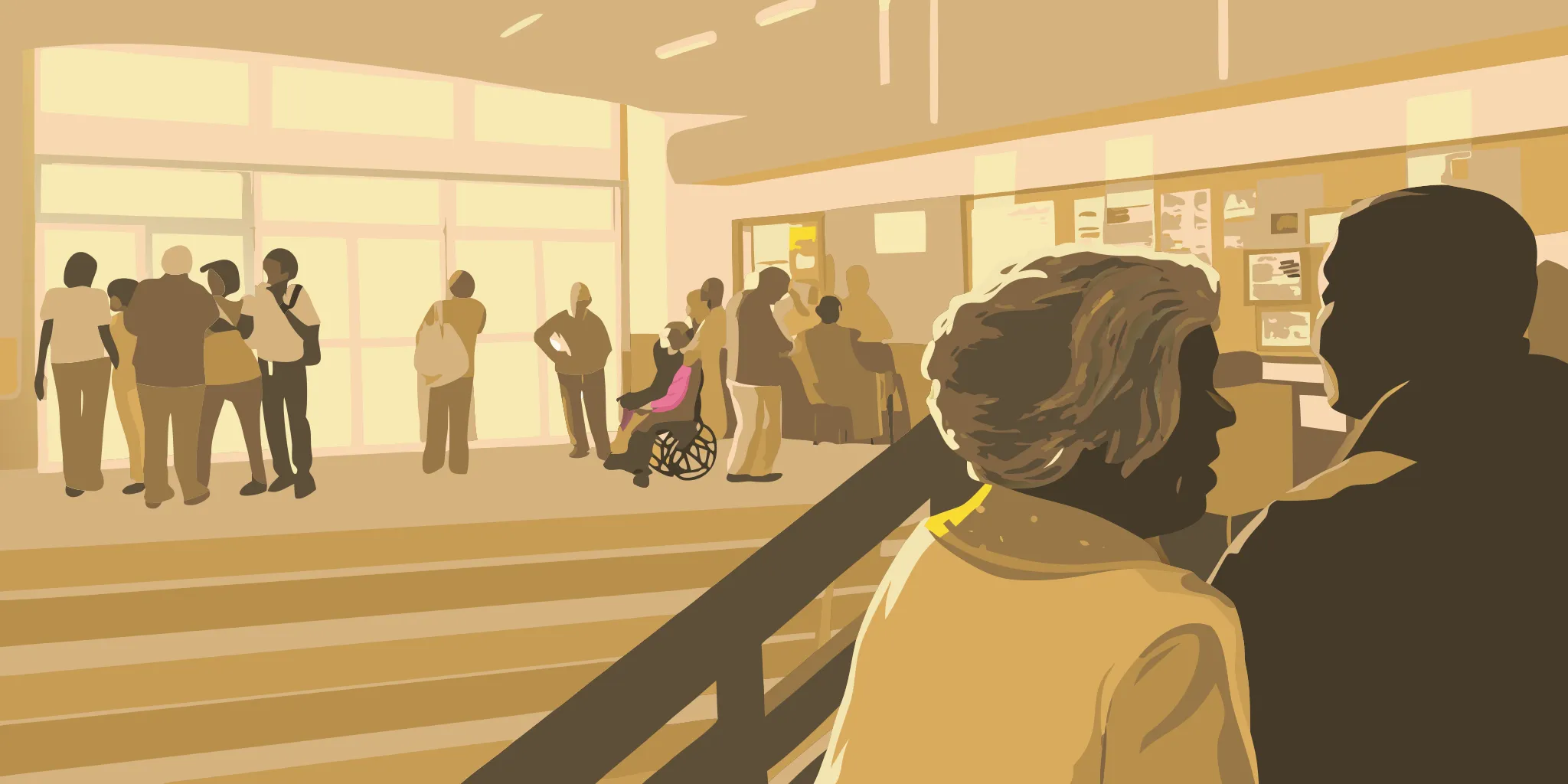
Community centers are more than convenient venues for local programming. They are recurring touchpoints where families, young people, older adults, and neighborhood residents spend meaningful time in familiar surroundings. For media buyers, that combination creates an opportunity to place a brand within a trusted, high-dwell environment instead of competing for attention in an increasingly crowded digital feed.
Contact All Points Media to build a custom place-based advertising network across community and recreation centers.
Community center advertising helps brands reach diverse local audiences through static and digital out-of-home placements in high-traffic, high-trust gathering spaces. All Points Media can connect campaigns with community environments nationwide, supporting strategic venue selection, turnkey installation, and consistent campaign management.
The value of these venues starts with the relationship people already have with the space. Understanding why that trust matters, and how it shapes attention and receptivity, is the foundation for evaluating community centers as an advertising environment.
Why Community Centers Are a High-Trust Advertising Environment
Community centers give brands access to high-traffic, high-trust settings where families, youth, seniors, and local residents spend meaningful time. For media buyers, that combination supports community center advertising with stronger contextual relevance, longer exposure, and broader audience diversity than many traditional roadside placements can provide.
Trust is shaped by context. A message displayed inside a recreation or community center appears alongside activities that already support social connection, wellness, and everyday routines. Research on community settings finds that these spaces facilitate social and leisure activities that can promote adult well-being and healthier lifestyles. That environment gives advertisers a more relevant setting for messages tied to healthcare, financial services, retail, food, education, and local services.
Build a community-centered campaign through All Points Media’s place-based media networks.
All Points Media’s venue data illustrates the scale and quality of the opportunity: 1,887 recreation center locations. More than 20,000 impressions per four weeks, one- to three-hour dwell times, and year-round traffic. These figures describe a media environment built around repeated, in-venue exposure rather than a brief roadside glance. The result is inventory that can complement broad-reach OOH while adding local context and sustained attention.
Context changes how exposure works
Traditional OOH often competes with traffic, weather, speed, and visual clutter. Community center placements meet audiences while they are entering, waiting, exercising, participating, or spending time with family. The message does not need to carry the entire burden of interruption. Its surroundings provide a reason for being there, which can make the placement feel more useful and less intrusive.
| Factor | Community centers | Traditional OOH |
|---|---|---|
| Trust | Located within familiar, community-oriented spaces associated with wellness, recreation, and local participation. | Can provide strong public visibility, but the surrounding context may be less personally relevant. |
| Dwell time | Typical recreation center dwell time is one to three hours, creating opportunities for repeated exposure. | Often depends on the audience’s travel speed and the duration of a passing view. |
| Audience diversity | Reaches families, youth, seniors, and local residents across recurring programs and activities. | Audience composition is generally determined by the route, traffic pattern, or surrounding geography. |
| Ad clutter | Can be planned within a defined venue environment, with messaging aligned to the audience and location. | May compete with other roadside signs, storefronts, vehicles, and competing visual stimuli. |
For campaigns that need both scale and local credibility, community centers are not a replacement for every OOH channel. They are a strategic layer that adds relevance, dwell, and a trusted setting to the media mix.
Who You Can Reach Through Community Center Advertising
Community center advertising reaches more than a broad local audience. It puts brands in front of families, youth participants, seniors, fitness-minded adults. And residents attending neighborhood events, creating practical opportunities for demographic and psychographic targeting in trusted community settings.
All Points Media’s network includes 1,887 recreation center locations, giving media buyers a substantial footprint for reaching people across age groups and income levels. These venues are not defined by a single audience profile. Families may visit for open gym time, childcare, or seasonal programming, while children and teenagers engage with after-school activities, youth sports, and camps. Seniors may spend extended time in activity groups, wellness programs, or social gatherings. Each use case creates a distinct context for a relevant brand message.
Build a community center advertising network around the audiences, locations, and programming that matter most to your campaign.
Reach families and youth in active, recurring settings
Community and recreation centers are high-traffic, high-trust environments where families, youth, seniors, and local residents gather daily, according to place-based venue research. That recurring exposure can support campaigns aimed at household decision-makers, parents, students, and caregivers. A family-oriented message can be placed near lobbies, activity rooms, or program areas where the surrounding context reinforces the product or service category.
Connect with seniors and wellness-minded adults
Senior activity groups and fitness programming create natural environments for health, wellness, financial services, healthcare, and lifestyle messaging. Community settings facilitate social and leisure activities that can promote adult well-being and healthier lifestyles, research published in the National Library of Medicine notes. This context helps advertisers think beyond age and household composition to reach people based on interests and behaviors.
Segment by mindset as well as demographics
The strongest planning approach combines demographic reach with psychographic segmentation. Health-conscious audiences may respond to wellness, nutrition, or preventive-care messaging. Family-oriented residents may be receptive to household products, education, entertainment, and local services. Community-invested residents may have stronger relevance for civic initiatives, local financial institutions, public programs, and organizations that support neighborhood life.
Because programming varies by venue, planners can align creative and placement with the audience mindset most likely to be present. A campaign can prioritize centers with fitness facilities, youth programming, senior services, or frequent community events, then build a network that reflects the desired geographic and audience mix. Review community center advertising placements to evaluate how this venue category can support a more precise local OOH strategy.
Effective Media Formats for Community Center Campaigns
The strongest community center advertising plans combine static placements for consistent visibility with digital displays for motion, rotation, and timely messaging. Posters, banners, bulletin boards, and screens can work across lobbies, hallways, gymnasiums, activity rooms, and pool areas, while QR codes connect those physical impressions to measurable digital actions.
Community and recreation centers bring together families, youth, seniors, and local residents in trusted, high-traffic settings. That mix supports a media plan built around the facility’s circulation patterns rather than a one-size-fits-all format. PlaceBased identifies both static OOH and digital DOOH as viable approaches for community center campaigns, with common facility types and placement formats varying by venue. Review the source’s placement and facility overview when mapping inventory across a network.
All Points Media can also help media buyers evaluate recreation center advertising options by audience, dwell environment, and campaign objective.
| Format | Best placements | Campaign strengths | Planning considerations |
|---|---|---|---|
| Static OOH | Posters and banners in lobbies, hallways, gymnasiums, activity rooms, and pool areas; bulletin boards where permitted | Persistent visibility, clear brand presence, and strong contextual alignment with the surrounding program or facility | Match creative size and message to viewing distance, traffic flow, lighting, and the time audiences spend in each area |
| Digital DOOH | Digital displays in entrances, waiting areas, common spaces, and other high-dwell circulation points | Motion, scheduled rotations, and the ability to refresh multiple messages within one network | Keep video loops concise, design for silent playback, and confirm screen specifications, frequency, and playback requirements |
Use static placements for sustained presence
Static creative is useful when the message benefits from repeated exposure over a longer campaign window. A well-placed poster or banner can reinforce a local offer, service, event, or brand association without competing with other moving content. Bulletin boards and activity areas may support more informational messaging, while lobbies and hallways can provide broad visibility as people enter, exit, or move between programs.
Use digital displays for rotation and responsiveness
Digital DOOH adds flexibility when a campaign needs several messages, dayparting, or creative updates. Video loops can introduce motion and sequence, but the core message should remain understandable without sound and within a brief viewing opportunity. Static and digital placements do not need to compete. Used together, they can create repeated visual reinforcement across different points in the same facility.
Connect physical exposure to digital action
QR codes can turn a physical sign in a recreation center into a digital lead-generation tool, according to ACTIVE Network. See the source guidance on QR codes in rec center marketing. Keep the destination mobile-friendly, use a clear action, and assign tracking parameters so scans can be evaluated by venue, placement, or creative version.
How Community Center Advertising Builds Hyper-Local Brand Connections
Community center advertising helps brands earn local trust by placing useful, relevant messages inside spaces where neighbors gather, participate, and return regularly. When campaigns reflect a specific community’s routines and priorities, they feel less like interruptions and more like part of the environment.
Digital targeting can identify a ZIP code, but it does not automatically create familiarity. Community centers offer a physical context for brand storytelling, bringing messages into places associated with youth programs, wellness activities, family events, and local participation. Research on community advertising notes that it can cut through digital noise, strengthen community bonds, and help brands become established in the local environment. That local presence is especially valuable when the objective is sustained awareness rather than a single online impression.
Build a community-specific campaign with All Points Media.
All Points Media develops custom networks rather than treating every community center as interchangeable inventory. The process can be tailored to neighborhood geography, audience profiles, venue characteristics, and campaign objectives. A media buyer may prioritize centers serving families in one market, wellness-oriented adults in another, or a combination of local audiences across a regional footprint. Creative can then be adapted to the setting while maintaining a consistent brand platform.
This approach supports more credible storytelling. A healthcare brand can align its message with a wellness-oriented environment. A financial services advertiser can speak to household planning without relying on broad national language. A retailer or service provider can connect its offer to the needs and rhythms of the surrounding neighborhood. The goal is not to force a message into a community space, but to make the message useful and contextually appropriate.
All Points Media also provides a turnkey path from planning through verification: venue selection, production through APM PrintWorks, nationwide installation through AP Installations, and proof-of-performance reporting. That single-source model reduces coordination across vendors while giving agencies a clearer view of campaign execution. For planning purposes, reviewing indoor advertising rates can help teams compare the scope and investment behind different venue-based programs.
When the placement, creative, and neighborhood strategy work together, community centers become more than media locations. They become trusted settings where brands can demonstrate relevance repeatedly and build recognition through consistent, respectful local participation.
Measuring the Success of Your Community Center Advertising Campaign
Measurement turns a community center placement from a visibility tactic into an accountable media channel. All Points Media provides proof-of-performance reporting that documents where a campaign ran, verifies installation, tracks available impression data, and consolidates results in a campaign recap. That single-source reporting gives media buyers a clearer view of delivery across a distributed venue network.
Use proof-of-performance reporting to connect local exposure with measurable audience actions.
Community center advertising can also support meaningful local communication. Research on out-of-home media has found that it can communicate important information to local populations, including people in disadvantaged areas. That broader reach makes delivery and audience context important parts of the evaluation, not just the final response count.
What proof-of-performance reporting should document
Installation verification confirms that creative was placed as planned and remained present in the intended environment. Impression tracking helps estimate the volume of potential exposure, while campaign recaps organize the delivery story by venue, market, format, and campaign period. Together, these records help agencies reconcile contracted placements with what was actually executed.
For a multi-location buy, the recap can also identify differences between markets. A campaign may have the same creative and schedule everywhere, but venue activity, audience mix, and local programming can affect exposure. Reviewing results at the market or venue level supports more informed optimization for the next flight.
Connect exposure to audience action
Advertisers can supplement delivery reporting with response signals such as foot traffic analysis, QR code scans, landing-page visits, and promotional code redemptions. QR codes are particularly useful because they connect a physical sign with a digital lead-generation path. Unique codes or destination URLs can help distinguish community center activity from other campaign sources.
Static placements can be evaluated through verified installation, estimated impressions, dwell context, and downstream actions. Digital placements add delivery metrics such as play counts, scheduled rotations, and screen-level reporting when available. Reading both formats together creates a more complete picture than relying on a single metric.
That measurement discipline is a key advantage over traditional out-of-home buying, where advertisers may receive less granular visibility into placement execution and response. All Points Media’s reporting framework helps turn community presence into documented delivery, actionable insights, and a stronger basis for future media planning.
Frequently Asked Questions
What are the benefits of community center advertising?
Community center advertising places a brand in a familiar, recurring environment rather than relying solely on crowded digital channels. These venues support community bonds and give advertisers opportunities to align messages with local programs, services, and everyday routines. The result is a more contextually relevant connection with residents.
Who can you reach with community center advertising?
Community and recreation centers attract a broad mix of families, youth, seniors, and other local residents who gather for programs, activities, and events. That audience diversity makes the channel useful for campaigns targeting specific neighborhoods while still reaching multiple age groups and household types.
What media formats work in community and recreation centers?
Available formats can include static posters, digital displays, lobby placements, gymnasium signage, pool-area media, activity-room placements, and bulletin boards. The right mix depends on traffic patterns, dwell time, venue policies, and the campaign objective. QR codes can connect a physical placement with a digital landing page or lead-generation experience.
Is community center advertising effective for hyper-local campaigns?
Yes. Advertisers can select facilities within defined neighborhoods or broader local markets, then tailor creative to the audience and surrounding community. Because people encounter the message during routine visits and activities, the channel supports geographic precision and repeated exposure without requiring a mass-market placement.
Contact us to plan your community center campaign
All Points Media can help translate your audience strategy into a community center advertising network aligned with the spaces and local audiences that matter to your brand. A focused conversation is a practical way to clarify placement goals, market priorities, and the right campaign structure. Contact All Points Media to build your custom network and start planning the next step.