
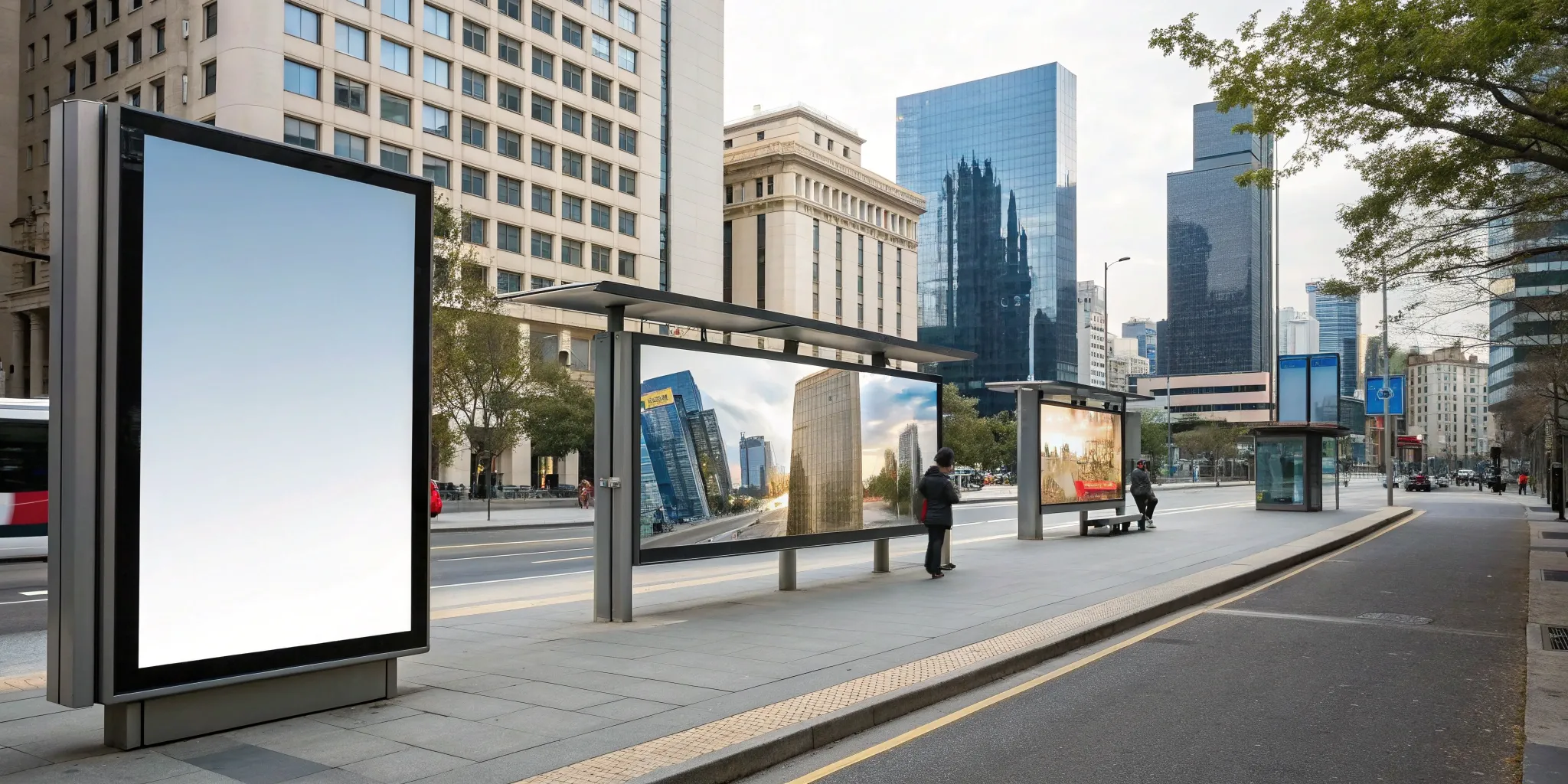
The most powerful ads meet people where they already are—at the gym, in the doctor’s office, or at their favorite restaurant. This is the core strength of place-based media. Instead of just shouting a message from a roadside, you can integrate your brand into the daily environments of your target audience. This is where the concept of an impression becomes so much more meaningful. In these high-dwell-time locations, you’re not just getting a glance; you’re getting genuine attention. Let’s explore what makes high-quality out of home advertising impressions and how you can leverage them to create more impactful campaigns.
Key Takeaways
- Think Quality, Not Just Quantity: An OOH impression is a calculated “opportunity to see,” not a raw traffic count. It already factors in visibility and audience behavior, so focus on the quality of these refined impressions to understand your campaign’s true potential.
- Match Your Message to the Moment: The most effective ads reach people when they are relaxed and receptive. Prioritize place-based media in high-dwell-time locations like fitness centers or medical offices to ensure your message is not just seen, but actually absorbed.
- Connect Physical Ads to Digital Results: Use modern measurement tools to prove your OOH campaign’s impact on business goals. By linking location data to online actions, you can demonstrate how your ads drive website visits, app downloads, and sales, calculating a clear return on investment.
What is an OOH Impression, Really?
If you come from a digital marketing background, the term “impression” is second nature. But in the world of out-of-home (OOH) advertising, an impression means something quite different. It’s not a simple server call or a pixel firing on a screen. An OOH impression is a sophisticated metric that estimates the opportunity for your ad to be seen in the physical world. It’s the foundational currency we use to plan, buy, and measure the impact of campaigns that connect with people on the move. Understanding what goes into this number is the first step to building a truly effective OOH strategy.
The Core of OOH Measurement
At its heart, an OOH impression tells you the total number of times your ad is likely to be seen. This goes far beyond just counting the cars that pass a billboard. Modern OOH measurement considers crucial factors like the ad’s visibility, typical traffic and pedestrian movement patterns, and the demographic makeup of who is in the area. Instead of relying on raw traffic counts, today’s OOH metrics are refined with layers of data to create a much more accurate picture of your ad’s potential audience. It’s a calculated opportunity to see, not just a guess based on volume.
Why Impressions Matter to Your Campaign
For media buyers and brand managers, impressions are the key to smart planning. This metric allows you to compare different advertising options on a level playing field and get clear, measurable results from your OOH investment. When you understand the potential impressions a specific location can generate, you can make informed decisions about where to allocate your budget for maximum impact. Impressions are the building block for other critical metrics like reach, frequency, and CPM (cost per thousand impressions), giving you the data you need to justify your spend and demonstrate the value of your campaign to stakeholders.
OOH vs. Digital Impressions: What’s the Difference?
The biggest distinction between OOH and digital is the delivery model. Unlike online ads, which are typically served to one person at a time, OOH ads are a one-to-many medium. A single, well-placed ad can be seen by hundreds or thousands of people. OOH measurement has evolved significantly from its early days of manual car counting. New technology and data sources now help us understand audiences with incredible precision. This is especially true for place-based media, where ads are positioned in high-dwell environments like gyms or medical offices, reaching specific, captive audiences when they are most receptive.
How Do You Calculate OOH Impressions?
Calculating out-of-home impressions has moved far beyond simply counting the cars that drive past a billboard. Today, it’s a sophisticated process that blends established data with modern technology to create a reliable estimate of how many times your ad was likely seen. Think of it less as a raw tally and more as a carefully constructed “opportunity to see” (OTS). The industry uses a multi-layered approach to move from a general traffic count to a qualified impression, giving you a much clearer picture of your campaign’s potential audience. This method ensures that when you invest in OOH, you’re basing your decisions on data that reflects real-world human behavior, not just abstract numbers. By understanding these layers, you can better appreciate the value of each impression and plan campaigns that truly connect with people in the right place at the right time.
Starting with Traffic and Audience Data
The foundation of any impression calculation is traffic data. This is the base number of people who have the potential to come into contact with your ad. For traditional roadside billboards, this data often comes from local transportation authorities. For place-based media, it’s based on visitor counts, ticket sales, or membership data provided by the venue, whether it’s a fitness center, a medical office, or a community hub. This initial count gives you a starting universe of potential viewers, but it’s just that—a start. It doesn’t tell you who these people are or if they actually noticed your ad, which is why it’s the first of several steps in the process.
Applying Standardized Impression Multipliers
Once you have the raw traffic count, the next step is to refine it with impression multipliers. These are standardized factors that adjust the raw numbers based on the specific context of the ad placement. The formula considers variables like dwell time (how long people stay in the area), the format of the ad, and for digital screens, the length of the ad loop. For example, an ad in a doctor’s waiting room, where dwell time is high, will have a different multiplier than a poster someone walks past in a busy hallway. These multipliers help create a more accurate picture by accounting for the environment’s impact on a person’s opportunity to see and absorb your message.
Layering in Mobile and Location Analytics
This is where modern technology really sharpens the focus. By using aggregated and anonymized mobile location data, we can understand how audiences actually move through a space and interact with the world around them. This information reveals detailed travel patterns, showing where people come from, where they’re going, and how they behave in and around a specific venue. This layer of data helps validate and enrich the initial traffic counts, providing deeper demographic and behavioral insights into the audience your ad is reaching. It’s a key component of the industry-standard methodologies used to ensure OOH measurement is both accurate and insightful.
Adjusting for Ad Visibility and Placement
The final step involves adjusting for the ad’s visibility. Just because someone is in the vicinity of an ad doesn’t guarantee they saw it. Visibility adjustment factors, often called “likelihood-to-see” metrics, account for real-world conditions like the ad’s size, its angle to the viewer, potential obstructions, and the speed at which people are moving. An ad placed at eye-level in a well-lit, uncluttered environment will have a higher visibility score than one that’s partially obscured or positioned far from the main line of sight. This final filter turns a potential “opportunity to see” into a much more realistic and valuable impression count.
What Makes an OOH Impression Effective?
An impression count tells you how many people could have seen your ad, but it doesn’t tell you the whole story. The real question is, did the impression actually make an impact? Not all impressions are created equal. A fleeting glimpse of a billboard from a speeding car is worlds away from an ad viewed for several minutes by a relaxed customer in a waiting room. The effectiveness of an OOH impression hinges on its quality, which is determined by a mix of context, relevance, and engagement.
An effective impression is one that reaches the right person, in the right place, at the right time, with the right message. It’s about creating a meaningful connection that sticks with the viewer long after they’ve walked away. This is where the environment plays a crucial role. Placing your ad in a setting where your target audience is already receptive and has time to absorb your message transforms a simple view into a powerful branding moment. Understanding these qualitative factors is the key to designing an OOH campaign that doesn’t just generate numbers, but delivers real results.
The Impact of Location and Placement
Where you place your ad is arguably the single most important factor in its effectiveness. An impression is only valuable if it happens in a context that makes sense for your brand. This is the idea behind proximity targeting—placing ads near specific points of interest, like retail stores, competitor locations, or community hubs. For instance, an ad for a new protein shake will land with much more impact inside a fitness center than it will on a generic bus shelter.
This is the core strength of place-based media, which focuses on integrating ads into the daily environments of a target audience. By choosing venues where consumers live, work, and play, you ensure your message is not just seen, but seen in a relevant setting, which can significantly influence purchasing decisions.
Audience Demographics and Dwell Time
An effective impression connects with the right audience. It’s not enough to just be seen; you need to be seen by people who are likely to be interested in your product or service. Modern OOH audience measurement goes beyond simple traffic counts to analyze the demographic and behavioral characteristics of the people being exposed to your ad. This allows you to target specific groups with much greater precision.
Equally important is dwell time—the amount of time a person spends in view of your ad. High-dwell-time environments, like doctor’s offices, salons, or cafes, provide a captive audience. People in these locations are often relaxed and looking for a distraction, making them far more receptive to your message than someone rushing through a busy transit station.
Creative Design and Ad Visibility
Even with the perfect location and audience, your ad won’t be effective if it’s poorly designed or hard to see. Visibility is a foundational element of a quality impression. Factors like the ad’s size, its position relative to eye level, and potential obstructions all play a part. Impressions are often refined using data on these visibility factors to provide a more realistic picture of who actually saw the ad.
Your creative needs to be bold, clear, and concise to capture attention quickly. The design should be tailored to the environment—vibrant and energetic for a bar, calm and professional for a healthcare facility. A compelling visual and a straightforward message ensure that when someone does see your ad, the impression is memorable and easy to understand.
Traffic Patterns and Environmental Factors
The flow of people and the surrounding environment constantly shape an ad’s effectiveness. Measuring OOH impressions can be complex because every location, from a roadside to a shopping mall, has unique traffic patterns. An effective campaign considers these nuances, such as the difference between pedestrian and vehicle traffic or peak hours versus off-hours.
Environmental factors also matter. Is the ad well-lit at night? Is it placed in a high-energy, cluttered space or a quiet, focused one? By understanding the context in which your ad will be seen, you can make smarter decisions. Place-based media often provides a more controlled and predictable environment, allowing your message to cut through the noise and connect with people during meaningful moments in their day.
How Do Reach and Frequency Fit In?
Impressions give you a great sense of your campaign’s total exposure, but they don’t paint the full picture. To truly understand how your OOH campaign is performing, you need to look at two other critical metrics: reach and frequency. Think of these three metrics as a team. Impressions tell you the what (total views), while reach and frequency tell you the who (unique viewers) and the how often (repeat views). Getting a handle on how these elements work together is key to planning a campaign that doesn’t just get seen, but gets remembered. A campaign that hits the right audience (reach) the right number of times (frequency) is one that will drive real results.
Reach vs. Impressions: A Quick Breakdown
It’s easy to mix up reach and impressions, but the distinction is simple and important. Impressions are the total number of times your ad is likely to be seen by an audience. Reach, on the other hand, is the number of unique people who see your ad at least once. Imagine an ad in a local fitness center that gets 1,000 impressions in a week. If the same 100 people came in to work out multiple times, your reach is 100, not 1,000. While impressions measure the sheer volume of ad views, reach measures the breadth of your audience. Both are valuable, but they tell you very different things about your campaign’s scope and penetration within a target market.
Why Frequency Matters for Message Recall
Frequency is the average number of times a person is exposed to your ad. This metric is where the magic of message retention happens. It’s one thing for someone to see your ad once; it’s another for them to see it multiple times during their daily or weekly routine. High frequency builds familiarity and trust, which is crucial for driving brand recall and influencing future purchasing decisions. This is a major advantage of place-based media, where ads in high-dwell environments like gyms or medical offices are seen repeatedly by a consistent audience. That repetition ensures your message sinks in and stays top-of-mind when it matters most.
Striking the Right Balance for Your Campaign
So, should you prioritize high reach or high frequency? The answer depends entirely on your campaign goals. If you’re launching a new product or announcing a grand opening, you might want to maximize reach to get the word out to as many people as possible. But if you’re trying to change consumer behavior or promote a complex offer, you’ll need higher frequency to make sure the message sticks. The most effective OOH advertising strategies find the right balance for the brand’s specific objective. A well-planned campaign ensures you’re not only reaching enough people but also reaching them enough times to make a lasting impact.
Common Hurdles in Measuring OOH Impressions
Measuring the impact of your OOH campaigns has come a long way, but let’s be honest—it’s not always a walk in the park. Unlike tracking a click, quantifying the experience of seeing a poster in a coffee shop is more complex. As you plan your media spend, it’s helpful to understand the common challenges you might face in getting a clear picture of your impression data. Knowing these hurdles upfront helps you ask the right questions and choose partners who have the right solutions.
Navigating Fragmented Data and Privacy Rules
One of the biggest headaches is piecing together data from different places. You might have traffic counts from one source, mobile data from another, and venue-specific information from a third. Making these disparate datasets talk to each other to form a cohesive picture is a significant technical challenge. On top of that, the rules around data privacy are constantly changing. Regulations like GDPR and CCPA limit how audience data can be collected and used, which means getting a granular view of who saw your ad requires careful, compliant methods. It’s a balancing act between getting detailed insights and respecting consumer privacy in advertising.
The Cost and Complexity of New Tech
The technology available for OOH measurement is impressive. We’re talking about WiFi tracking, multi-sensory devices, and camera-based analytics that can provide incredibly precise data on how people interact with your ads. The catch? This tech can be expensive and complicated to set up and manage. For many advertisers, the investment required to deploy these advanced tools across a large-scale campaign is a major barrier. This is why working with a media partner who has already integrated these technologies into their network can give you access to top-tier measurement without the hefty price tag or operational burden.
Proving Attribution in Omnichannel Campaigns
Your OOH campaign is likely just one piece of a larger marketing puzzle. When you’re also running social media, search, and display ads, how do you prove it was the poster in the gym that led to a website visit or a sale? This is the classic attribution challenge. Connecting a real-world ad exposure to a digital action requires sophisticated marketing attribution models that can link anonymous mobile IDs to conversion events. While the industry has made huge strides here, clearly demonstrating the direct impact of OOH in a multi-channel strategy remains one of the most complex parts of campaign reporting.
The Lack of Real-Time Reporting
If you’re used to the instant feedback of digital ad platforms, the reporting pace in OOH can feel a bit slow. While digital OOH offers more immediate data, many traditional and place-based campaigns rely on post-campaign analysis to deliver the full performance picture. This lag can make it difficult to make quick adjustments or optimize your strategy mid-flight. You can’t always A/B test creative in the same way you would online. This is why comprehensive proof-of-performance reporting after the campaign is so critical—it provides the validated insights you need to refine your approach for the future.
How Technology is Improving OOH Measurement
For years, measuring out-of-home impressions felt more like an art than a science. But that’s changing fast. Thanks to new technologies, we can now get a much clearer and more accurate picture of who sees your ads and what actions they take afterward. This shift means OOH is becoming a more accountable and data-rich channel, giving media buyers and brand managers the insights they need to justify their spend and refine their strategies. These advancements are closing the gap between physical and digital advertising, making OOH a more powerful component of any integrated campaign by providing the concrete data needed to prove its value.
Tapping into Mobile and Geolocation Data
One of the biggest game-changers in OOH measurement is the use of anonymized mobile and geolocation data. Think about it: nearly everyone carries a smartphone. By analyzing aggregated, privacy-compliant data from mobile apps—like navigation, weather, or social media—we can understand real-world movement patterns with incredible detail. This allows us to see how many people pass by a specific billboard, bus shelter, or even an ad inside a gym. It moves beyond simple traffic counts to provide a dynamic view of audience density and behavior, helping you verify that your message is reaching the right people at the right time.
The Role of Programmatic Buying and Targeting
If you’re familiar with buying digital ads, then programmatic OOH will feel like a natural evolution. This technology automates the buying, selling, and delivery of ads on digital screens. For advertisers, it brings a new level of flexibility and efficiency to the OOH world. Instead of lengthy negotiations for specific placements, you can use a self-serve platform to launch campaigns across multiple networks and venues. More importantly, programmatic platforms consolidate different measurement data sources, making it easier to target specific audiences and adjust your campaign in near real-time based on performance.
Using Sensors and WiFi for Accurate Counts
In place-based environments like fitness centers, medical offices, or restaurants, we can get even more precise. Advanced tools like multi-sensory trackers, WiFi analytics, and camera-based sensors allow us to measure consumer traffic and engagement with a high degree of accuracy. These technologies can provide exact data on how many people entered a specific area, how long they stayed (dwell time), and their general traffic flow. This is a huge leap from traditional estimation models, giving you concrete numbers on the audience your ad is reaching within a specific, high-engagement venue.
Integrating OOH with Digital Campaign Analytics
The ultimate goal is to understand how OOH advertising impacts your broader business objectives. Technology now makes it possible to connect physical ad exposure to digital actions. By cross-referencing location data with online activity, we can measure how many people who saw your OOH ad later visited your website, downloaded your app, or searched for your brand online. This omnichannel approach to attribution finally allows you to see the direct influence of your OOH campaigns on digital conversions, proving its value and helping you calculate a more accurate return on investment.
Maximize Your OOH Campaign’s Impact
Understanding what an impression is and how it’s calculated is the first step. The next is using that knowledge to build a campaign that truly connects with your audience and delivers on your business objectives. It’s not just about getting your ad seen; it’s about getting it seen by the right people, in the right context, and then being able to measure what happens next. Let’s walk through how to make your OOH impressions work harder for you.
Set Realistic Goals and KPIs
Before you launch any campaign, you need to define what success looks like. Are you aiming for brand awareness, driving foot traffic to a new store, or promoting a limited-time offer? Your goals will determine your key performance indicators (KPIs). While impressions are a foundational metric, your focus should be on quality over quantity. Modern OOH metrics are refined using data on visibility, movement patterns, and demographic filtering to give you a much clearer picture of your audience. Set specific, measurable goals, like increasing brand recall by 15% in a target zip code or driving a 10% lift in website visits from a specific market.
Measure Campaign Performance and ROI
Once your campaign is live, you need a plan to track its performance against your KPIs. The process of Digital Out-of-Home Audience Measurement involves analyzing audience behavior, demographics, and reach to gauge your campaign’s effectiveness. You can use tools like brand lift studies, geo-targeted mobile data, and unique promo codes to connect your OOH ads to consumer actions. This helps you move beyond impressions to understand the real-world impact and calculate a more accurate return on your investment, whether that’s measured in sales, leads, or brand sentiment.
Avoid These Common Measurement Mistakes
With so much data available, it’s easy to get overwhelmed or focus on the wrong things. A common mistake is treating all impressions as equal without considering the context or audience dwell time. Another is failing to establish a clear attribution model before the campaign starts. The good news is that a major expansion of data solutions has enhanced marketers’ capabilities significantly. To avoid these pitfalls, partner with experts who can help you integrate OOH data with your broader marketing analytics and focus on the metrics that align directly with your campaign goals.
Get Better Impressions with Place-Based Media
If you want to generate more effective impressions, think beyond the billboard. While traditional OOH is great for broad reach, place-based media delivers your message to a captive audience in high-dwell-time environments. Think about reaching people in fitness centers, doctor’s offices, restaurants, and community centers—places where they are relaxed and more receptive to your message. This hyper-targeted approach ensures your impressions aren’t just seen, but absorbed. By placing your ads in the context of your audience’s daily lives, you create a more meaningful connection and drive a much stronger impact.
Related Articles
- Out of Home Place Based Media Advertising
- DOOH infographic – Digital Out of Home Advertising-All Points Media
- DOOH infographic ver6 4_08_2019 – Digital Out of Home Advertising-All Points Media
- DE OHS – DUI Real Time – Digital Out of Home Advertising-All Points Media
- All Points Media: OOH Advertising Experts | About Us
Frequently Asked Questions
Why is an impression in a gym or doctor’s office considered more valuable than one on a highway? The value of an impression comes down to context and attention. An ad seen from a car moving at 60 miles per hour is a fleeting glance. In contrast, an ad in a place-based venue like a fitness center or a waiting room reaches a captive audience. People in these environments have significant dwell time, meaning they are present, relaxed, and often looking for something to engage with. This makes them much more receptive to your message, allowing for a deeper and more memorable connection with your brand.
How reliable is the data used to calculate OOH impressions? Calculating OOH impressions is a highly sophisticated process that goes far beyond simple traffic counts. The industry relies on a multi-layered approach that combines verified data from sources like transportation authorities and venue visitor counts with aggregated, anonymous mobile location data. This information is then refined with visibility factors that account for the ad’s size, placement, and potential obstructions. While it’s an estimation of the opportunity to see, it’s a data-driven one built on established, industry-accepted methodologies.
If my campaign gets a million impressions, does that mean a million different people saw my ad? Not necessarily. This is the key difference between impressions and reach. Impressions represent the total number of times your ad was likely seen, which includes repeat viewings by the same people. Reach, on the other hand, measures the number of unique individuals who saw your ad at least once. A high impression count could mean you reached a huge number of people once, or a smaller, more targeted group multiple times. Both metrics are important for understanding your campaign’s performance.
Why can’t I get real-time impression data for my OOH campaign like I do for my online ads? The nature of measuring exposure in the physical world is fundamentally different from tracking a digital click. While some digital OOH networks can provide faster reporting, most place-based and traditional campaigns rely on post-campaign analysis to provide a complete and accurate picture. This process involves gathering and validating data from multiple sources to ensure the final numbers are reliable. This deliberate pace ensures you get a comprehensive report that truly reflects your campaign’s performance.
How do I know if my OOH impressions are actually leading to sales? Connecting a physical ad to a final sale is the classic attribution challenge, but technology has made it much easier. We can measure the impact of OOH impressions by analyzing subsequent consumer actions. This is often done through brand lift studies, which survey audiences about brand recall, or by tracking increases in website traffic and mobile app downloads from the specific geographic areas where your ads are running. Using unique QR codes or promotional offers in your creative also provides a direct way to link your OOH ad to a purchase.