
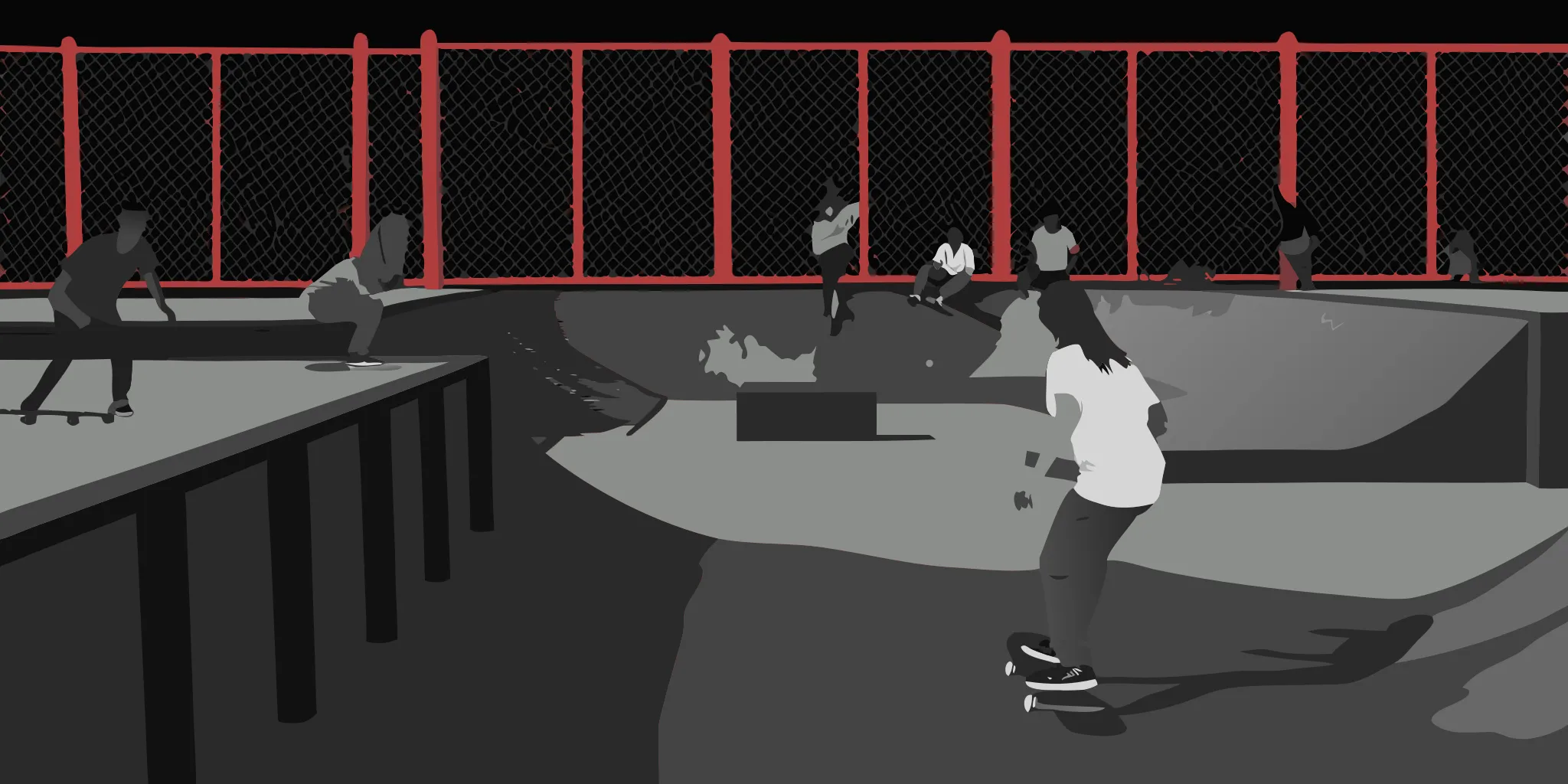
Skate park advertising gives brands a way to join an active community in a setting where riders, friends, families, and spectators spend meaningful time. The opportunity is not simply to place a logo near a ramp. A strong campaign chooses formats that fit the park, respects the audience and skate culture, and gives media buyers a clear plan for execution and measurement.
Planning a local, regional, or nationwide campaign? Share your project idea with All Points Media to start building a custom skate park network.
This guide covers the decisions that matter to media planners and brand teams, from format selection and creative concepts to brand safety and proof of performance. It complements All Points Media’s skate parks advertising overview with a practical framework for turning the venue into a campaign plan. Brands can also extend their reach with mobile advertising options that bring the message to additional high-traffic locations.
Why Skate Parks Belong in a Place-Based Media Plan
Skate parks bring together an interest-based audience in a physical environment built around participation. Riders often stay for extended sessions, while friends, parents, and community members watch from designated viewing areas. This makes the setting fundamentally different from a quick roadside impression.
For media buyers, the value is contextual relevance. Athletic apparel, footwear, entertainment, quick-service restaurants, beverages, wireless services, financial education, community programs, and other suitable categories can connect their message to activity, creativity, and local culture. The setting can also support public-service campaigns related to safety, health, education, and community resources.
Skate park media can work as a focused venue category or as one component of a broader place-based media strategy. A brand might use parks to add youth and active-lifestyle context to a multi-venue advertising network, reinforce a nearby retail opening, support an event, or build a repeat presence across priority markets.
Who Does Skate Park Advertising Reach?
The audience extends beyond skateboarders alone. Depending on the location, time, season, and park programming, exposure may include BMX riders, scooter riders, spectators, parents, event attendees, recreation staff, and nearby community members. That mix makes location-level planning more useful than relying on a single broad demographic assumption.
Media buyers should define the intended audience in terms of both people and moments. Useful planning questions include:
- Is the campaign meant to reach active teens and young adults, parents, or the broader community?
- Does the message fit everyday practice sessions, organized events, or seasonal programming?
- Which markets, neighborhoods, or retail trade areas matter most?
- Should skate parks stand alone or complement fitness, recreation, entertainment, and community venues?
- What action should a person reasonably take after seeing the message?
Because skate parks may include minors, campaigns need a particularly careful audience and creative review. A plan should avoid inappropriate categories, manipulative messaging, or creative that depends on sensitive personal attributes. The right goal is to be relevant to the environment without treating every visitor as the same person.
Skate Park Advertising Formats to Consider
The best format is the one that is visible, durable, safe, and approved for a specific park. Availability varies by venue, so planners should treat the following as a format menu rather than a promise that every option is available everywhere.
Fence Wraps and Perimeter Displays
Fence wraps can create a broad visual presence along the edge of a park. They are well suited to simple, high-contrast creative that can be understood from a distance. Perimeter displays can also frame spectator areas or key approaches without interrupting activity.
These placements require careful material selection and secure installation. Creative should preserve sightlines, and the final plan must follow venue rules and safety requirements.
Viewing-Area and Spectator Signage
Benches, viewing zones, and gathering areas can provide natural dwell time. Messaging in these locations can carry more detail than a large perimeter unit, especially when the audience is waiting or watching. This may be a useful place for a concise campaign message, a clear call to action, or a scannable code when approved by the venue.
Ramp-Adjacent and Course-Level Media
Some parks may permit media on or near selected course features. These placements can feel closely integrated with the environment, but they also demand the strictest safety and approval process. Nothing should interfere with riding surfaces, change how a feature performs, create glare, obstruct visibility, or distract riders at a critical point.
A safer creative principle is to use approved surfaces that are visible in context while remaining outside the rider’s functional path. Venue operators and installation specialists should make the final placement decision.
Event and Activation Media
Competitions, demonstrations, workshops, and community events can create opportunities for temporary displays, branded gathering areas, sampling where permitted, or an experiential component. Event media is most effective when the brand contributes something useful to the day rather than merely occupying space.
Activation plans should account for staffing, permits, product restrictions, weather, cleanup, and any additional consent requirements related to photography or attendee participation.
Multi-Format Networks
A campaign does not have to rely on one unit type. A perimeter display can establish broad visibility, viewing-area media can explain the message, digital place-based advertising solutions can add motion and flexibility, and an event component can create direct engagement. The format mix should follow the objective, not the other way around.
Campaign Ideas That Fit the Environment
Strong skate park campaign ideas respect the setting and make the message useful, timely, or culturally appropriate. They do not need to imitate skate culture to earn attention.
Local Retail and Opening Support
Brands with nearby locations can use a defined park network to build awareness within relevant trade areas. The creative might introduce a new store, highlight a nearby location, or connect an approved offer to the neighborhood. Geographic planning should prioritize parks based on market goals and practical proximity rather than simply choosing the largest possible list.
Product Launches for Active Lifestyles
A skate park can give an active-lifestyle launch a credible physical context. Media can introduce the product visually, while an approved event or demonstration can provide a deeper experience. The message should remain simple enough to understand in motion and should not imply an endorsement from riders or the venue unless one has been formally secured.
Entertainment and Cultural Releases
Film, gaming, music, and live-event campaigns may find an audience among park visitors, particularly when the creative connects to shared interests. A phased campaign can build early awareness, concentrate activity around a launch date, and remain visible afterward to reinforce recall.
Community and Public-Service Messages
Local services, safety programs, education initiatives, and public-health campaigns can use the setting to deliver practical information. The most effective public-service creative gives visitors one clear message and one clear next step, with language appropriate for a mixed-age audience.
Market Tests Before a Larger Rollout
A regional or local skate park advertising program can help a team test creative, operational requirements, and market response before considering a wider network. Establish the decision criteria in advance so the test answers a real planning question.
Need help turning a campaign idea into an executable network? Send All Points Media your target markets, timing, audience, and objectives.
How to Plan a Skate Park Advertising Campaign
A media plan becomes more reliable when strategy, venue procurement, production, installation, and reporting are considered together. The following sequence keeps the idea connected to real-world execution.
1. Define the Objective and Next Action
Start with one primary objective, such as awareness, store visitation support, event attendance, community education, or launch visibility. Then define the action the creative should encourage. A campaign built for broad recognition needs a different message and measurement framework than one asking viewers to visit a nearby location.
2. Build the Network Around Audience and Geography
Select markets based on campaign priorities, then evaluate venue fit within those markets. Consider neighborhood context, seasonal use, event calendars, and whether other venue categories should extend coverage. All Points Media builds custom networks rather than forcing every campaign into a fixed inventory list.
3. Match Creative to Format and Viewing Distance
Large units need bold imagery, short copy, and immediate brand recognition. Displays near viewing areas may support a little more explanation. If the plan uses a QR code or short URL, provide a reason to use it and make sure the placement supports safe, stationary interaction.
Prepare creative variations when formats, dimensions, or market messages differ. Every execution should still feel like part of one campaign.
4. Confirm Approvals, Materials, and Installation Details
Venue approval is not a final checkbox. It shapes the placement, message, material, schedule, and installation method. Production specifications should address outdoor durability where relevant, while professional installation should protect the park, the media, and the people using the space.
5. Set the Measurement Plan Before Launch
Agree on success indicators, documentation requirements, and reporting cadence before media goes live. This helps the campaign team distinguish confirmed execution data from modeled audience estimates and downstream business signals.
Brand Safety and Youth-Audience Considerations
Brand safety in a skate park begins with category suitability and continues through creative review, placement, installation, and ongoing maintenance. A campaign that reaches a mixed-age audience should be held to a higher standard, not treated as an opportunity to use overly aggressive targeting.
- Use age-appropriate categories and creative. Review imagery, language, offers, and landing pages for a setting that may include minors.
- Avoid sensitive targeting assumptions. Plan around venue context and approved audience criteria without inferring sensitive personal information about individual visitors.
- Protect physical safety. Do not obstruct movement, sightlines, access points, instructions, or riding surfaces.
- Respect the venue and community. Follow operator standards, local requirements, and any rules for event participation, sampling, or photography.
- Plan for maintenance. Outdoor media should be monitored so damaged material can be addressed promptly.
- Keep claims supportable. Creative should not make promises that the brand cannot substantiate.
Brand suitability works in both directions. Advertisers need confidence in the placement environment, and venue operators need confidence that the advertiser will add an appropriate, professionally managed presence.
How Should Skate Park Advertising Be Measured?
Measurement should reflect the objective and separate what is directly verified from what is estimated. No single metric tells the full story, so buyers should use a practical combination of execution evidence, exposure estimates, and business outcomes.
Verify the Campaign Was Executed as Planned
Proof-of-performance documentation can confirm that approved placements were installed in the intended locations. Photo documentation, placement details, installation status, and campaign timelines create a reliable operational record. This is the foundation for every other measurement layer.
Understand Potential Exposure
Available venue information and agreed planning methods can help estimate impressions, reach, or frequency. These figures should be labeled accurately as estimates rather than presented as directly observed actions. Market coverage, campaign duration, venue traffic patterns, and format visibility all affect the model.
Connect Media to an Appropriate Response
Where the campaign calls for an action, teams can consider approved tools such as unique landing pages, QR codes, offer codes, event registrations, or geographic and time-based business analysis. Each method has limitations. For example, a QR scan captures only people who chose to scan, not everyone who saw the media.
Review Results Against the Original Decision
A useful recap does more than list numbers. It connects execution and response indicators to the campaign objective, notes relevant limitations, and identifies what the team should repeat or change in the next flight.
A Turnkey Approach to Skate Park Media
Skate park campaigns involve more than buying space. They require appropriate venue selection, local coordination, format planning, production, professional installation, campaign management, and reporting. Managing those pieces across multiple markets can quickly become complex.
All Points Media brings more than 30 years of place-based media experience to custom local, regional, and nationwide programs. Its turnkey model provides one partner from strategic network building and print production through installation and proof-of-performance reporting. Learn more about All Points Media and its approach to reaching audiences where they live, work, and play.
Ready to explore skate park advertising for an upcoming campaign? Submit your project idea and share your audience, markets, timing, and goals.