
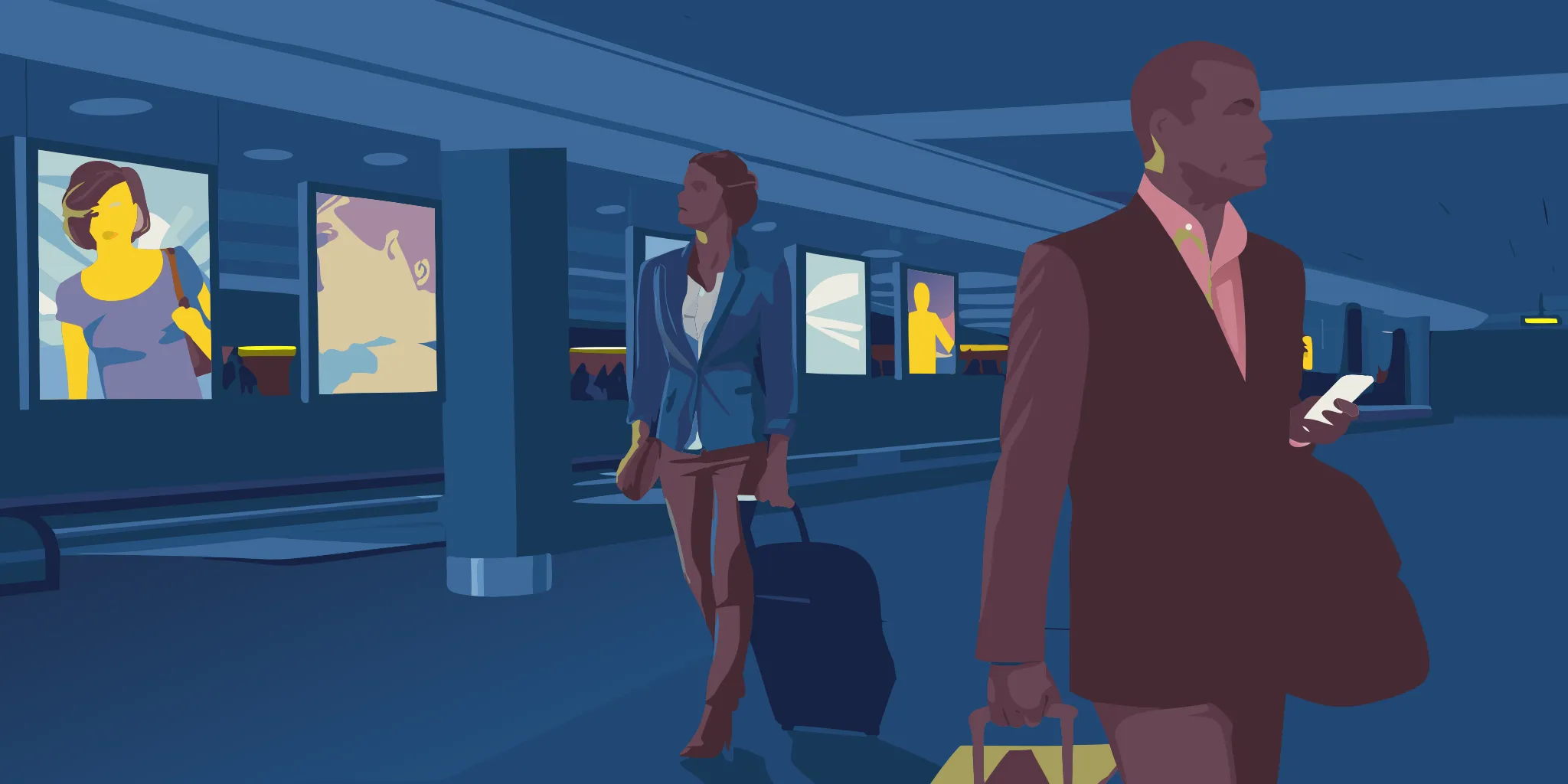
Airport advertising can be a smart way to reach travelers in a premium, high-dwell setting. It is also a specific kind of media buy with clear limits. For local and national brands, the better question is not whether airports are valuable. The better question is what role they should play inside a broader out-of-home plan.
Discuss a custom campaign with All Points Media: share your project idea.
Airport media works best when the campaign needs a polished environment, business or leisure travelers, and repeated exposure while people wait, walk, shop, or connect. It can support brand launches, financial services, tourism, technology, healthcare, and B2B campaigns that benefit from a premium travel context.
But airport advertising is still fixed to airport inventory, airport traffic patterns, and airport approval timelines. If the goal is deeper local reach, more venue control, or a tighter match to audience behavior, a custom place-based network may give buyers more flexibility.
This guide compares airport placements with broader place-based media options so media buyers can choose the right mix. Ask better budget questions, and plan a campaign around actual audience moments.
Airport advertising: what buyers are really buying
Airport advertising is paid media placed along the passenger journey, from entry and security to gates, baggage claim, and ground transport. Media buyers are not simply reserving signs. They are buying access to a planned sequence of places where travelers wait, move, and make choices.
Formats along the passenger journey
The format mix can include digital out-of-home screens, large static placements, banners, wall wraps, and experiential activations. Each option serves a different role. A wall wrap can establish presence, while a digital screen can deliver a short message in a busy zone.
Placement matters as much as format. A security queue, gate hold area, and baggage carousel create different viewing conditions. Buyers should match creative length and message depth to the setting. They should also decide whether the campaign needs broad airport presence or selected touchpoints.
Dwell time and useful attention
Dwell time gives brands room to communicate, but time alone is not the product. The real value is useful attention within a defined part of the trip. One airport study found that a 10% rise in dwell time was linked to a 5% rise in non-aeronautical revenue. The airport dwell-time research also found different effects across food, beverage, and retail revenue.
This makes context central to the media plan. Travelers scan for directions, check flight details, wait for boarding, and decide how to spend time. A CDC airport signage study found that directional prompts may encourage travelers to walk to their gate instead of riding a train. That example is not an ad result. It does show why clear messages at the right point can guide action.
Audience quality and premium context
For buyers, audience quality is more than a broad claim about travelers. It comes from the setting, the route through the terminal, and the reason people are there. Airports can support brand awareness, product introductions, service reminders, and calls to action when the placement fits the moment.
Airports also feel premium because the environment is controlled and the journey has structure. Travelers pass through a limited set of zones. Large formats can build stature, while digital units can keep the message brief and timely. Experiential formats can invite a more active response when space and operations allow.
The strongest plan starts with the campaign goal, not a list of available units. Buyers should define the audience, terminal zones, message role, and proof needs before selecting formats. That planning logic also applies to broader place-based advertising strategies, where venue context shapes how people see and use a message.
When airport media is a strong fit
Audience and brand fit
Airport advertising works best when the traveler profile matches the campaign goal. It is a practical choice for brands seeking business travelers, decision-makers, and frequent flyers. B2B campaigns can use the setting to build familiarity before a sales conversation begins. Financial services brands can also explain a clear offer, such as a travel benefit or business banking service.
The airport setting can support premium positioning without relying on a hard sell. Travelers move through a planned journey, then wait at check-in, security, gates, and baggage claim. That gives brands room to use a short sequence of messages. The aim is not to fill every available surface. It is to choose placements that fit the audience, terminal flow, and campaign objective.
Awareness across markets
Airport media is also a strong fit for national awareness campaigns. It can help a brand maintain a consistent message across major travel markets while adapting creative for each location. Tourism campaigns can use arrival placements to reach visitors as they plan transportation, dining, attractions, or lodging. Departure placements can support future travel ideas and destination recall.
For media buyers, the useful question is where the airport fits within a wider plan. A campaign may pair airport placements with place-based advertising strategies that extend reach beyond the terminal. This approach can support regional launches, seasonal travel periods, and campaigns tied to major business or leisure destinations.
Dwell time and timely prompts
Long dwell time makes airport media useful when a message needs more than a passing glance. Research on U.S. airports found that dwell time positively influences non-aeronautical revenue. The same study linked longer dwell time with food, beverage, and retail spending. That makes the setting relevant for offers that travelers can act on during the trip, as described in airport dwell-time research.
Point-of-decision contexts matter too. A concise prompt near a gate, baggage claim, retail area, or ground transport zone can guide the next step. The message might direct travelers to scan a code, visit a nearby location, or consider a service. A CDC airport study found that directional signs may prompt travelers to walk to their gate instead of riding a train.
The fit is weaker when the audience is too broad or the call to action has no link to the travel journey. Start with the traveler segment, the market, and the decision point. Then select a bespoke mix of placements that supports the media plan rather than treating airport inventory as a generic buy.
Where airport advertising can fall short
Airport advertising can offer long dwell time and a premium setting. It is not the right answer for every media plan. A strong buy starts with the campaign goal, not the prestige of the venue. Media buyers should weigh reach, timing, audience fit, and cost before reserving airport inventory.
Fixed inventory and audience fit
Airport placements are tied to a specific terminal, concourse, or traveler path. That structure can limit flexibility when a campaign needs wider local coverage or a tighter audience match. A premium location still may not reach enough people in the neighborhoods where the brand needs results.
Passenger movement also changes the value of each placement. Research on airport layout found that terminal design affects how passengers dwell and interact with commercial amenities. The study covers linear, finger pier, and concourse designs in its airport terminal analysis. A media plan should look beyond airport traffic totals and ask where the audience will see the message.
Costs, approvals, and campaign timing
Airport advertising costs can vary by airport, placement, format, and campaign length. That makes early scoping important, especially when a plan includes several markets. Buyers should compare each placement against the reach and frequency the campaign needs. A high-profile screen is not automatically the best use of budget.
Creative timing deserves the same care. Airport campaigns can require review steps before a message goes live. Buyers should confirm lead times, file rules, production needs, and approval windows before setting a launch date. This is important for short promotions, seasonal offers, or campaigns that need frequent updates.
Message placement matters as much as creative quality. CDC research on airport prompts found that directional signs may guide travelers toward walking instead of riding a train. The broader lesson is practical: the message must appear where the traveler can act on it.
When broader local coverage matters
An airport audience can be valuable, but it may be too narrow for a campaign built around local saturation. A regional brand may need repeated exposure near stores, offices, health centers, or community destinations. A public service campaign may need coverage across daily routines, not only travel moments.
In those cases, airport inventory can still play a supporting role. The wider plan may need place-based advertising strategies that match the audience across more settings. This approach helps buyers balance airport visibility with the local reach needed to support campaign goals.
- Check whether traveler traffic matches the intended audience.
- Compare airport visibility with the need for local repetition.
- Confirm creative review and production timelines before launch.
- Choose the environment that fits the goal, not the environment with the most prestige.
Airport placements vs broader place-based networks
Different roles in the media plan
Airport advertising gives brands a focused way to reach travelers during a defined part of their journey. It can support a launch, a business traveler campaign, or a message tied to travel. The setting matters because people have time to notice signs and screens.
That context can shape behavior, not just awareness. A CDC study of airport directional signs found that prompts may encourage travelers to walk to their gate instead of riding a train. The lesson for media buyers is practical: a well-matched message can work harder when it appears at the right moment.
A wider venue strategy
Airport placements serve a clear purpose, but they are one part of a broader out-of-home plan. All Points Media builds custom networks around campaign goals instead of treating every buy as a fixed inventory package. Its place-based advertising strategies can reach people in the settings that fit the audience and message.
The network spans more than 100,000 leased venues across more than 50 venue categories. That scale gives planners room to select a useful mix, rather than force a campaign into a single setting. A financial brand may need commuter touchpoints, while a health campaign may call for community-based venues.
Quick comparison: airport placements offer a premium travel setting, while broader place-based networks can be built around selected venues, markets, and audience moments. Airport media is strongest when the airport journey is central to the brief. A custom network is stronger when the buyer needs more control over venue mix, local reach, or audience context.
| Factor. | Airport media. | Place-based network. |
|---|---|---|
| Best use. | Premium travel reach. | Custom audience reach. |
| Venue mix. | Airport locations. | Selected venue categories. |
| Geography. | Airport markets. | Chosen local markets. |
| Planning model. | Defined inventory. | Built around goals. |
Choosing the right network shape
The choice is not airport advertising or place-based media in every case. Airport media may be the right fit when travel context is central to the message. A broader network is useful when the campaign needs repeated contact across a market, several audience segments, or multiple venue types.
Execution also changes the planning burden. All Points Media handles strategy, procurement, creative production, installation, and performance reporting as a turnkey service. This reduces the work of managing separate venue partners while keeping the plan tied to the original brief.
Accountability matters after the plan moves into the field. Proof-of-performance reporting helps buyers confirm that placements were installed as planned. Bi-weekly integrity checks add another layer of oversight for longer campaigns. That process gives teams a clear record of delivery across selected venues.
Buyers should start with audience behavior, geography, and the action the campaign should prompt. Then they can decide whether airport inventory stands alone or works within a wider network. Reviewing the differences between place-based media options can help teams choose the right mix for each market.
How should media buyers evaluate airport advertising costs?
Airport advertising costs should be judged against the campaign plan, not a generic price list. A quote can change with the airport tier, terminal, placement, format, and term length. It can also change when a brand requests category exclusivity or a larger share of voice. Start by defining the audience, market coverage, and campaign goal.
Cost drivers in the media plan
Static panels, digital screens, experiential activations, and terminal takeovers require different scopes. Static formats may involve printing and installation. Digital placements may support new creative versions during the term. Experiential programs can add staffing, permits, storage, and on-site logistics. A takeover may combine several formats and locations into one coordinated presence.
Ask the media partner to separate the media cost from production, installation, removal, and any creative adaptation. The quote should also state the campaign term, airport tier, terminal coverage, rotation details, exclusivity limits, and reporting plan. That breakdown makes different proposals easier to compare.
Value beyond the lowest rate
A low rate does not answer the main buying question: will the placement support the campaign objective? Consider where travelers encounter the message, how long they may see it, and whether the format fits the call to action. Airport layout can shape dwell and spending patterns, according to airport dwell-time research. Placement context matters when two proposals appear similar on paper.
Media buyers should also decide whether airport inventory is the only answer. Some briefs call for a custom network around the traveler, commuter, or regional audience. In those cases, compare airport placements with broader place-based advertising strategies. The useful comparison is not airport media versus everything else. It is each option’s fit with the target audience and campaign goal.
A practical proposal checklist
Before approval, request a clear plan that shows what the investment includes. Review the proposal line by line.
Start with airport tier, terminal, concourse, and exact placement locations. Then confirm the format, campaign term, production needs, install costs, creative update process, reporting cadence, and photo proof.
Use the same checklist for every vendor response. Then compare total campaign cost, not the media line alone. A complete airport advertising proposal should show what runs, where it runs, how long it runs, and how execution is checked. This approach helps buyers avoid hidden scope gaps and choose the plan that best fits the brief.
High-dwell venue categories that can extend the buy
Airport advertising can anchor a campaign, but the journey does not end at baggage claim. A wider venue plan can carry the same message into places where people wait, shop, eat, work out, or complete routine tasks. The right extension is not a generic substitute for an airport placement. It is a custom layer built around the audience, market, and campaign goal.
Healthcare, fitness, and retail settings
Healthcare settings can add useful reach around waiting rooms, pharmacies, and other patient-facing spaces. Fitness venues can support wellness, healthcare, sports, and lifestyle campaigns. Retail locations can bring the message closer to a purchase decision. Each category gives the creative a new job while keeping the campaign theme consistent.
Start with the audience behavior, not a preset inventory list. A planner can use place-based advertising strategies to build a network around the people the brand needs to reach. That may mean a focused mix of healthcare and fitness venues in one market. In another market, retail may carry more weight.
Restaurants, government, and community venues
Restaurants and community spaces can extend exposure into local routines. Government-facing venues can be relevant for public service, healthcare, financial, or civic messages. These settings can also support clear prompts when the next action matters. The creative may ask people to visit a site, scan a code, or remember a local resource.
Context should shape that prompt. A CDC airport study found that directional signs may prompt travelers to walk to their gate instead of riding a train. The study also noted that similar prompts may work in other community settings. The lesson is practical: place the message where people can act on it.
Venue selection should follow the campaign goal. Restaurants may suit a message that benefits from repeat local exposure. Community locations may help a public information campaign reach people during familiar routines. Government venues can give service-based messages a useful context.
Mobile support around the fixed plan
Mobile billboard or AdVan options can connect airport advertising with selected neighborhoods, event zones, business districts, and venue clusters. They are useful when a fixed placement needs added market coverage or a timed street-level presence. A mobile unit can also support a launch, conference, store opening, or local event without replacing the core airport buy.
The best plan uses each channel for a clear reason. Airport media offers a premium travel setting. Place-based extensions add repeat exposure in selected daily environments. Mobile support can help join those touchpoints across a market. For a less common mix, planners can share a project idea and shape the venue plan around the brief.
That approach keeps the campaign coordinated. It also avoids the burden of managing unrelated venue vendors one by one. Creative, timing, market coverage, and reporting should work as one plan. The result is a bespoke network that complements airport advertising instead of diluting it.
How to plan a custom airport and place-based campaign
Airport advertising works best when it is planned as part of a wider journey. The airport can be a key anchor, while selected venues extend the message into daily life. A custom plan keeps each placement tied to the same audience, market, and campaign goal.
A five-step planning process
Start with the buying brief, not a fixed inventory list. The right airport role depends on who the campaign must reach and what should happen next. These five steps create a practical path from the initial brief to reporting.
- Define the audience and geography. Set the priority audience, markets, timing, and desired action. Note where people travel, work, shop, seek care, or spend time. This makes the plan more precise than a broad list of available placements.
- Choose the airport role. Decide whether the airport should build awareness, support a launch, prompt action, or reinforce trust. Then map the traveler’s path through the terminal. Placement should match that moment. A CDC airport signage study found that point-of-decision prompts can influence traveler behavior.
- Map complementary venues. Extend the idea beyond the terminal with a bespoke network of relevant locations. Review place-based advertising strategies that fit the same audience and market. A healthcare campaign may need different venue types than a retail launch or public service message.
- Confirm creative and production needs. List the formats, sizes, materials, install dates, and approval steps before launch. Decide whether digital messages need updates by market, time, or context. Keep each message clear enough to work in its setting.
- Measure proof-of-performance. Set the reporting plan before placements go live. Confirm what documentation the media buyer needs for each site. Add a review schedule so teams can verify that each placement remains active and in good condition.
One plan across multiple settings
The airport does not need to carry the full campaign alone. It can introduce the message at a high-value travel moment. Complementary venues can then add reach and repetition across the same market. This approach helps media buyers connect airport advertising with a custom-built place-based network instead of buying unrelated placements.
Venue choices should follow audience habits and campaign goals. They should not come from a standard package. That distinction matters when a plan crosses several markets or must support more than one audience segment.
Turnkey execution and clear reporting
All Points Media can manage strategy, procurement, creative production, installation, and reporting as one turnkey program. Its full-service model gives media buyers one point of accountability across the campaign. This reduces vendor coordination while keeping the plan aligned with the brief.
Proof-of-performance should be built into the plan, not treated as a final handoff. Photo documentation and placement checks give teams a clear record of execution. They also make it easier to address issues while a campaign is live.
Frequently asked questions about airport advertising
What is airport advertising?
Airport advertising is out-of-home media placed inside or around airports. Common formats include digital screens, static displays, wall wraps, banners, lounge media, jet bridge placements, and experiential activations.
How much does airport advertising cost?
Airport advertising costs vary by airport tier, placement type, campaign length, production needs, exclusivity, and reporting requirements. A buyer should compare the total campaign cost against audience fit, dwell time, frequency, and the role the airport plays in the media plan.
What types of airport advertising are common?
Common airport formats include digital out-of-home screens, static signs, baggage claim displays, banners, wall graphics, terminal wraps, airport lounge screens, and experiential brand activations.
When should brands consider place-based media instead of only airport media?
Brands should consider broader place-based media when they need more control over geography, audience context, venue type, or local saturation. A custom network can extend the campaign into healthcare, fitness, retail, restaurant, community, and other high-dwell environments.
Ready to plan a smarter out-of-home campaign?
Waiting too long can narrow your options and leave your media plan tied to placements that do not fit every market, audience, or campaign goal. Starting now lets your team compare airport opportunities with a custom-built place-based network before budgets, creative needs, and launch dates become harder to adjust. A clear plan today can reduce last-minute tradeoffs and keep each placement focused on the people and places that matter most to your brand.
Ready to move from a broad idea to a practical media plan for your next campaign? Contact All Points Media to discuss a custom campaign built around your goals, markets, and timeline. Request the right next steps for your team while planning time is still on your side.
Airport plans can be extended beyond terminal placements with mobile ADVAN Media vehicle advertising around priority markets. Digital integration can add flexibility through programmatic digital place-based advertising with APM Digital.>