
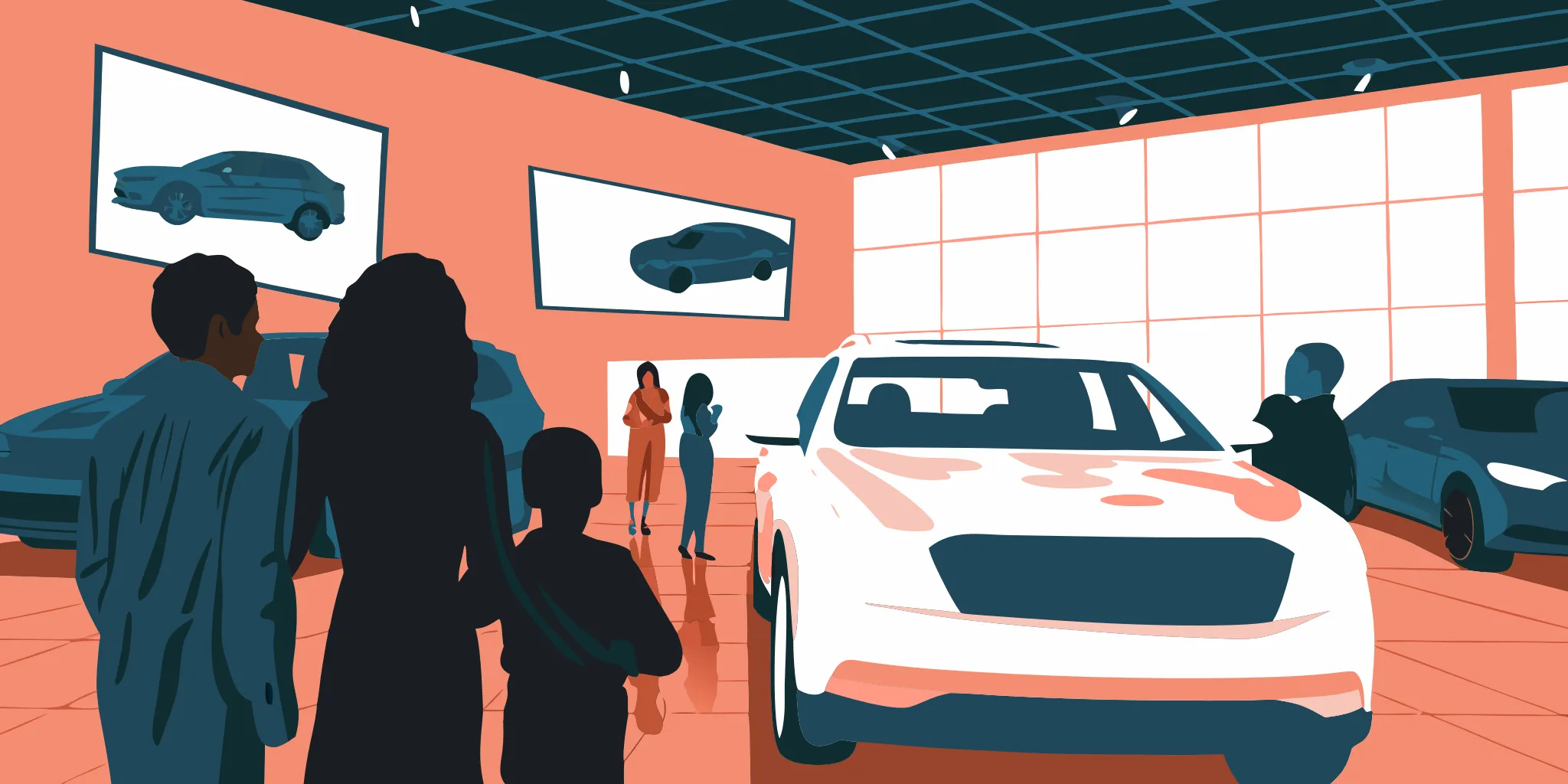
A dealership visit is more than a final step in the sales process. It is a concentrated opportunity to reach consumers who are comparing vehicles, evaluating fit, speaking with staff, and deciding what deserves serious consideration. Online research may narrow the field, but the showroom, service area, and customer lounge are where attention becomes immediate and tangible.
Automotive dealer advertising uses place-based media inside and around dealership environments to connect brands with in-market buyers during a high-intent, high-dwell moment. For media buyers, it adds a physical layer to digital and broadcast campaigns, reinforcing recall while consumers are actively engaged with automotive decisions.
Schedule a consultation with All Points Media to build a custom dealership advertising network that reaches in-market car buyers at the point of purchase.
All Points Media builds turnkey networks across high-dwell venues nationwide, managing strategy, venue selection, production, installation, and proof-of-performance reporting. That approach helps campaigns reach consumers where decisions are taking shape, not simply where impressions are available.
Why Automotive Dealer Advertising Matters for In-Market Buyers
Answer capsule: Automotive dealer advertising reaches consumers after awareness and research have narrowed the field, when a dealership visit turns consideration into a tangible product experience. By placing messages in a high-dwell environment, marketers can influence final questions, comparisons, and next steps while vehicle choice is still being evaluated.
Every vehicle purchase moves through multiple decisions
Automotive marketing does not begin at the showroom door. The funnel typically starts with broad awareness, then moves through model research, feature and price comparisons, financing consideration, dealer selection, purchase, and post-purchase loyalty. A vehicle is a high-involvement purchase, and consumers may spend months researching options before committing. That extended consideration period makes consistent, multi-channel visibility important for maintaining recall as preferences develop.
Digital search, social media, video, and programmatic media are valuable earlier in the journey. They can introduce a model, answer questions, and drive qualified consumers toward a dealer location. However, the message still needs to work when the consumer is ready to inspect a vehicle, speak with staff, compare alternatives, or schedule a test drive. That is where dealership advertising adds a distinct layer to the media plan, providing a final connection point that digital alone cannot replicate.
The dealership visit closes the distance between interest and action
Consumers visit dealerships to evaluate attributes that are difficult to assess fully online, including physical fit, interior feel, visibility, controls, and overall driving experience. Research finds that dealership visits remain a critical part of the search process and provide substantial benefits in assessing product fit: consumer search and automotive dealership research documents this role.
That physical evaluation creates a valuable point of influence. A well-placed message can reinforce a vehicle benefit, clarify an offer, or direct attention to a complementary service. It also reaches people who have already invested time and effort in the category.
For media buyers, this is the strategic value of place-based media: it extends the campaign into the environment where purchase consideration becomes physical and immediate. Unlike traditional out-of-home formats that capture passing attention, dealership advertising works with intentional, goal-driven visitors who are already in the consideration phase.
Available Formats and Placements in Automotive Dealer Advertising
Answer capsule: Automotive dealer advertising can combine digital displays, signage, posters, and screens across the showroom. Service area, customer lounge, and finance office to reach consumers at distinct points in the dealership journey.
Showroom and customer-facing digital displays
Digital displays in the showroom support brand, product, and local-market messaging while consumers browse vehicles or speak with sales staff. Creative can be refreshed for seasonal campaigns, new-model awareness, service reminders, or complementary offers. Dealerships can rotate creative monthly or quarterly, keeping the showroom advertising aligned with the current incentive program or inventory mix. The placement is visible to active shoppers, but the message should remain simple enough to work alongside the in-person sales process.
Waiting-area and customer lounge signage
Waiting-area signage and customer lounge screens reach people spending time on site, including vehicle owners returning for maintenance and shoppers accompanying a buyer. These environments support larger-format creative, sequential messaging, or content designed for repeated exposure. The objective is to make dwell time useful for communicating with a defined local audience.
Service-bay posters and finance office placements
Service-bay posters put relevant messages in front of vehicle owners during maintenance visits, creating a natural context for automotive services or community offers. Finance office placements reach customers during a more individualized part of the purchase process, where trust-building messages are more appropriate than broad awareness creative. Each placement type serves a different stage of the customer relationship, from first-time shopper to repeat service visitor.
Dealer Authority’s comprehensive roundup of car dealership advertising ideas reinforces the value of coordinating service, retention, inventory, and campaign messaging. A carefully selected mix of dealership placements can complement broader place-based media and extend a campaign into a high-dwell environment.
| Placement | Audience | Typical Dwell | Creative Format |
|---|---|---|---|
| Showroom digital displays | Active shoppers, test-drive visitors | 15-45 min | Digital video, rotating slides |
| Waiting-area / lounge screens | Service customers, companions | 30-90 min | Sequential messaging, long-form content |
| Service-bay posters | Vehicle owners during maintenance | 30-90 min | Static print, durable signage |
| Finance office placements | Buyers completing financing | 45-60 min | Trust-building, concise copy |
| Test-drive circulation areas | Browsing and test-drive customers | 5-20 min | Brief brand reinforcement |
What Makes Dealership Environments a High-Dwell Advertising Channel?
Answer capsule: Dealership environments give automotive advertising more time and attention than fleeting OOH exposures. When consumers are waiting, comparing vehicles, or completing financing, a well-placed message can remain visible through a meaningful part of the purchase decision process.
Service and financing create valuable attention windows
A customer waiting for maintenance may remain on-site for 30 to 90 minutes, creating repeated exposure to screens, posters, and other permitted placements. The audience is not passing through. It has time to absorb a message and connect an offer or product benefit with an active automotive need.
The finance office offers a different but equally focused setting. Consumers may spend 45 to 60 minutes completing paperwork. Messaging positioned appropriately can support consideration without interrupting the transaction. In the showroom, browsing customers encounter advertising while comparing models, features, and accessories.
Context makes exposure more useful
Research on automotive consumer behavior reinforces why the physical dealership still matters: dealership visits provide product information and assessment that online research cannot fully replicate. Effective automotive marketing balances digital search with physical test drives and dealership consultations. All Points Media specializes in high-dwell advertising environments that make that physical context valuable.
For media buyers, the strategic advantage is deliberate attention. Dealership placements complement broader OOH and digital activity by reaching consumers at a high-intent moment with enough dwell time for the message to be noticed and remembered.
Talk to our team about automotive dealer advertising that places your brand in front of high-intent buyers during the dealership visit.
How to Integrate Place-Based Media With Digital Automotive Campaigns
Answer capsule: The strongest automotive campaigns connect digital discovery with physical dealership experiences. Search, social, programmatic, and audience-based tactics create awareness and consideration, while place-based media reinforces the message when shoppers are comparing vehicles or preparing to purchase.
Build awareness and consideration through digital channels
Digital media is well suited to the earlier stages of the automotive funnel. Paid search captures active demand, social introduces vehicles to defined audiences, and programmatic campaigns extend reach across relevant content environments. Because purchasing a vehicle involves extended research, a single exposure rarely carries the consumer from awareness to action. Automotive marketing is a multi-stage process that moves from awareness through purchase and loyalty, as outlined by Northwood University.
Close the distance to conversion with dealership placements
Once a shopper is inside the dealership, the context changes. Showroom displays and customer-lounge screens reinforce the same value proposition seen online while the consumer evaluates product fit and financing options. This alignment between digital and physical creative makes each channel more effective. A shopper who saw a model highlighted in a social campaign is more likely to engage with a showroom display featuring that same vehicle. And the in-person experience can deepen the interest that began online.
Campaign teams can retarget website visitors with dealership-specific messaging and use showroom creative that mirrors digital assets. Explore the industries served by All Points Media to see how place-based planning extends across consumer environments.
Build one coordinated message across every touchpoint
Integration works best when the audience, offer, visual system, and call to action are planned together. Use digital reporting to identify messages earning engagement, then adapt those insights for in-dealership displays. In turn, dealer-location exposure can inform follow-up audiences and creative sequencing. The result is a connected path from awareness to physical evaluation and purchase, without treating any channel as an isolated tactic. Media buyers who coordinate these touchpoints see stronger campaign cohesion across the full buyer journey.
How to Measure the Impact of Automotive Dealer Advertising
Answer capsule: Measure automotive dealer advertising by combining dealership activity, campaign response signals, customer recall, and sales timing. A disciplined measurement plan establishes a defensible baseline, connects exposure to identifiable actions, and uses proof-of-performance documentation to show where placements ran.
- Establish a dealership baseline. Before the campaign launches, document the metrics that describe normal performance at each location: showroom visits, service appointments, test-drive requests, leads, and vehicle sales. Record the measurement period, dealership changes, promotions, and inventory conditions. Without this context, a later increase is difficult to interpret.
- Deploy unique tracking by location. Give each dealership or creative variation a distinct response mechanism. QR codes can route visitors to location-specific landing pages, while personalized URLs and promotion codes identify the source of an inquiry. Keep the offer consistent enough to compare results.
- Ask customers how they heard about the dealership. Add a customer-intercept question to sales, service, and lead follow-up workflows. Offer automotive-specific response options alongside digital, search, and place-based advertising. Survey responses reveal assisted awareness that a last-click report misses.
- Compare exposure windows with sales activity. Align placement start and end dates with dealership traffic, lead volume, test drives, and sales data. Look for directional changes during the exposure window, then account for seasonality, pricing, and new model releases.
- Review proof-of-performance reporting. Request documentation confirming where and when the campaign ran. All Points Media provides full proof-of-performance reporting as part of its service, giving media buyers a structured record to compare with response and dealership data across industries served by All Points Media.
Frequently Asked Questions
What are the most effective automotive dealer advertising strategies?
The strongest strategy combines dealership placements with digital, search, social, and programmatic media. Use digital channels to build awareness, then reinforce the message with relevant creative in showroom. Service, and customer-lounge environments where buyers can engage with it during an active dealership visit.
How do you reach in-market car buyers effectively?
Build a coordinated campaign around the buyer’s decision journey. Target audiences before the visit, maintain message continuity across channels, and place ads where consumers spend time at the dealership. Creative should connect to a useful next step, such as exploring inventory or scheduling a test-drive.
What role does SEO play in automotive dealer advertising?
SEO helps a dealership appear when local consumers search for vehicles, services, and purchase-related information. It supports discovery before the visit, while place-based media reinforces brand and offer awareness after the consumer arrives.
How can dealerships measure place-based advertising performance?
Start with campaign objectives and baseline measures, then track engagement through location-specific QR codes, personalized URLs, or landing pages. Add customer-recall surveys and compare dealership activity over the campaign period. All Points Media provides proof-of-performance reporting for deployed placements.
How should dealerships integrate digital and physical advertising?
Use one audience strategy, message framework, and measurement plan across both environments. Digital media introduces the brand and drives consideration, while dealership advertising reaches consumers during browsing, service, and purchase conversations.
Build Your Automotive Dealer Advertising Network
All Points Media helps connect your brand with in-market audiences through thoughtfully planned placements in automotive dealership environments. A custom place-based network gives your campaign a clear role at the point of purchase while fitting into the broader media strategy you already have in place.
Contact All Points Media about automotive dealer advertising solutions for your next campaign.