
Bowling alley advertising gives brands a focused way to reach families, league players, young adults, and group-event guests while they are already gathered in a social venue. All Points Media’s bowling alley network supports local, regional, and national campaigns with placements around lanes, scoring tables, concourses, restrooms, and other high-dwell areas.
Talk to All Points Media about a bowling alley advertising campaign built around your audience, market, and media goals.
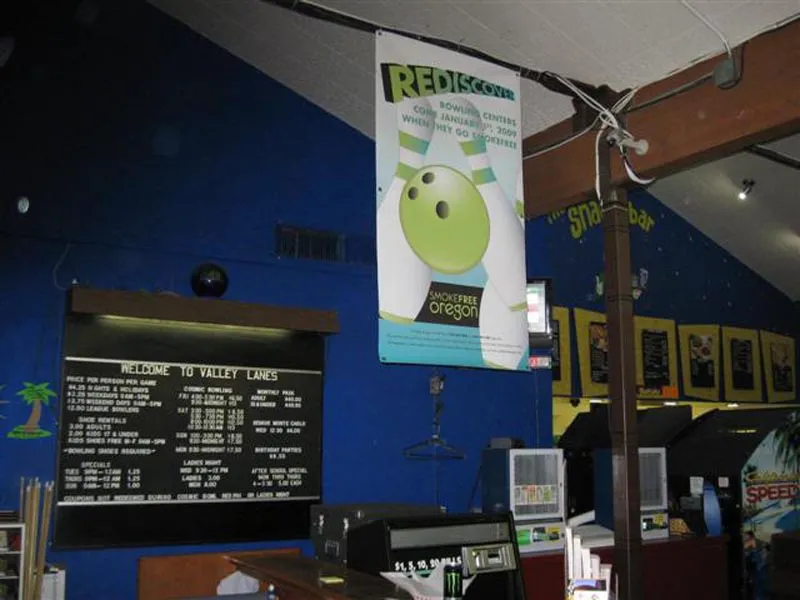
For media buyers, the value is not just the venue. It is the combination of audience context, dwell time, repeat visits, and turnkey execution. All Points Media can help brands select bowling centers by geography and audience fit, produce the creative, coordinate installation, and document campaign delivery with proof-of-performance reporting.
The strongest campaigns start with a clear plan for who needs to be reached, what message fits the moment, and which placements can support awareness, consideration, or direct response. The path begins with
What makes bowling alley advertising valuable?
Bowling alley advertising is valuable because it places brands inside a recreational environment with longer dwell time, repeat visitation, and multiple natural viewing points. All Points Media identifies bowling alleys as a recreation venue category with families, league players, and adults ages 25-54, plus typical dwell time of two to three hours per visit. That gives a brand more than a passing glance. It creates repeated exposure across the lanes, scoring tables, concourse, snack bar, and restroom path.Reaching a broad audience
Bowling centers bring together audience segments that are difficult to reach through a single traditional channel: families planning weekend outings, league participants with recurring weekly visits, young adults in social groups, and corporate or private-event guests. That blend makes place-based out-of-home advertising especially useful for brands that need both local relevance and repeated in-venue exposure. Media buyers can use the setting to align messaging with recreation, social connection, food and beverage occasions, or community participation.High engagement and focus
When people bowl, their attention naturally moves between the lane, ball return, scoring screen, seating area, and nearby walkways. That makes lane-side media and scoring-table placements especially useful for brand visibility. Since bowlers watch the pins and screens throughout the visit, bowling alley advertising formats can earn repeated exposure without forcing a message into the experience.Building community trust
Bowling alleys are often the heart of a town or city. They serve as hubs for social groups and local events. Brands that use these spaces can show they are part of the local area. This context helps a brand appear connected to the community instead of distant from it. Using indoor recreational facilities for ads lets a campaign become part of everyday local routines, from league nights to birthday parties and corporate outings.Bowling alley advertising formats brands can use
Strong campaign ideas usually combine format, audience, and moment. Common bowling alley advertising ideas include:- Lane-side awareness placements for family entertainment, CPG, restaurant, and retail brands.
- Scoring-table or settee-area ads for repeated exposure during game play.
- Lobby and concourse screens for high-reach entry, exit, and event traffic.
- Concession-area messaging for food, beverage, and retail tie-ins.
- Restroom or hallway placements for additional frequency outside the lanes.
- QR-code or short-URL creative for offers, store locators, sweepstakes, or lead capture.
Lane side and gameplay zones
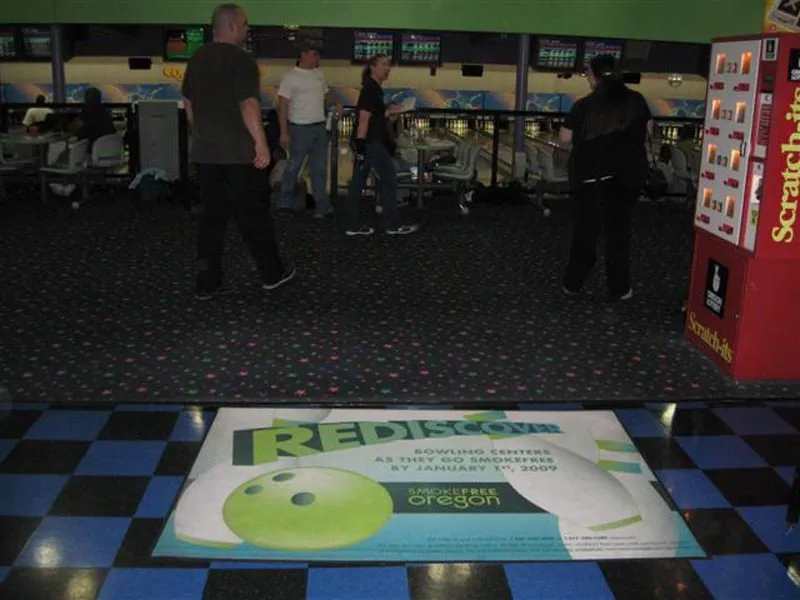
The lane area is the highest-attention zone in the venue because players repeatedly return to the same seating, scoring, and ball-return area throughout the visit. Lane-side signs, scoring-table placements, and adjacent graphics can keep a brand visible during natural pauses between turns. These formats are strongest when the creative is simple, visually distinctive, and easy to process from a seated or standing viewing position. Floor graphics in the settee or approach-adjacent areas can add scale without crowding wall space or digital screens. They are useful for product launches, seasonal campaigns, retail tie-ins, and directional offers because they sit directly in the guest path. The best executions use bold shapes and short copy, not dense claims that require prolonged reading.Lobby and concourse displays
The lobby and hallways are where everyone walks. Digital screens in these areas can play video or show bright slides. These screens are perfect for showing time-sensitive deals or news. Since these spots have high foot traffic, they are great for reaching everyone who enters the building, not just the bowlers. These indoor recreational facilities offer a mix of static and digital options for awareness, event promotion, and market-specific messaging. Table and snack bar ads reach people when they are taking a break. Many visitors spend time eating or drinking between games. Small signs on tables or at the food counter have very high dwell time. This is a good moment to share more details about a service. People are relaxed and have the time to read a bit more than they would on a quick walk-by.Event and mobile extensions
Sponsorships for league nights allow for deeper ties to the local community. These groups visit every week, so they see your brand often. You can also run event activations where people can try a product or talk to a brand rep. These live moments make a big impact. When you combine these with mobile ads, you can reach people on their phones while they are in the building. This gives the campaign a stronger connection between the venue experience and the next customer action.| Format. | Best Use. | Audience Moment. | Creative Note. |
|---|---|---|---|
| Lane Signs. | Brand Awareness. | During Active Play. | Use Bold Logos. |
| Digital Screens. | Event Promotion. | Entering Venue. | Short Video Clips. |
| Floor Graphics. | Direct Action. | Moving to Lanes. | Large Text. |
| Table Tents. | Product Details. | Dining or Resting. | Include QR Codes. |
| League Sponsorship. | Local Trust. | Weekly Socializing. | Community Tone. |
How to match campaign ideas to bowling alley audiences
Bowling centers draw many types of people each week. To get the most from place-based out-of-home advertising, match your message to the group in the building and the reason they are there. A family birthday party, a weekly league, a company outing, and a late-night social group can all pass through the same venue with different motivations. Audience-led planning helps creative, placement, and timing feel intentional.Reaching family groups and local leagues
Family groups often visit on weekends and during school breaks to spend time together. They spend many hours in the lanes and at the snack bar where your ads can reach them. Since kids and parents are both present, a single placement strategy can reach multiple household decision-makers. Table ads, lane-side signs, and snack bar media work especially well when the offer relates to food, entertainment, retail, family services, or local healthcare. League bowlers are their own group who come back each week and stay for a long time. These players often have loyalty to the center and to the surrounding community. Brands can use repeat reach over a season to build familiarity with a defined local audience instead of chasing one-time impressions. Because players continually return their attention to the game, ads near lanes, scoring areas, and ball returns have a built-in visibility advantage. For local campaigns, that placement choice can matter as much as the creative message itself.Engaging young adults and event groups
Young adults often visit in the evening for social nights or late-night bowling. They are often there with friends, dates, or larger social groups, which makes the environment useful for entertainment, QSR, beverage, retail, financial services, and app campaigns. Creative should match the energy of the night without looking like a generic billboard dropped into the venue. Birthday parties and office events bring in large groups that stay for a set time. These groups use almost every part of the center, from the front desk to the lanes. You can use floor graphics, concourse displays, or event-area signage to meet them as they move through the building. Like other indoor recreational facilities, bowling alleys offer concentrated group moments that are difficult to duplicate with standard roadside media.Attracting snack bar and arcade visitors
The snack bar is a hub for every guest who visits the center. People go there to buy drinks and pizza while they wait for their turn. This is a prime spot for food, beverage, CPG, delivery, and local restaurant brands to reach guests near an immediate consumption moment. Ads on table tents or near the counter can support awareness, trial, or direct response. Arcades and lounges attract people looking for more than just bowling. Younger kids spend time at the games while adults might relax in the lounge. Each area can support a different message. Lounge placements may suit adult-focused services, while arcade or family-zone placements can support entertainment, retail, or youth-oriented campaigns. Digital or motion-based creative can also help catch the eye in busy areas when it is used with restraint. The goal is not to overwhelm the room. It is to make the brand noticeable at moments when guests are already moving, waiting, or deciding what to do next.What creative works best in bowling alleys?
The best bowling alley advertising creative is simple, venue-aware, and easy to process from several distances. It should respect the social setting while giving guests one clear message to remember or act on. Explore All Points Media’s bowling alley advertising options for high-dwell recreation venues.Simple copy and strong visuals
Success in bowling alley advertising depends on clear and short messages. Guests are often balancing the game, food, conversation, and movement through the venue. Use concise copy, a recognizable visual system, and a single primary message. Strong contrast and large type help guests understand the ad from the lane, the settee area, or the concourse. Avoid dense copy or fine-print offers that require someone to stop playing to decode the message. Your ads should have a clear goal. Use one main image and one call to action so the campaign is easy to understand in a loud, active room. Since place-based out-of-home advertising relies on context, the creative should fit the fun mood of the venue while still looking polished enough for a national brand.Targeting high-dwell areas
Bowling alleys are unique because people stay for a long time. Most guests spend about two to three hours per visit at these spots. This high-dwell time allows for repeated exposure as people move between the lanes, snack bar, arcade, and restroom areas. To make the most of that time, place ads where people naturally look or pause, such as scoring tables, lane-side signs, digital screens, and high-traffic concourse zones. Focus on placements that align with the venue flow. In a bowling alley, that often means scoring screens, ball returns, seating areas, snack bar paths, restroom corridors, and event check-in points. These are the places where attention naturally concentrates, so the ad does not need to fight the room to be noticed.Family-friendly and helpful offers
The crowd in bowling alleys often includes families and league players. Creative should respect that mixed audience. Friendly, benefit-led copy often works better than aggressive sales language. A local pizza offer, a family healthcare message, an entertainment release, or a retail promotion can all feel relevant when the message matches the setting and the moment. Matching your look across different formats is also key. You might use floor art near the door and posters in the restrooms. Keeping the same look and feel helps build trust with the crowd. If you need help with your campaign, you can explore our venue network to understand where bowling alley placements fit within a broader recreation-media plan. Using the same colors, logo treatment, and offer structure across formats makes the campaign easier to remember.How should brands plan a bowling alley advertising campaign?
Planning a successful bowling alley advertising campaign requires more than choosing a format. Brands need to define the audience, geography, flight length, creative role, and measurement plan before installation starts. A full-service partner can then translate those requirements into a custom venue network, production plan, installation schedule, and reporting package.Set goals and find your people
Start by naming your main goal, such as selling more items or building trust. Since bowling centers attract many types of people, you must pick the spots that match your target market. You can choose to reach families during weekend play or young adults during league nights. This focus helps you pick the right places for your message. Ads set in active zones help people remember your brand much better than ads on the side. Research shows thatintegrated place-based signageshapes how people pay attention and remember what they see. By placing your brand where the action is, you stay in the minds of your audience long after they leave.Pick the best mix and build your ad
Next, choose the media types that fit your budget and goal. You might use floor graphics near the shoe rental or digital screens by the snack bar. Once you have a plan, create high-quality art that stands out in a busy room. A partner like All Points Media can help you manage the design and print work to make sure every ad looks great. Planning these steps ensures yourplace-based out-of-home advertising reaches the right eyes at the right time. Most campaigns follow a set path to get the best results from start to finish.- Set your goals.Decide if you want to drive traffic to a local store or build brand awareness in the city.
- Define your audience.Pick times and venue types to reach the people most likely to use your service.
- Choose your media.Select a mix of signs and digital screens to cover the best high-dwell spots.
- Create your brand art.Design bold art that people can read from a distance while they play.
- Print and set up.Work with a partner to print your ads and install them across your venues.
- Check your work.Use photos to verify that every ad is in the right place and looks good.
- Review and adjust.Look at your results to see what worked best and plan your next flight.