
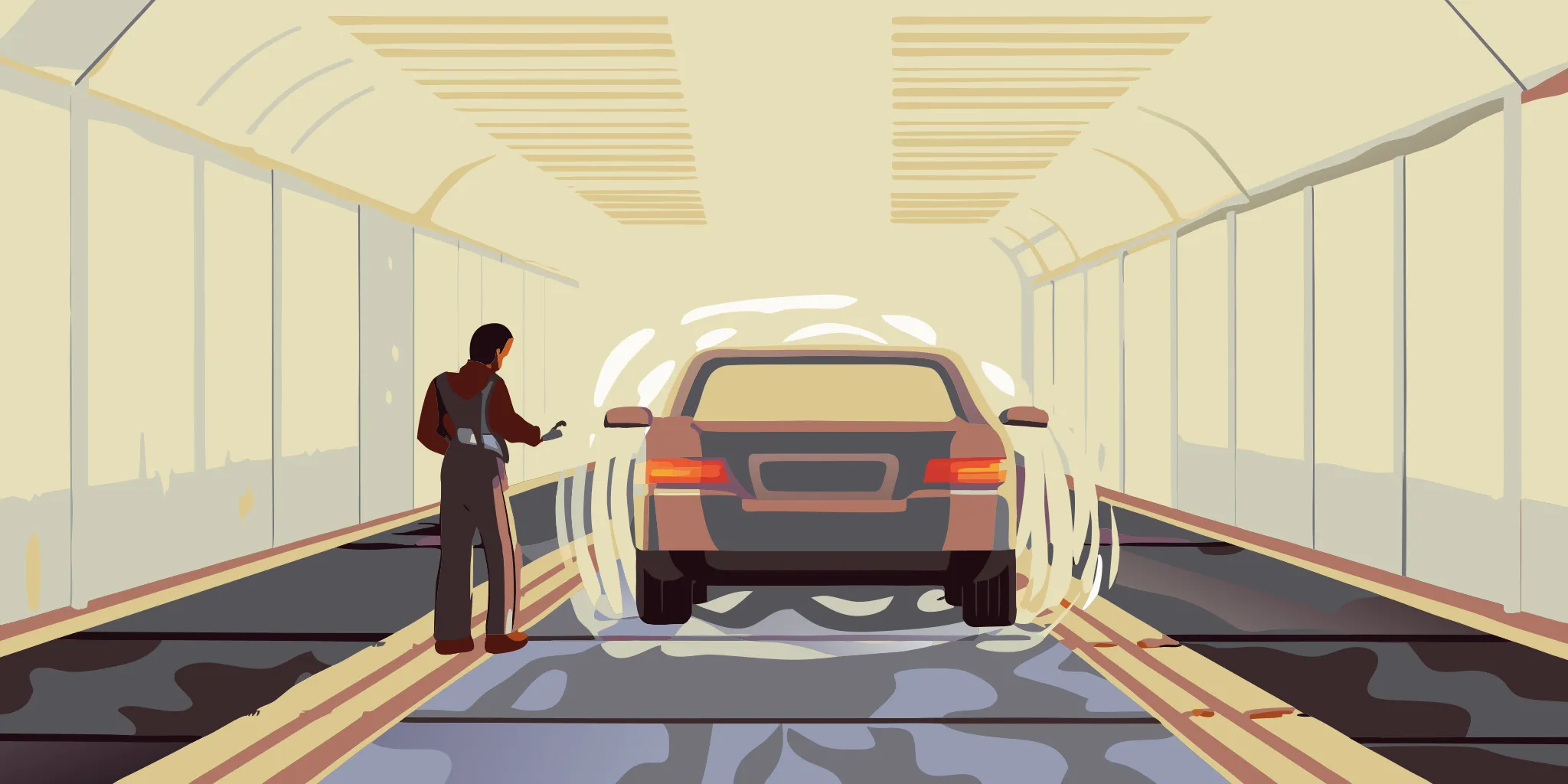
Drivers do not scroll past a car wash. They sit in line, move through the tunnel, wait for detailing, or stand near a pay station with several quiet minutes to notice what is around them. That makes car wash advertising a useful place-based media channel for brands that need more than a passing glance from local, repeat audiences.
Car wash advertising places brand messages in high-dwell car wash environments, including tunnels, waiting areas, pay stations, and service points. It helps media buyers reach drivers during routine visits, build local awareness through repeat exposure, and connect OOH spend to clear proof-of-performance reporting.
For agencies and brand teams, the value is not just that people wash their cars. The value is the context. The audience is local, vehicle-owning, often in an errand mindset, and physically present in a controlled environment. With the right venue network, creative format, and measurement plan, a car wash can turn routine dwell time into a practical media opportunity.
This guide explains where the channel fits, which advertisers can use it well, how formats differ, what drives campaign cost, and how to measure delivery without overstating results.
Why car wash advertising works for high-dwell driver reach
Car wash advertising works because drivers spend meaningful time in a contained location with limited distractions. The setting supports brand attention, local market relevance, and repeated exposure when customers return. It is strongest when the creative is simple, location-specific, and matched to the dwell moment.
Most roadside OOH has to win attention in seconds. Car wash media has a different advantage. Drivers are already stopped or moving slowly, and the environment gives them fewer competing messages than a highway, social feed, or crowded retail aisle.
High-dwell attention
A car wash creates natural waiting time. Drivers may pause at the entrance, sit in the tunnel, wait in a lobby, or spend time near vacuums and finishing areas. Each of those moments gives an ad more time to register than a fast roadside impression.
That does not mean the creative should be complicated. The best campaigns still use a clear brand, a simple offer or message, and a direct next step. Long dwell time gives the audience enough time to understand the message, but buyers should not treat the placement like a brochure.
Repeat local exposure
Car washes can also create repeat exposure. Many drivers use the same locations because they are close to home, work, a grocery route, or a regular errand path. When a message appears in that routine, it has a chance to become familiar without relying on one large burst of media.
This is why car wash advertising solutions can work for both awareness and local activation. A retail brand, healthcare provider, financial service, or automotive advertiser can reach people in a real-world setting that is tied to movement around a specific trade area.
Cleaner context than many media environments
Digital feeds are crowded. Traditional billboards can be missed at driving speed. In a car wash, the environment is slower and more contained. That makes it easier for a brand to own the moment, especially when the campaign uses multiple surfaces in the same site.
For media buyers, this is the planning advantage. The placement is not just an impression count. It is a location, a behavior, a dwell window, and a repeat pattern that can be mapped to the campaign’s geographic goals.
Car wash advertising formats buyers can use
Common car wash advertising formats include wall wraps, tunnel posters, digital screens, pay-station media, lobby placements, vacuum-area signs, and full-site takeovers. The right format depends on dwell time, sightline, campaign objective, creative complexity, and whether the buyer needs static impact or flexible digital updates.
Format selection should start with the viewer’s behavior at the location. A driver moving through a tunnel sees the environment differently than a customer standing in a lobby or using a vacuum station. Strong media plans match the message to the amount of time and attention available.
Static signs, posters, and wall wraps
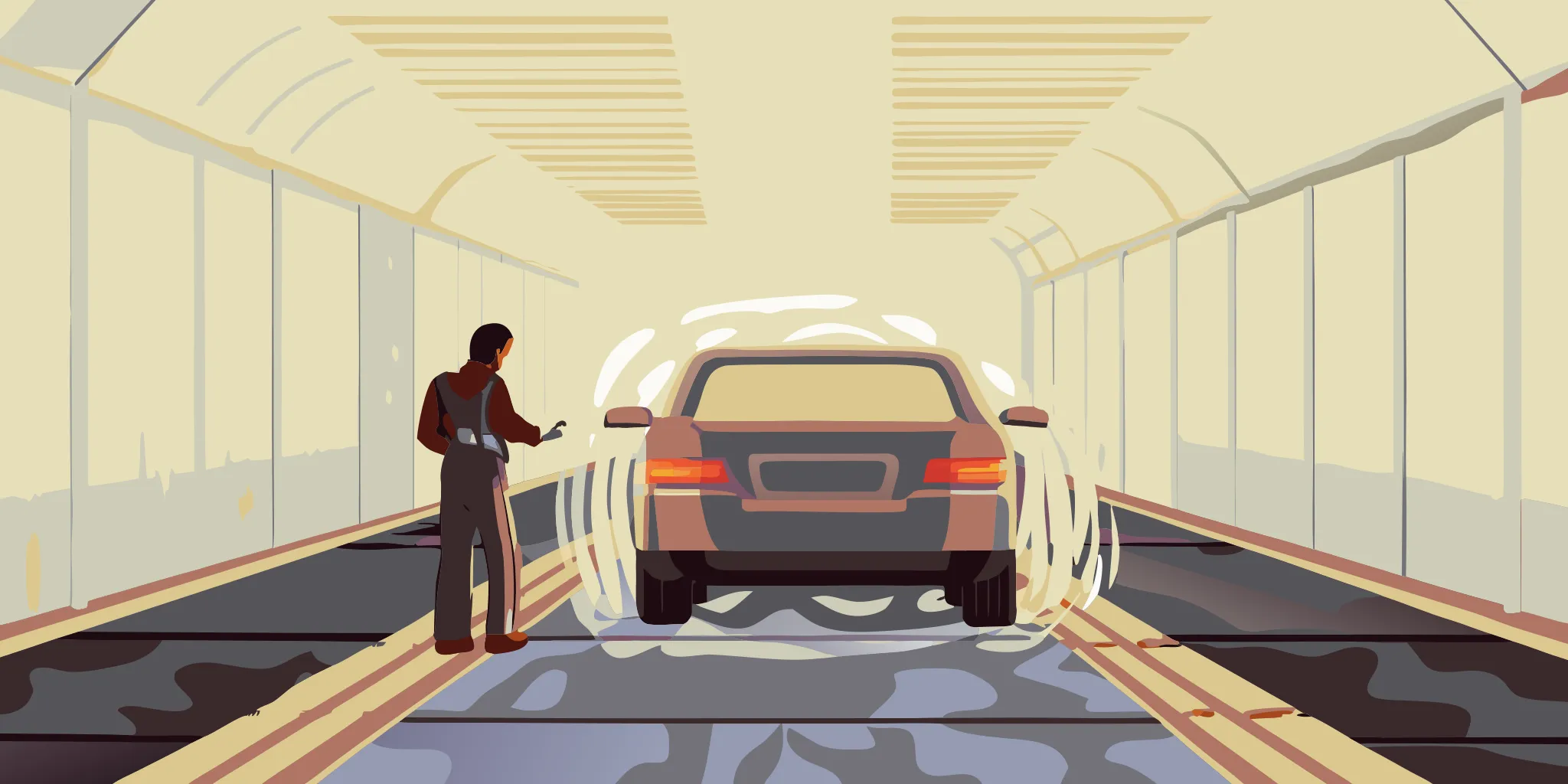
Static media works well when the campaign needs durable awareness. Wall wraps, tunnel posters, and bay signage can create a strong visual presence because they sit inside the environment instead of beside it. The message should be easy to process from a seated driver’s position.
These placements are useful for brand awareness, local store traffic, public information campaigns, and offers that do not need frequent creative changes. They also help buyers keep the same message in market long enough to benefit from repeat visits.
Digital screens and waiting-area media
Digital screens are better when the advertiser needs creative flexibility. A brand can rotate messages, localize by market, or align creative with seasonal timing. Waiting areas and lobbies are especially useful because viewers are not moving through the space as quickly.
Digital out-of-home inside a car wash can support product launches, time-sensitive promotions, public service announcements, and multi-message campaigns. Buyers should still keep each message concise because the screen may be one of several things competing for attention.
Pay-station and point-of-service placements
Pay-station media reaches customers at a decision point. This placement can be useful for retail, automotive, insurance, restaurant, financial, and local service advertisers because drivers are already completing a transaction and may be thinking about the next stop in their day.
Point-of-service creative should make the next action obvious. A QR code, short URL, offer code, or local store reference can connect the placement to direct response. Make the code easy to scan and send users to a mobile-ready landing page.
| Format | Best use | Planning note |
|---|---|---|
| Wall wraps | High-impact awareness | Use bold creative and minimal copy. |
| Tunnel posters | Repeated dwell exposure | Place messages where drivers naturally face forward or sideways. |
| Digital screens | Flexible and seasonal messaging | Keep each rotation short and readable. |
| Pay-station media | Direct response and local activation | Use a clear offer, URL, or QR code. |
| Full-site takeover | Market launches or brand dominance | Coordinate multiple surfaces for one campaign story. |
Which advertisers fit car wash audiences?
Car wash audiences fit advertisers that benefit from reaching local drivers during routine errands. Strong categories include automotive, insurance, retail, quick-service restaurants, healthcare, financial services, entertainment, government campaigns, and home services. The common thread is local relevance and a message that fits the driver’s next action.
The channel is not limited to automotive brands, but automotive relevance is a natural starting point. Drivers at a car wash are already thinking about vehicle care, convenience, and errands. That makes the environment useful for brands tied to mobility, local decisions, and household routines.
Automotive, insurance, and mobility brands
Auto service centers, tire retailers, dealerships, insurance carriers, and roadside assistance brands can use car wash media to reach an audience that is already engaged with vehicle maintenance. The message feels contextual rather than random.
For these categories, creative can focus on safety, convenience, seasonal needs, or local service access. The strongest campaigns avoid clutter and make the brand easy to remember when the driver needs the service later.
Retail, food, and CPG brands
Retail and food advertisers can use car wash locations to influence the next stop. Drivers may be running errands, heading home, or moving through a shopping corridor. A nearby restaurant, grocery promotion, coffee brand, or convenience store can connect the ad to an immediate action.
Consumer packaged goods brands can use the channel for frequency and local reinforcement. The goal is often not one instant purchase inside the car wash. The goal is to make the brand more familiar before the next store visit.
Healthcare, finance, and public sector campaigns
Healthcare providers, banks, credit unions, insurers, and public agencies can benefit from repeated local visibility. These categories often depend on trust, familiarity, and timing. A car wash placement lets the message appear in a familiar community environment.
Public sector campaigns can also use car wash media for health reminders, safety messages, local programs, or civic information. The channel works best when the message is short, useful, and easy to understand without extra explanation.
How should buyers plan local targeting and network scale?
Buyers should plan car wash advertising by defining target markets, priority trade areas, and relevant traffic patterns. They should choose formats by dwell behavior, then scale through a partner that can manage venue access, installation, and reporting across local, regional, or national campaigns.
A strong plan begins with geography. The campaign may need to reach one neighborhood, a metro area, a set of DMAs, or a national footprint. The best network strategy depends on where the audience lives, works, shops, and drives.
- Define the market. Start with the DMA, city, zip codes, or store trade areas that matter most.
- Match venue behavior to the objective. Use tunnel and waiting-area placements for awareness, and pay-station media for direct response.
- Prioritize repeat exposure. Favor locations where routine visits can support frequency over time.
- Plan creative by format. Do not use the same detailed message on every surface.
- Require proof of performance. Confirm that reporting will document installation, dates, markets, and location delivery.
Local and regional targeting
Local campaigns often need precision. A healthcare group may care about a specific service area. A restaurant chain may want to support stores in certain corridors. A financial services brand may want to reach households in selected zip codes.
In those cases, car wash advertising should be planned around the campaign’s real geography, not just the largest list of locations. A smaller network can outperform a larger one if the locations better match the audience.
National network execution
National campaigns require more than access to sites. They require consistent production, installation, campaign management, and reporting across many markets. That is where a turnkey media partner matters.
All Points Media positions its offering around alternative out-of-home networks, venue selection, print production, nationwide installation, campaign management, and proof-of-performance reporting. For media buyers, that reduces the operational burden of coordinating many individual locations.
What should buyers know about costs and measurement?
Car wash advertising costs depend on market size, number of locations, media format, campaign length, production requirements, installation needs, and reporting scope. Measurement should focus on delivery proof, market coverage, exposure quality, direct-response signals when used, and broader lift analysis when budget allows.
There is no responsible universal price for car wash media because the plan changes by market, format, scale, and campaign requirements. A few locations with static creative will not be priced like a multi-market digital and print program with custom reporting.
Cost drivers
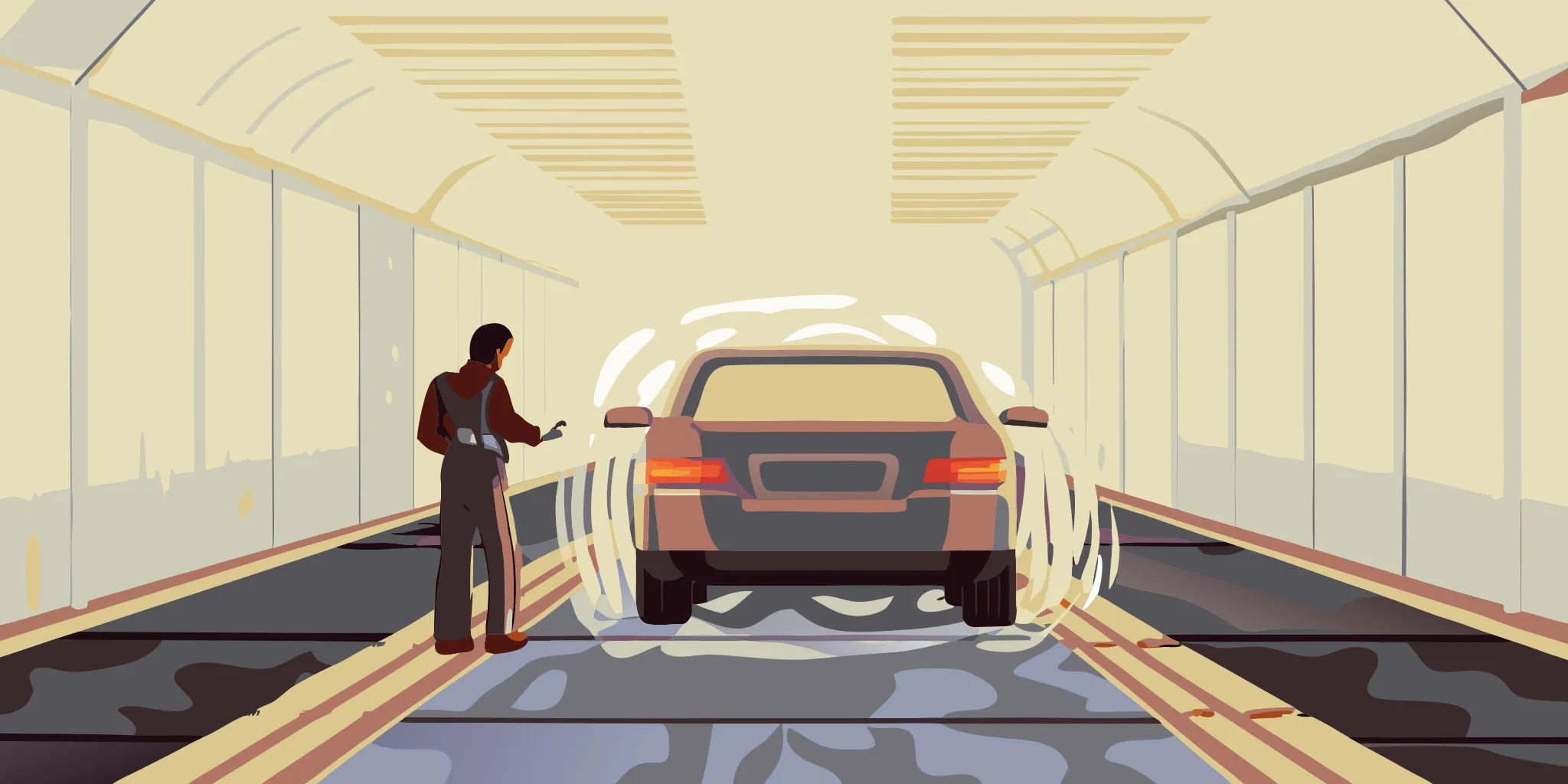
The main cost drivers are market demand, location count, format, production, installation, and campaign duration. Buyers should also consider creative versioning, local market customization, and reporting requirements. A campaign with many creative versions or custom installation needs will require more coordination.
Buyers should ask what is included in the proposal. Media, production, installation, maintenance, and reporting may be bundled or separated depending on the plan. Clear scope prevents confusion when comparing options.
Proof of performance
Proof of performance is especially important in place-based media because buyers need evidence that placements were installed correctly and ran for the expected period. This can include location lists, installation photos, run dates, and market summaries.
For All Points Media, proof-of-performance reporting is part of the value proposition. It gives agencies and brand teams a practical way to document delivery for internal stakeholders and clients.
Direct-response and lift measurement
Direct-response measurement can include QR codes, unique landing pages, short URLs, promo codes, call tracking, or store-level analysis where appropriate. These tools are useful, but they should be designed before the campaign launches so attribution is clean.
For larger campaigns, buyers may also consider brand lift, sales lift, or exposed-versus-control analysis. These studies can be helpful, but they need enough scale and clean methodology. When that is not feasible, focus on delivery quality, market relevance, and clear response signals.
How can agencies brief a car wash campaign?
Agencies should brief a car wash campaign with the target audience, markets, timing, budget range, preferred formats, creative requirements, measurement needs, and conversion path. A complete brief helps the media partner recommend the right venue network and avoid mismatched placements.
A better brief leads to a better plan. Media buyers do not need every answer before speaking with a partner, but they should be ready to explain the business goal and the audience. That helps the partner recommend formats and markets instead of simply quoting inventory.
Define the business objective
Start with the outcome. The campaign may need awareness, store traffic, lead generation, event promotion, public information reach, or support for a larger media plan. Each objective changes the format and measurement strategy.
If the goal is awareness, a high-impact wall wrap or tunnel presence may be the right fit. If the goal is response, pay-station media with a mobile landing page may matter more. If the goal is regional scale, network planning and execution quality become the priority.
Clarify audience and geography
Provide the target geography, demographic priorities, retail footprint, service areas, and any markets to exclude. If the advertiser has store locations, sales territories, or priority zip codes, those details should be included in the brief.
This is also the point to note creative requirements. A campaign may need different versions by market, language, product, or offer. The earlier those needs are known, the easier it is to plan production and installation.
Set the measurement plan before launch
Measurement should not be an afterthought. If a QR code, vanity URL, coupon code, or lift study is part of the plan, it needs to be built into the creative and reporting structure before the campaign begins.
Agencies should also ask how the partner documents delivery. A full-service alternative OOH program should make it easy to show where the campaign ran, when it ran, and what proof was collected.
Frequently Asked Questions
Are car wash ads effective for building brand recall?
Yes. Car wash ads can support brand recall because drivers spend several minutes in a focused setting and often return to the same wash location. The combination of dwell time, simple creative, and repeated exposure helps a message become familiar.
Can car wash advertising campaigns reach a national audience?
Yes. Campaigns can start in one local market and scale across regions or nationally when the media partner has the right venue access, installation process, and reporting system. All Points Media supports alternative OOH campaigns across many venue categories and markets.
How often do drivers visit car wash locations?
Visit frequency varies by weather, market, household behavior, and vehicle type. For planning purposes, the key value is repeat behavior. Many customers return to familiar locations, which gives brands more than one opportunity to be seen.
What should buyers measure in a car wash advertising campaign?
Buyers should measure whether the campaign delivered as planned, which markets and locations were covered, and what proof was collected. When direct response is part of the plan, QR scans, landing-page visits, promo codes, calls, and store-level signals can add more detail.
How do buyers know if ads were installed correctly?
Buyers should ask for proof-of-performance reporting. That may include installation photos, location lists, campaign dates, and market summaries. This documentation helps agencies confirm that the media ran as promised and gives clients clear evidence of execution.
Ready to reach drivers with car wash advertising?
All Points Media helps agencies and brands plan car wash advertising as part of a broader place-based media strategy. The team can support venue selection, custom network planning, production, installation, campaign management, and proof-of-performance reporting for local, regional, or national programs.
Car wash media works best when the placement, creative, market plan, and measurement approach are built together. All Points Media can help media buyers evaluate whether this high-dwell channel fits the campaign objective and how it should connect to the rest of the OOH plan.