
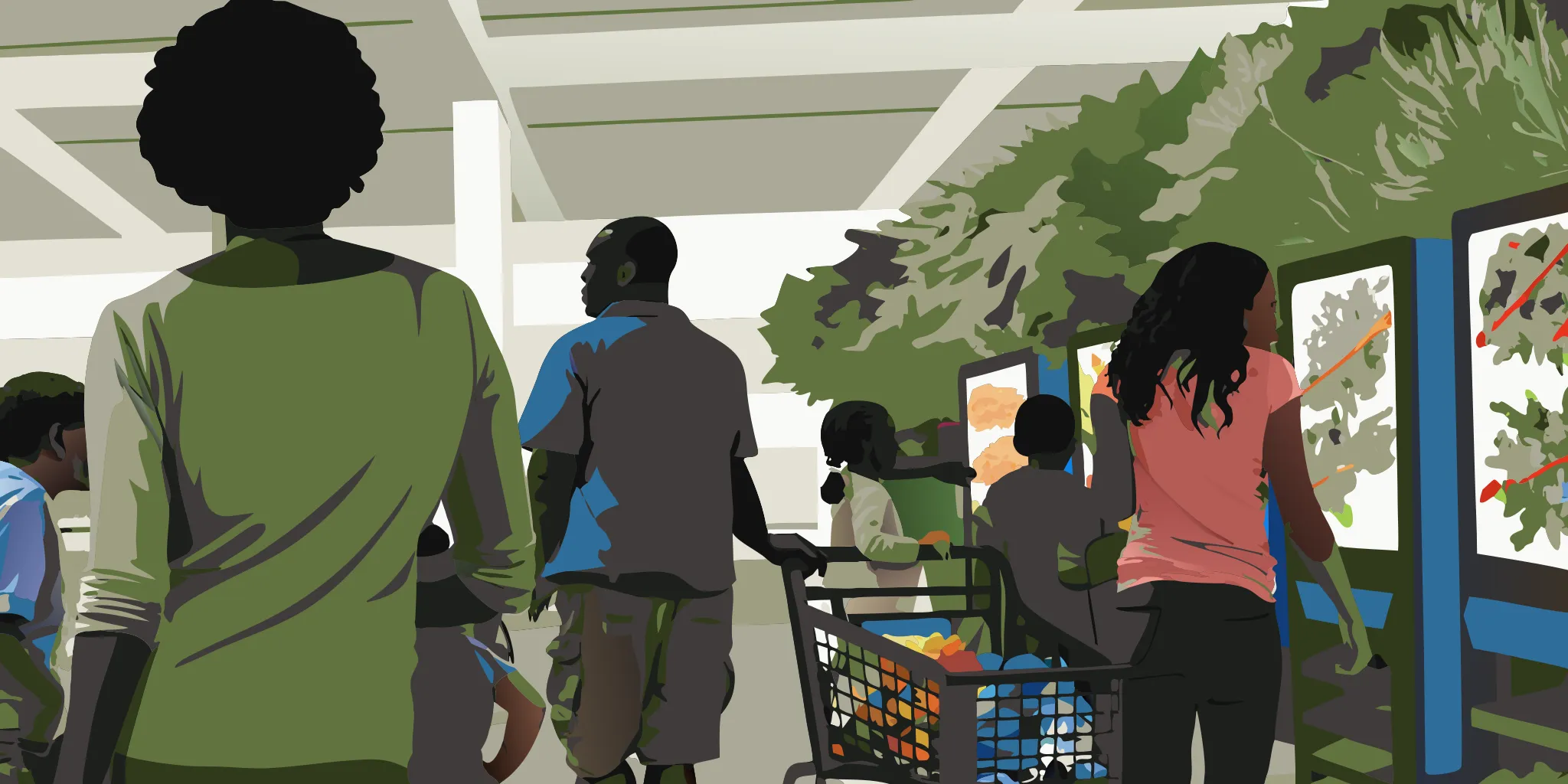
America’s local supermarkets are high-traffic hubs where consumers make physical brand choices every single day. Establishing a presence in these stores lets businesses reach local shoppers during a vital point of their week. For brands seeking consistent exposure, grocery store advertising offers a direct path to connect with household decision-makers. Contact All Points Media today to build a custom grocery store advertising network that puts your brand in front of active shoppers every week.
As a highly effective form of place-based media, grocery store advertising places brand messages on physical surfaces such as shopping carts. Floor graphics, and digital screens directly inside the local supermarket. This marketing channel reaches an exceptionally captive audience of active buyers while they browse, select products, and wait in the checkout lane. According to research from the Centers for Disease Control and Prevention, online shopping trends vary significantly by age and education, but the physical grocery store remains a crucial brick-and-mortar retail hub for local communities. Brands use this channel to build high-frequency exposure that targets consumers near the point of purchase, keeping their products top-of-mind when buying decisions are actively made.
To understand the full value of supermarket campaigns, you must first look at how shoppers interact with these physical environments. Let us explore why grocery stores deliver high-frequency shopper engagement.
Why Grocery Stores Deliver High-Frequency Shopper Engagement
The bottom line: Grocery stores are the highest-frequency retail environment in America, with the average household visiting 1.7 times per week and spending 32-43 minutes per trip. This recurring habit gives advertisers over 80 brand exposures per year in a captive, purchase-intent environment.
A Unique Environment of Repeated Exposure
Modern consumers are exposed to thousands of digital ads every day, leading to message fatigue. In contrast, the supermarket is a stable, high-frequency physical space where people return week after week. Statistically, 98% of Americans still purchase groceries in person rather than online, according to industry research published by the Centers for Disease Control and Prevention (CDC). This in-person preference makes the local supermarket the most heavily trafficked retail environment in the country.
Because shopping is a recurring habit, the primary shopper of a household visits the store an average of 1.7 times per week. This consistent habit means that local place-based media can reinforce a brand message more than 80 times over the course of a single year. This level of repetition builds deep local familiarity that home-based or digital media channels struggle to match.
Deep Dwell Times and Captive Audiences
Unlike quick convenience store runs, a trip to the supermarket is a prolonged, structured event. Shoppers spend an average of 32 to 43 minutes per visit navigating the aisles. During this block of time, consumers act as a captive, highly focused audience. They move slowly through the space, looking at displays, reading labels, and waiting in checkout lanes where their attention is naturally directed toward nearby displays.
This prolonged dwell time means that grocery store advertising does not rely on fleeting, split-second glances. Instead, shoppers have ample time to read, absorb, and recall the message on shopping carts, wellness kiosks, or digital checkout screens. Because the environment is highly familiar, consumers are relaxed and open to helpful suggestions, making them far more receptive to brand messages.
The Receptive Psychological State of the Shopper
The mental state of a grocery shopper is highly favorable for local advertisers. Supermarket shopping is a familiar routine, which means consumers are often relaxed and receptive rather than stressed or hurried. They are already in a spending mindset, actively seeking solutions for their household needs. This productive mental state makes them highly responsive to well-placed, local advertisements.
Furthermore, research shows that only 21% of shoppers always arrive with a strict shopping list. The vast majority are open to discovery, making decisions as they walk through the aisles. By placing your brand message directly in their path, you can influence those in-the-moment household decisions. All Points Media builds custom, turnkey networks that place your message in these high-dwell locations to maximize your local market impact.
Who Grocery Store Advertising Reaches: Audience Insights
The bottom line: In-store grocery shoppers skew 25-54 and are predominantly household decision-makers who manage family budgets, plan meals, and select products. With 39% of buyers never purchasing groceries online, the in-store audience represents a high-intent, physically engaged demographic.
Supermarket campaigns place your brand in front of active household decision-makers in a high-engagement environment where purchase intent is high. These shoppers are not just walking past a billboard; they are actively managing a household budget, planning meals, and selecting products for their families.
The Household Decision Maker
Grocery shoppers are often the main buyers for their homes. They decide what brands to buy, what food to put on the table, and what household goods to stock. This group skews heavily toward the 25-54 age range, making them a prime target for brand marketers. Because these buyers spend 30 to 45 minutes in the store during a typical trip, they have ample time to see, read, and think about your message.
A Complete Shopping Journey
The shopper journey is a multi-step experience. It starts the moment a customer pulls into the parking lot and ends at the checkout line. Along the way, buyers follow a routine path through the aisles. This path gives brands several chances to connect with them:
- Parking lot and entrance: First impressions set the tone. Wellness kiosks and entrance displays greet shoppers immediately.
- Aisle navigation: Shopping cart ads travel with the buyer for the entire trip, ensuring sustained brand visibility throughout every aisle.
- Product selection: End-cap displays and floor graphics guide shoppers toward specific items at the moment of decision.
- Checkout zone: Digital screens and point-of-sale displays capture attention during the final wait, influencing last-minute impulse purchases.
This journey helps your message stand out when consumers are relaxed and ready to buy.
Hyperlocal Targeting Potential
Most shoppers choose grocery stores close to home. This local habit makes grocery store advertising a powerful tool for a hyperlocal OOH campaign. Brands can target specific neighborhoods by choosing store locations based on local demographics. This precision lets you tailor your message to match the community around each store, which reduces waste and boosts relevance.
The All Points Media Advantage
All Points Media helps brands reach this high-value audience through custom venue selection and targeted placement. We build custom, place-based media networks that fit your exact campaign goals. Our turnkey service handles everything from strategy and venue leasing to print production, professional installation, and proof-of-performance reporting. We place your brand where your customers live, work, and play, ensuring your message makes a real impact.
Formats That Work in Grocery Store Advertising
The bottom line: Five primary formats dominate grocery store advertising: shopping cart ads, wellness kiosks, checkout digital screens, end-cap displays, and floor graphics. Each format targets a different stage of the shopping journey, from entrance to checkout.
Brands use grocery store advertising to capture consumers at key points in their shopping trips. By placing ads where people make buying choices, you can drive sales and build long-term brand awareness. All Points Media builds custom, place-based networks to put your business front and center during these high-dwell shopping trips.
Touchpoint Ads and Entrances
Reaching shoppers as soon as they walk through the doors sets the tone for their entire visit. Wellness kiosks at entrances and pharmacy zones offer a clean, highly visible format that stands out. These kiosks often provide free sanitizing wipes, which means consumers interact directly with your ad. Placing displays in these high-traffic entryways helps brands secure immediate, positive attention from local buyers.
In-Aisle and Checkout Displays
Once shoppers are inside, you can engage them with in-aisle and point-of-sale options. Shopping cart ads keep your brand in front of the buyer for the duration of their trip. Digital screens at the checkout line capture eyes during periods of high dwell time when people wait to pay. Custom end-cap displays and floor graphics guide shoppers toward specific items in the aisles, capturing impulse purchases.
Choosing the right setup depends on your campaign goals and target audience. The table below compares the top formats used in modern grocery store advertising formats to help you plan your next campaign.
| Format Name | Description | Best Use Case | Shopper Touchpoint |
|---|---|---|---|
| Shopping Cart Ads | Frames on front and nose of metal or plastic shopping carts. | Sustained brand exposure during the full trip. | In-aisle browsing |
| Wellness Kiosks | Sanitizing hand-wipe dispensers with large printed ads. | High-visibility entrance branding and local trust. | Store entrance and pharmacy |
| Checkout Digital Screens | Digital displays mounted above registers and belt lines. | Point-of-sale impulse buying and dynamic messaging. | Checkout wait line |
| End-Cap Displays | Custom branded shelves at the end of product aisles. | New product launches and retail sales events. | Aisle transitions |
| Floor Graphics | Adhesive slip-resistant decals applied directly to floors. | Directional pathing and point-of-purchase lift. | Product aisles and checkout |
National health surveys show that 39% of buyers shop online, which makes reaching the in-store crowd even more vital. Working with All Points Media allows you to select the precise formats that fit your marketing goals and reach active household buyers.
Grocery Store Advertising in a Multi-Venue OOH Campaign
The bottom line: Integrating grocery store advertising into a multi-venue OOH campaign extends brand exposure across consumers’ daily routines. Pairing high-dwell grocery placements with fitness centers, medical offices, and transit hubs for sustained frequency.
A single channel is rarely enough to drive deep brand recall in a crowded market. By combining multiple touchpoints, brands can surround consumers during their daily routines. Integrating grocery store advertising into a larger place-based media strategy ensures that your message reaches people where they live, work, and play. When a consumer sees your campaign at a fitness center in the morning and a supermarket in the afternoon, the frequency of exposure builds trust and action.
The Value of Multi-Venue Networks
All Points Media manages a nationwide network of over 100,000 leased venues across 50+ categories in all 50 states. This vast footprint allows brands to build custom networks that link grocery placements with other high-traffic locations. For instance, a campaign can pair retail spots with medical offices, transit hubs, or local corporate centers. These combined channels work together to reinforce your message throughout the week, turning single impressions into lasting brand awareness.
Turnkey Campaign Management
Executing an out-of-home campaign across many locations can be complex for busy media buyers. To solve this, All Points Media provides a fully integrated, turnkey approach to place-based media. This model handles every phase of the process:
- Strategy development: Audience analysis and venue selection tailored to your campaign objectives.
- Venue procurement: Leasing and contracting across 50+ venue categories nationwide.
- Creative production: In-house print production through APM PrintWorks for consistent quality.
- Professional installation: Nationwide field installation via the AP Installations network.
- Performance reporting: Comprehensive proof-of-performance with verified placement data.
Working with experienced out of home advertising companies simplifies your logistics. It ensures consistent quality, perfect physical placement, and clear tracking for your entire multi-venue campaign.
Enhancing In-Store Marketing
A multi-venue plan does not just build broad brand awareness; it also drives immediate action at the point of purchase. Pairing neighborhood OOH assets with local in-store marketing services bridges the gap between external brand building and internal buying decisions. This dual approach captures consumer attention when they are relaxed, receptive, and ready to shop. By placing your brand along the path to purchase and directly inside the retail aisle, you maximize the impact of your marketing investment. Get started with All Points Media and build a campaign that reaches shoppers at every touchpoint.
Conclusion: Unlock the Power of Grocery Store Advertising
The bottom line: Grocery store advertising delivers unmatched frequency, captive audience attention, and proximity to purchase that digital channels cannot replicate. With 98% of Americans shopping in-store weekly and average dwell times exceeding 30 minutes. Supermarkets offer advertisers a uniquely receptive environment for building brand awareness and driving purchase decisions.
The opportunity is clear: high-frequency exposure to household decision-makers during their weekly shopping routines. Across proven formats from shopping cart ads to digital checkout screens, all integrated into a broader multi-venue OOH strategy. All Points Media brings 30+ years of expertise in building custom place-based media networks that deliver measurable results for brands across CPG, healthcare, financial services, and retail verticals. Whether your goal is local brand awareness, new product launch support, or sustained category dominance. A well-executed grocery store advertising program creates an unfair advantage at the point of purchase.
Frequently Asked Questions
Why is grocery store advertising effective?
Grocery store advertising works because it places messages directly in front of active household decision-makers. Shoppers are highly receptive as they spend an average of 30 to 45 minutes walking the aisles. This place-based media captures attention at key decision points, influencing choices right before the final checkout.
Do in-store ads influence impulse purchases?
Yes, point-of-sale displays and video networks are designed to spark impulse buys. These ads reach shoppers during the final checkout phase, when they are most likely to make unplanned choices. This physical presence helps brands stand out at the exact moment a buyer is ready to pay.
How do digital circulars play a role in supermarket marketing?
Digital circulars act as a modern way to highlight store deals and coupons directly to app users. While some buyers still plan ahead, most do not. Research shows that only 21 percent of shoppers always arrive with a shopping list, making well-timed digital and in-store ads vital to guide their choices.
How many people still buy groceries in physical stores?
In-store shopping remains the dominant way people get food. According to a national study shared by the CDC, 61 percent of grocery shoppers have never bought their groceries online. This large, steady foot traffic makes physical stores an excellent space for high-frequency brand exposure.
Ready to Reach Shoppers Where They Buy?
Delaying your local media campaign lets competitors capture the attention of high-value household decision-makers. Starting your place-based program now ensures your brand is visible during weekly shopping trips before shopping habits shift. Partnering with All Points Media allows you to get your physical signage in front of a relaxed, receptive, and highly targeted local audience immediately.
Ready to build a custom grocery store advertising network? Contact All Points Media to set up a free consultation and launch your targeted local campaign.