
Library advertising reaches people during long, purposeful visits, not hurried commutes. For media buyers, that creates room for useful messages to earn attention without fighting a crowded street or fast-moving feed.
Request information about a library advertising campaign with All Points Media.
Library advertising places brand messages inside trusted community spaces where education-focused visitors often stay for 30 to 120 minutes. It works best for brands seeking local relevance, repeat exposure, and useful attention from families, students, job seekers, and other community members. Buyers can place messages near entrances, computer areas, children’s sections, and other spaces selected around visitor behavior and campaign goals throughout each library. Effective planning connects the audience, market footprint, creative format, flight dates, installation process, and measurement plan before placements go live for every selected location. This buyer’s guide explains how to assess audience fit, choose formats, build local or nationwide networks, and verify execution through proof-of-performance reporting.
The central buying question is simple: can the setting connect your message with the right people at the right moment? Before comparing formats or building a custom network, start with Why library advertising earns attention. The practical path begins with
Why library advertising earns attention
Library advertising earns attention because it appears in a trusted, high-dwell community setting. Visitors often move through several areas during one purposeful trip, giving relevant messages multiple chances to be noticed. For media buyers, the venue combines local context, repeated exposure, and the ability to align placements with real visitor activities.
A place-based media setting
Library advertising places brand messages inside public libraries, where people spend time reading, studying, using computers, or joining community programs. It is a form of place-based media because the message appears within a setting tied to a clear activity. That context separates it from ads people pass quickly during a commute.
The setting also shapes how a campaign should be planned. Media buyers can select placements near entrances, computer areas, or children’s sections based on the audience and campaign goal. The result is a custom venue network, not a broad purchase of generic outdoor inventory.
Trust and community context
Libraries serve as public spaces for learning, access, and local connection. The Public Libraries Survey from the Institute of Museum and Library Services tracks library services, use, staffing, and finances. This public-service role gives advertisers a distinct setting for useful, relevant messages.
That trust does not give brands permission to interrupt the experience. Creative should fit the setting, use clear language, and respect why visitors are there. A healthcare message might focus on practical access to care. A local campaign might point people toward a nearby service or event.
More time to notice and respond
Library visits often involve several tasks rather than one quick transaction. A visitor may browse shelves, work at a computer, attend a program, and wait for another family member. Well-placed media can earn repeat views during that visit without relying on loud or disruptive creative.
This makes library advertising useful for campaigns that need more than a passing glance. Detailed calls to action, local service information, and education-led messages have room to work. Media buyers can also use place-based advertising to connect a broader campaign with nearby community activity.
Library advertising is not the same as advertising a library’s own services. Library marketing promotes its programs, collections, hours, or public value. Brand-funded library advertising uses approved placements inside the venue to reach visitors on behalf of an outside advertiser. Keeping that line clear helps protect the setting while giving campaigns a focused channel.
Who can brands reach in libraries?
Library advertising can reach people during a useful, task-focused part of their day. Visitors may be studying, using computers, attending programs, browsing with children, or seeking local resources. This mix gives media buyers broad community reach without relying on a narrow audience profile.
The right audience still depends on the branch, its programs, and the message location. Planners can use the Institute of Museum and Library Services Public Libraries Survey as a starting point for local research. They should then confirm branch activity and placement options before building a network.
Community audiences by branch
Each branch reflects the area it serves. A downtown location may support commuters, job seekers, students, and people using public computers. A neighborhood branch may bring in families, caregivers, older adults, and residents attending local programs. These are planning signals, not fixed demographic promises.
Media buyers should review the role of each branch instead of treating every library as equal. Ask which programs draw repeat visitors, when traffic is strongest, and where people pause. That approach turns place-based media into a custom community network rather than a broad inventory buy.
Campaign categories with a natural fit
Libraries can suit messages tied to education, health, finance, public services, entertainment, and nearby retail. The common thread is usefulness. A campaign should help visitors learn about an option, complete a task, or find a relevant service in their area.
- Education messages can support schools, training programs, tutoring, and skill-building resources.
- Health and public service campaigns can share clear steps, local access points, or enrollment details.
- Financial messages can focus on practical services, fraud awareness, or community banking options.
- Arts, entertainment, and local event campaigns can connect with visitors seeking things to do.
Creative should match the setting. Clear headlines, useful details, and simple calls to action tend to fit better than disruptive sales language. Media buyers can also connect library placements with a wider place-based advertising plan for community events.
Audience fit beyond broad labels
Strong planning starts with the action a brand wants people to take. A children’s area may suit a family-focused message. A computer area may support education or service access. Entry displays can introduce broader messages to many visitors as they arrive.
Media buyers should ask for branch lists, available display areas, program calendars, and proof of placement. They should also check whether the creative fits the library’s public-service setting. These checks help brands choose relevant locations without making unsupported claims about who will see each ad.
Library advertising formats to consider
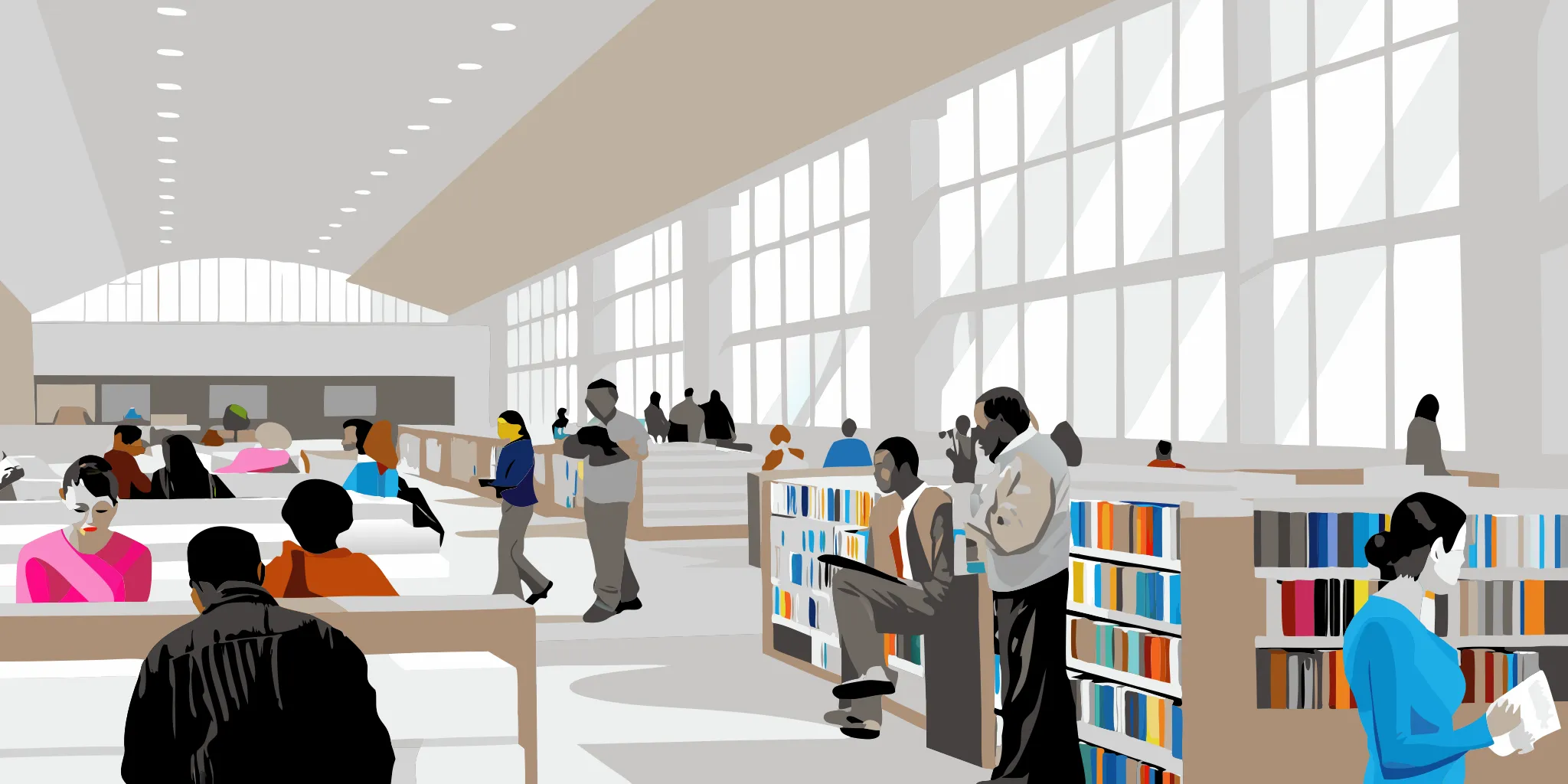
Library advertising can take several physical and digital OOH advertising forms, each suited to a different campaign goal. Availability depends on the library system, branch layout, local approval process, and campaign dates. Start with the audience action, then match the format to mobile billboard trucks or other venue-specific placements where that action can happen.
Physical formats for repeated exposure
Posters, entry displays, table graphics, and brochure placements can reach visitors as they move through familiar spaces. These formats work well for simple messages that benefit from repeated viewing. They can also support place-based advertising tied to local events, enrollment periods, or community programs.
Physical creative should fit the viewing distance and time available at each placement. An entry display needs a fast headline and bold visual. A tabletop piece can carry more detail because visitors may see it while seated. Print plans should also account for production, shipping, installation, and removal.
Digital formats for flexible messaging
Digital screens can support motion, rotating messages, and scheduled creative changes where a library offers approved screen inventory. This flexibility can help campaigns serve different messages by date or time. Screen size, sound rules, file specifications, and rotation length may differ by location.
Interactive formats may include sponsored Wi-Fi pages, computer-area messaging, or other digital touchpoints. These options require careful review of privacy, access, and user experience. Planning should also follow applicable ADA standards for accessible design and the library system’s own policies.
| Format | Practical strength | Planning consideration |
|---|---|---|
| Entry or lobby display | High visibility near a main traffic point | Keep the message brief and confirm available space |
| Wall poster | Supports steady exposure in a set area | Check sightlines, size rules, and installation method |
| Table or study-area graphic | Reaches seated visitors at close range | Use useful detail without disrupting the space |
| Brochure or take-one | Gives visitors information to keep | Plan restocking and track remaining materials |
| Digital screen | Allows motion and creative rotation | Confirm file rules, schedule, and share of screen time |
Format choices within a custom network
A strong plan does not assume every format is offered at every branch. Instead, it builds a custom mix around approved locations, audience fit, creative needs, and site limits. The broader library advertising network can help buyers assess possible placements without treating libraries as identical inventory.
Before production begins, confirm which formats each location accepts and how the creative will be reviewed. Also define installation timing, proof-of-performance needs, and the process for replacing damaged materials. These details help keep a multi-location campaign consistent while respecting each library’s rules.
How do you plan a library advertising campaign?
A strong library advertising plan starts with a clear business goal, not a list of available placements. The plan should connect audience, market, message, and measurement before any creative goes to print. This sequence keeps each choice tied to the campaign objective.
Campaign strategy and audience
First, define the action the campaign should drive. That action might be visiting a store, attending an event, requesting information, or recalling a brand. Set one main outcome and a small group of measures that can show progress.
Next, describe the people and places that matter. Use customer data, sales patterns, and the American Community Survey to shape the market plan. Then map priority ZIP codes, neighborhoods, or regions against libraries that serve those areas.
-
Set the objective. Name the desired action, campaign window, budget range, and measures of success. Keep the brief focused on one main goal.
-
Define the audience and markets. Detail who should see the message and where they live, work, shop, or study.
-
Build the venue network. Select libraries based on market fit, likely audience context, placement options, and campaign scale. Review the proposed network before production begins.
-
Match creative to the setting. Use a clear headline, simple visual, visible brand cue, and direct call to action. Adapt each piece to its placement.
-
Coordinate activation. Confirm final art, production dates, delivery, installation, and launch timing. Assign one owner to track approvals and resolve issues.
-
Verify and improve. Check placement, collect proof of performance, review results, and adjust the network or message when the evidence supports a change.
Venue and creative choices
Venue selection should follow the audience plan. A broad national campaign may need a custom network across many markets. A local effort may focus on a smaller set of branches near stores, events, or service areas. All Points Media’s library advertising options can help planners assess the setting without treating each location as isolated inventory.
Creative should respect how people use the space. Keep the message easy to scan, but give interested readers a clear next step. A short URL, QR code, offer code, or named event can help connect exposure with later action.
Activation and ongoing review
Before launch, create one working calendar for approvals, production, delivery, installation, and reporting. Include backup dates and escalation contacts. This reduces gaps between the media plan and what appears in each venue.
A turnkey partner can manage venue procurement, production, installation, and reporting through one plan. That support is useful when a campaign spans many libraries or markets. It also lets the media team compare results across a broader place-based media program.
Optimization should follow evidence, not guesswork. Review whether placements launched as planned, which markets produced the strongest signals, and whether the call to action worked. Use those findings to refine the next flight, creative version, or venue mix.
What makes library ad creative effective?
Effective creative respects the library environment while making a clear, useful offer. Patrons arrive to learn, work, attend programs, and access community resources. A message that feels relevant to those goals can earn attention without interrupting the experience.
Lead with one useful message
Choose one idea for each placement. State the benefit in plain language, keep the visual hierarchy easy to scan, and use a call to action that tells the viewer what to do next. A localized message can make a national brand feel more useful to the community it is trying to reach.
Design for the placement
A wall display, study-area panel, and digital screen create different viewing conditions. Adapt type size, contrast, copy length, and image detail to the distance and time available. Accessible design helps more patrons understand the message. Coordinate final dimensions, production specifications, and approvals with each venue before printing or trafficking creative.
Connect exposure to action
Give interested viewers a simple next step, such as a short URL, QR code, nearby location, or memorable offer. Use unique response paths when practical so the campaign team can connect activity to a placement or market. The result should feel informative and appropriate, not intrusive.
How should marketers measure library advertising?
Measurement begins before the first placement goes live. Define the business outcome, the signals that indicate progress, and the evidence needed to confirm delivery. Because place-based campaigns influence people in the physical world, a useful framework combines proof of performance with response and outcome metrics.
Confirm campaign delivery
Start with operational evidence. Verify the correct creative, location, format, and flight dates. Proof-of-performance reporting gives the campaign team a record that placements were installed or displayed as planned. This foundation makes later performance analysis more reliable.
Track measurable response
Use tools suited to the objective. Unique QR codes, short URLs, promotional codes, dedicated landing pages, and location-specific calls to action can reveal direct response. Compare activity by market, format, or creative version, but remember that not every exposed patron will respond immediately or through a trackable path.
Connect activity to business outcomes
Evaluate results against the original goal, whether that is awareness, visits, sign-ups, applications, purchases, or another verified conversion. Where budget and campaign scale support it, marketers can also consider brand-lift research or geographic comparisons. No single metric explains the entire effect, so interpret direct response alongside delivery quality, audience fit, and other media running at the same time.
Review results while the campaign is active when possible. Stronger markets or creative treatments may deserve more support, while weak response can signal a need to clarify the offer or adjust the mix. A documented test plan turns one library campaign into evidence for the next.
How to scale a library campaign with All Points Media
All Points Media helps media buyers turn a focused library test into a coordinated multi-market program. All Points Media brings more than 30 years of alternative out-of-home experience and nationwide capabilities spanning over 50 venue categories. Its turnkey team can manage venue selection, production, installation, campaign operations, and proof-of-performance reporting.
Talk with All Points Media about building a custom library advertising network.
A focused local test can establish which audiences, formats, messages, and response paths deserve broader investment. Once the campaign team has a clear objective and useful learning, it can expand into additional markets while preserving consistent execution.
All Points Media helps media buyers manage the operational details behind library advertising. Its turnkey approach can include strategic venue selection, custom network building, print production, nationwide installation, campaign management, and proof-of-performance reporting. That coordination is especially valuable when a plan spans many locations or markets.
Build the network around the buyer’s goal
Start with the audience and geography rather than a fixed list of placements. A custom network can combine suitable library opportunities with other relevant environments. Buyers exploring a broader mix can review All Points Media’s place-based media capabilities across more than 50 venue categories.
Standardize what should be consistent
Use shared creative standards, production specifications, trafficking dates, and reporting requirements. Leave room for localized messaging when it improves relevance. A central campaign manager can help reduce handoffs and keep implementation aligned across markets.
Use each flight to improve the next
Compare proof of performance and outcome signals by format and market. Preserve the elements that worked, revise weak messages, and expand deliberately. This test-and-scale approach helps brands build nationwide reach without treating every community or venue as identical.
Frequently asked questions about library advertising
These quick answers cover the questions media buyers most often ask when evaluating library advertising. Exact inventory and approval requirements vary by library system, so campaign planning should confirm the available formats, audience fit, specifications, timing, and measurement approach for every selected market.
What is library advertising?
Library advertising is place-based media displayed within public library environments. Depending on venue availability, a campaign may use physical or digital formats to reach patrons while they read, work, learn, attend programs, or use community services.
What types of brands are a good fit for library advertising?
Brands with useful, community-relevant offers are often a strong fit. Potential categories include healthcare, financial services, education, entertainment, government programs, retail, and other organizations seeking local engagement. Final fit depends on the audience, message, venue policies, and campaign objective.
What advertising formats are available in libraries?
Available formats vary by location. Potential options can include wall displays, posters, digital screens, study-area placements, and other approved media. Buyers should confirm exact inventory, specifications, timing, and venue requirements during planning.
How is a library campaign measured?
Measurement can combine proof of performance with response and outcome signals. Marketers may use QR codes, short URLs, landing pages, promotional codes, geographic comparisons, or brand-lift research where appropriate. The best plan is defined before launch and tied to the campaign’s business goal.
Ready to reach community audiences?
All Points Media can help you plan and execute a library advertising campaign built around your audience, markets, and goals. From strategic venue selection through production, installation, campaign management, and proof-of-performance reporting, one experienced team can coordinate the details.
Request information about library advertising with All Points Media.