
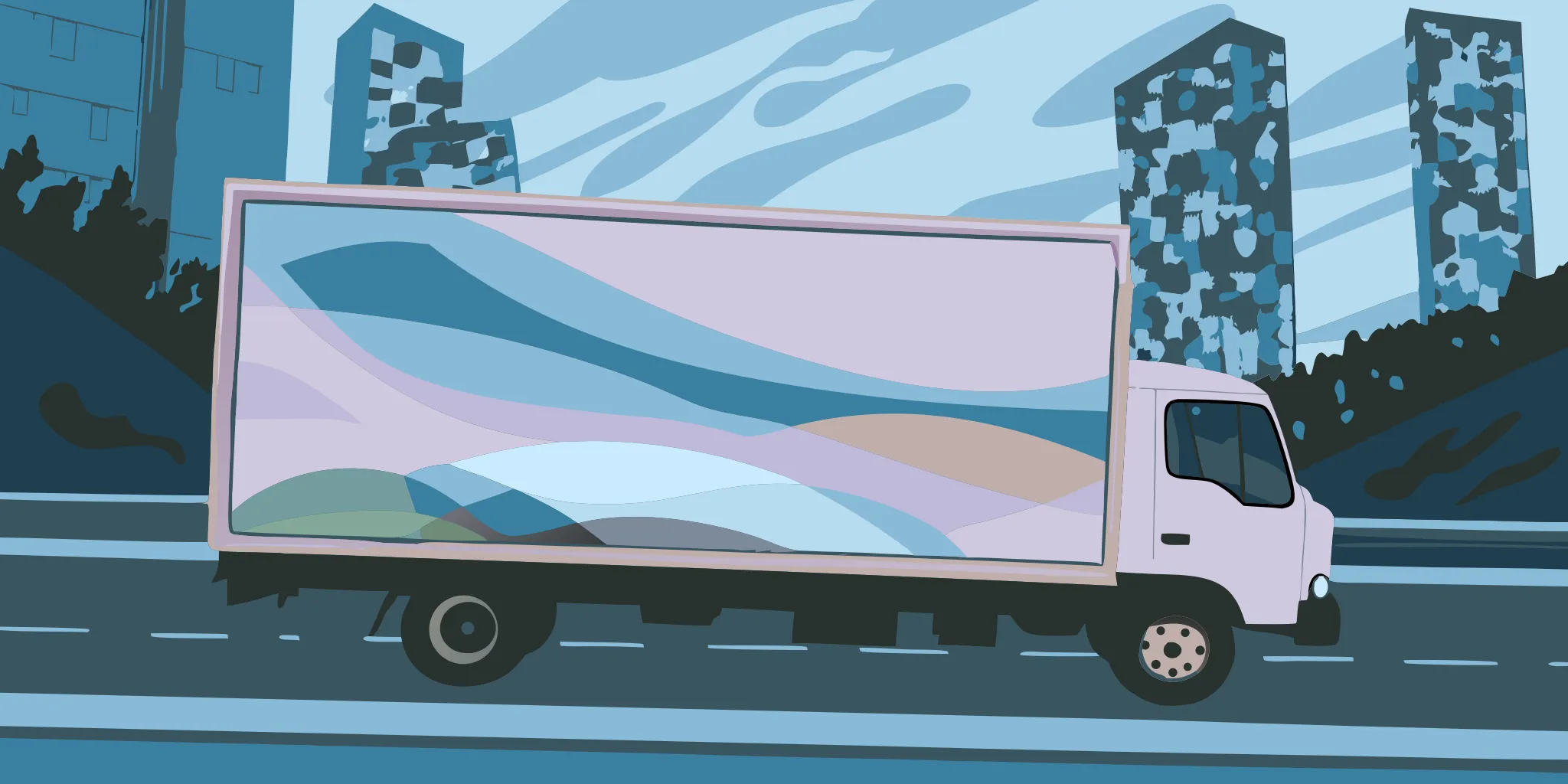
The human eye is naturally drawn to light and motion. In a busy urban environment, that simple biological fact gives you a huge advantage. While people may have learned to tune out the static signs they pass every day, a giant, vibrant video screen rolling down the street is impossible to ignore. This is the raw, attention-grabbing power of mobile video billboard advertising. The combination of novelty, movement, and scale creates a memorable brand experience that cuts through the noise. It’s not just about being seen; it’s about creating a moment of disruption that makes your message stick. Here, we’ll explore how to harness this format to make a lasting impression.
Key Takeaways
- Take Your Message Directly to Your Audience: Mobile billboards give you the unique ability to be proactive. Plan custom routes and schedules to intercept specific demographics during their daily routines, whether they are commuting, attending an event, or in a particular neighborhood.
- Keep Your Creative Bold and Simple: An ad on a moving truck must be understood in just a few seconds. Use large fonts, high-contrast colors, and a single, focused message to capture attention instantly, ensuring your brand and call to action are the most memorable elements.
- Integrate Mobile with Place-Based Media: Use mobile billboards to generate widespread awareness while people are on the move, and use place-based ads to connect with them in high-dwell environments like gyms or cafes. Combining these formats creates a comprehensive OOH strategy that surrounds your customer.
What Are Mobile Video Billboards?
Imagine taking the eye-catching power of a digital billboard and putting it on wheels. That’s a mobile video billboard in a nutshell. These are trucks equipped with large, bright LED screens that display ads as they drive through carefully selected areas. Instead of waiting for your audience to pass by a fixed location, you take your message directly to them.
Mobile video billboards use trucks with large digital screens that drive around specific areas to display your ads. This format is incredibly dynamic, allowing you to showcase everything from static images to full-motion video with sound. It’s a powerful way to cut through the noise of a busy city, command attention at a major event, or simply make a big impression in a specific neighborhood. Think of it as a moving, unmissable centerpiece for your outdoor advertising campaign.
How Do They Work?
The real magic of mobile billboards is their ability to go exactly where your audience is, right when they are most receptive. The strategy is all about precision. You can map out custom routes that travel through specific neighborhoods, target business districts during lunch hour, or circle a stadium before a big game. By driving through different areas during peak times, your message reaches commuters, pedestrians, and event-goers who might otherwise miss a static ad.
This approach allows you to participate in the moments that matter most to your audience. While place-based media is designed to reach people where they stop and dwell, mobile billboards intercept them while they are on the move. It’s a proactive form of advertising that actively seeks out eyeballs instead of passively waiting for them.
Digital Trucks vs. Traditional Billboards
If traditional billboards are like a printed magazine ad, digital mobile billboards are like a dynamic web banner. The biggest advantage is flexibility. With digital screens, you can change your creative in an instant without any extra printing costs. You can run different ads at different times of the day, A/B test your messaging, or update your campaign with a time-sensitive offer. This makes your campaign incredibly agile.
Digital trucks also offer a level of accountability that traditional billboards can’t match. Modern mobile billboard campaigns provide data on performance, giving you clearer visibility into how your investment is working. This level of flexibility and data is central to modern OOH, including digital networks like APM Digital that bring video content into high-dwell indoor spaces. It’s a smarter, more responsive way to manage your out-of-home advertising.
Why Add Mobile Billboards to Your Media Mix?
Mobile billboards offer a dynamic way to bring your message directly to your audience. They are a powerful complement to your existing strategy, bridging the gap between static outdoor ads and digital campaigns. By putting your brand in motion, you can create high-impact encounters in the real world, making your media plan more resilient and responsive. It’s about adding a flexible, attention-grabbing layer that works with other channels to surround your customer.
Reach Specific Audiences on the Go
This is where the targeting capabilities of mobile billboards shine. A digital truck isn’t waiting for people to pass by; it actively seeks them out. You can map a route through specific neighborhoods or business districts where you know your audience spends time. Imagine running a campaign for a new energy drink and having your ad circle college campuses and gyms. Mobile advertising also allows for precision targeting based on time of day, ensuring your message is seen during rush hour or weekend events. This control means less waste and a greater impact on the people who matter most.
Customize Your Routes and Schedule
The true power of a mobile billboard is its flexibility. Your campaign isn’t locked into one location; you can create custom routes that align with your strategic goals. Want to target morning commuters on one side of town and the evening dinner crowd on another? You can do that. A major concert just got announced? You can adjust your schedule to be there. This ability to make real-time adjustments is a game-changer, letting you capitalize on spontaneous opportunities. This adaptability ensures your message is always in the right place at the right time.
Capture More Attention Than Static Ads
In a world saturated with ads, breaking through the noise is key. A giant, moving digital screen is hard to ignore. The combination of light, motion, and novelty makes mobile billboards incredibly effective at capturing attention. People become accustomed to static ads on their daily commute, but a vibrant video ad rolling past is a different experience. This disruption creates a memorable moment. Mobile billboards have a high recall rate because they deliver a message in an unexpected format. This heightened visibility helps your brand drive advertising impact and stick in the minds of your audience.
What Kind of Ads Can You Run?
One of the biggest advantages of mobile video billboards is creative flexibility. Unlike traditional printed ads, digital screens let you move beyond a single, static message. You can run a variety of ad formats, often in the same campaign, to keep your content fresh and engaging. Whether you have a simple graphic, a full-blown commercial, or something in between, there’s a format that will work for you. Let’s look at the most common types of ads you can run on a digital billboard truck.
Static Digital Images
Think of a static digital image as a high-definition digital poster. It’s the most straightforward ad format, but that doesn’t mean it’s not effective. These crisp, bright images are displayed on the truck’s large LED screens, making your branding and message pop. The real power here is the flexibility. You can swap out your creative in minutes, allowing you to A/B test different messages, update promotions on the fly, or change your ad based on the truck’s location or time of day. This approach saves you the time and money associated with reprinting and installing traditional vinyl ads, giving you more control over your campaign.
Full-Motion Video
This is where mobile video billboards truly live up to their name. Running full-motion video allows you to capture the undivided attention of people on the street. These trucks are equipped with large screens capable of playing high-quality video, turning the side of the vehicle into a mobile movie screen. You can repurpose existing TV or social media commercials or create something entirely new to tell a compelling story about your brand. While some trucks have sound capabilities, it’s best to design your video to be understood without it, as audio is often restricted. The sheer novelty of seeing a vibrant, moving commercial on a truck creates a memorable and high-impact brand experience.
Animation and Interactive Content
If a full video production isn’t in the budget, animation offers a fantastic way to add eye-catching movement to your ad. This can range from simple animated text and logos to more complex motion graphics that bring your message to life. Dynamic content is proven to draw the eye more than a static image, ensuring your ad stands out in a busy environment. You can also make your campaign interactive by including a clear call to action that bridges the physical and digital worlds. Adding a QR code, a unique hashtag, or a simple URL encourages viewers to pull out their phones and connect with your brand online, making your OOH impact instantly measurable.
How Much Do Mobile Billboards Cost?
When planning any advertising campaign, the first question is usually about the budget. While there’s no single price tag for a mobile video billboard campaign, understanding the key cost drivers will help you build a realistic budget and strategy. The final investment depends on several factors, including how long your campaign runs, where the truck drives, and the type of ad you display. By breaking down these components, you can make informed decisions that align your campaign goals with your financial plan, ensuring you get the most value from every dollar spent. Think of it less as a fixed cost and more as a flexible investment that you can tailor to your specific objectives.
Key Pricing Factors
The overall cost of your mobile billboard campaign is influenced by a few core elements. First is the type of truck you use. A state-of-the-art digital LED truck that can play full-motion video will naturally have a different price point than a truck with static vinyl or printed posters. The complexity of your creative also plays a role; simple static images are less resource-intensive than producing high-quality video or interactive content. These costs are important to consider as you weigh your options against other advertising formats, like place-based media, which reaches consumers in different environments. Evaluating these factors upfront allows you to allocate your budget effectively.
Campaign Length and Frequency
The duration and intensity of your campaign are major determinants of your total spend. A short, high-impact campaign running for a single weekend to support a product launch will have a different cost structure than a month-long awareness campaign. Generally, longer campaigns may come with a lower per-day rate, but the total investment will be higher. Similarly, frequency matters. Do you want the truck running for a standard eight-hour day, or do you need extended coverage during a major conference or festival? An experienced advertising partner can help you find the right balance between campaign length and frequency to maximize visibility without exceeding your budget.
How Location Affects Your Budget
Where your mobile billboard drives has a significant impact on cost. A campaign targeting high-traffic routes in a major metropolitan area like New York or Los Angeles will typically be more expensive than one in a smaller city or suburban market. The beauty of mobile billboards is their flexibility; you can design custom routes to target specific events, neighborhoods, or even competitor locations. This hyper-targeting is a powerful tool, and a strategic partner can help you optimize routes to reach your desired audience efficiently. This approach ensures your message is seen by the right people at the right time, which is a core principle of effective digital OOH advertising.
Creating an Ad That Gets Noticed
A mobile video billboard gives you a powerful, moving canvas to work with, but your creative strategy needs to be just as dynamic as the truck itself. An eye-catching ad can stop people in their tracks and make a lasting impression. On the other hand, a cluttered or confusing design will get lost in the noise. To make sure your message lands, focus on three core principles: designing for motion, keeping your copy tight, and making your brand the hero. Let’s walk through how to get each part right.
Design for a Moving Canvas
Think of your ad as a fleeting moment in someone’s day. You only have a few seconds to capture attention, so your design must be bold and immediately understandable. Use large, clean fonts and high-contrast color palettes that pop. Simple, powerful imagery works best; avoid intricate details that are hard to process at a glance. Your design must be effective from 50 feet away. This principle is true for all dynamic advertising, from digital trucks to the engaging screens in our APM Digital network. The goal is to create a visual that’s impossible to ignore.
Keep Your Message Clear and Concise
When it comes to mobile billboards, less is always more. Your audience is on the move and doesn’t have time to read a paragraph. Stick to a single, focused message using seven words or less. What is the one thing you want someone to remember? Lead with that. Your copy should be so clear that anyone can grasp its meaning instantly. This principle of clarity is essential across all forms of place-based media, where you’re meeting consumers during their daily routines. Let your billboard make a quick, powerful statement.
Make Your Brand and CTA Stand Out
After someone sees your ad, what should they do next? Your brand logo and call to action (CTA) are the keys to driving results. Place your logo prominently so there’s no question who the message is from. Your CTA needs to be just as clear and direct: a simple website URL, a social handle, or a command like “Visit Us Today” works perfectly. While QR codes can be used, they should be large and are most effective when the truck is stopped. The key is to make your brand memorable and the next step obvious, turning a passing glance into an interaction, much like our Boardwalk Live Feed captures real-time engagement.
Mobile Billboards vs. Other Outdoor Ads
Mobile billboards are a powerful tool, but they’re just one option in the out-of-home (OOH) advertising landscape. To build the most effective campaign, you need to understand how they compare to other formats, like traditional static billboards and place-based media. Each has its own strengths, and the right choice depends entirely on your campaign goals, target audience, and budget.
Think of it like building a toolkit. A mobile billboard might be perfect for a product launch or event promotion where you need to generate widespread buzz in a specific city. But for reaching a niche audience in a specific mindset, another tool might work better. Let’s break down how mobile billboards stack up against other OOH mainstays so you can make an informed decision for your media mix.
How They Stack Up Against Static Billboards
The most obvious difference between a mobile billboard and a static one is movement. A traditional billboard stays in one place, reaching the same commuters and locals day after day. A mobile billboard, on the other hand, goes where you want it to go. This dynamic approach allows you to deliver your message directly to different neighborhoods, events, or even competitor locations throughout the day.
This mobility often leads to a higher recall rate because the novelty of a giant screen on wheels is harder to ignore than a sign you pass on your daily drive. While static billboards are great for building long-term brand presence along high-traffic routes, mobile billboards excel at creating immediate impact and executing hyper-local strategies that require flexibility and precision targeting.
Choosing Between Mobile Billboards and Place-Based Media
While mobile billboards target people on the move, place-based media connects with them when they’ve arrived at their destination. This is a key distinction. Place-based media includes ads in locations like fitness centers, doctor’s offices, restaurants, and community centers, reaching consumers during moments of high engagement. Instead of catching a fleeting glance on a busy street, your ad is seen by a captive audience with higher dwell times.
Consider the audience’s mindset. Someone in a gym locker room or a waiting room is generally more relaxed and receptive to new information than someone navigating traffic. This makes place-based advertising ideal for more detailed messaging or for brands that align with the venue’s activities. A mobile billboard is a broadcast tool for broad awareness, while place-based media is a precision tool for contextual connection.
Integrating OOH with Your Digital Campaigns
No OOH format works in a vacuum. The most successful campaigns use outdoor advertising to fuel digital engagement. Mobile billboards are especially effective at bridging the physical and digital worlds. An eye-catching video ad on a truck can feature a QR code for an exclusive offer, a hashtag to encourage social sharing, or a clear URL that drives traffic to a landing page.
When you integrate your OOH strategy with digital channels, you create a cohesive brand experience. The mobile billboard generates initial awareness and real-world buzz, while your social and search campaigns capture that interest and convert it into action. This synergy turns a passing glance into a measurable interaction, helping you prove ROI and build a more comprehensive picture of your customer’s journey.
Planning Your Mobile Billboard Campaign
A stunning ad on a digital truck is a great start, but a successful campaign hinges on smart, strategic planning. It’s not enough to just be seen; you need to be seen by the right people, in the right places, at moments when your message will truly resonate. This is where the real work begins. By carefully mapping your route, defining your audience, and setting clear metrics for success, you can transform your mobile billboard from a moving ad into a powerful driver of results.
Map Your Route and Schedule
The biggest advantage of a mobile billboard is its mobility. Unlike a static sign, you control exactly where your ad goes and when. Start by thinking about your audience’s daily journey. Do you want to catch commuters on major highways during rush hour? Or maybe circle a business district during the lunch rush? You can plan routes that cover specific zip codes, pass by competitor locations, or target attendees at a big conference or sporting event. This flexibility also means you can make real-time adjustments to your route based on traffic or unexpected opportunities, ensuring your ad gets maximum visibility where it matters most.
Define Your Target Audience
Knowing who you want to reach is fundamental. Mobile billboards excel at hyper-local targeting, allowing you to bring your message directly to your ideal customers. For example, a restaurant can run a campaign targeting nearby neighborhoods and office parks right before dinnertime to influence take-out orders. A new gym could focus on residential areas and community centers to drive membership sign-ups. The key is to align your route and schedule with your audience’s behavior. This kind of timed targeting ensures your ad is not just seen, but seen at a moment when your audience is most likely to act on it, making your campaign far more effective.
Measure Your Campaign’s Performance
To prove your campaign worked, you need to define what success looks like from the very beginning. Are you aiming to increase brand awareness, drive traffic to a new store, or promote a specific offer? Setting clear objectives is the first step toward measuring your return on investment. You can track performance by including a unique URL, QR code, or promo code on your ad to monitor direct responses. You can also look at secondary metrics, like spikes in website traffic from the targeted geographic areas or an increase in social media mentions. This makes your mobile billboard campaign an accountable and data-driven part of your media strategy.
Finding the Right Mobile Billboard Partner
Choosing a mobile billboard company is about more than just renting a truck with a screen. The right partner acts as a strategic extension of your team, helping you plan, execute, and measure a campaign that truly delivers. They bring the expertise in logistics, routing, and technology, so you can focus on the big picture. As you evaluate your options, think about which provider can offer a true partnership, not just a transactional service.
What to Look For in a Provider
A great provider will do more than just drive your ad around town. Look for a partner with a deep understanding of how to integrate mobile billboards into a broader marketing strategy. They should offer clear, accountable measurement, turning your campaign into a measurable media channel with visibility into real-world performance. A strong partner will have a modern fleet of high-resolution digital trucks, a proven track record with case studies to back it up, and the ability to help you tell a cohesive story. They should be a full-service resource, handling everything from planning to proof-of-performance reporting, ensuring a smooth process from start to finish.
Key Questions to Ask Before Signing
Before you commit, it’s essential to ask the right questions to ensure a provider is aligned with your goals. Your campaign objective, whether it’s building brand awareness or driving foot traffic, should guide every decision. Start by asking how they plan to translate your specific billboard strategy into a concrete plan for routing, timing, and messaging.
Here are a few key questions to get the conversation started:
- How do you develop routes to ensure we reach our target demographic?
- What are your reporting capabilities, and what metrics will we receive?
- Can you accommodate real-time route adjustments based on traffic or events?
- What are the creative specifications and lead times for ad assets?
- Can you share case studies from clients with similar goals?
Understanding Contracts and Campaign Management
Your contract should clearly outline the entire scope of the campaign. Look for specifics on the campaign duration, the number of trucks, daily hours of operation, and the agreed-upon routes or geofenced zones. Pricing should be transparent, detailing how costs are structured based on factors like campaign length and truck type. A good contract will also include clauses that allow for flexibility, such as the ability to make real-time adjustments to the schedule. Beyond the contract, ask about their campaign management process. You should have a dedicated point of contact who provides regular updates and performance reports, ensuring your campaign stays on track and delivers results.
Related Articles
- Digital Mobile Truck Billboard | All Points Media
- Ultimate Guide to Digital Mobile Billboard Truck Rental
- Truck Billboard Advertising: The Ultimate Guide
Frequently Asked Questions
How do I know if a mobile billboard campaign is actually working? Measuring success starts with defining your goals before the campaign even begins. If you want to drive online traffic, you can use a unique website URL or QR code on your ad to track visits. For tracking sales or in-store visits, a special promo code works well. You can also look at broader data, like an increase in website traffic from the specific geographic areas where the truck was driving or a lift in social media mentions during your campaign.
Can I really target a specific event or even a competitor’s store? Yes, absolutely. This is one of the biggest strengths of a mobile billboard. You can work with your advertising partner to create custom routes that circle a concert venue, a convention center, or a major sporting event. You can also strategically route the truck to drive past your competitors’ locations during their peak hours. It’s a proactive way to make sure your message is seen in the most impactful places.
What’s the main difference between using a mobile billboard and placing ads inside a venue like a gym? The key difference is the audience’s mindset and environment. A mobile billboard is designed to capture attention from people who are on the move, like drivers and pedestrians. It’s great for broad awareness and making a big, immediate impression. Place-based media, on the other hand, reaches people when they have arrived at a destination and have more time to engage. Think of it this way: a mobile billboard is a powerful broadcast tool, while place-based media is a tool for deeper connection with a captive audience.
How much creative flexibility do I really have? Can I change my ad mid-campaign? With digital video billboards, you have a tremendous amount of flexibility. Unlike traditional ads that need to be printed and installed, digital creative can be changed almost instantly. This means you can run different ads in the morning and evening, test two different messages to see which performs better, or update a promotion on the fly. This agility allows you to react to opportunities and refine your campaign as it runs.
Is a mobile billboard better for brand awareness or for driving direct sales? It can be excellent for both, but your strategy will determine the outcome. For a brand awareness campaign, you might focus on broad routes, bold branding, and memorable visuals to make a lasting impression on a wide audience. To drive direct sales or actions, you would use a more focused strategy, perhaps targeting specific neighborhoods with a clear call to action and a compelling, time-sensitive offer.