
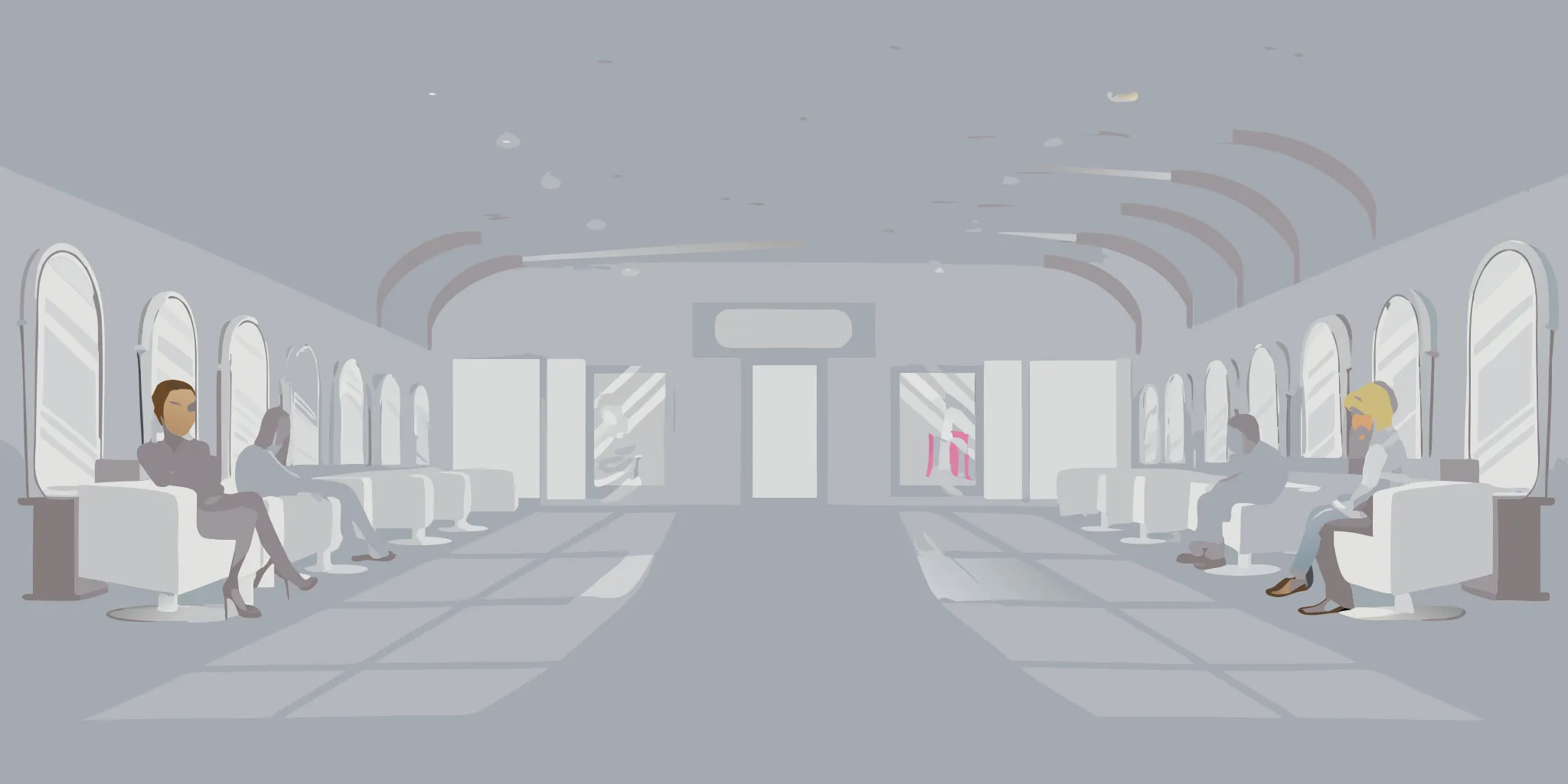
A salon chair can hold a consumer’s attention for 60 to 240 minutes. That extended pause gives beauty and wellness brands room to educate, build trust, and prompt action.
Salon advertising ideas place beauty and wellness messages inside hair salons and barber shops, where audiences have time to notice and consider them. Strong formats include mirror clings, styling-station signage, product displays, sampling, front-desk offers, and QR codes tied to a clear next step. All Points Media provides print media production services for these and other OOH formats. Match each placement to the customer’s moment, using mirrors for repeat exposure, waiting areas for education, and checkout zones for offers or trials. Campaigns work best when the message fits the venue, the audience, and a measurable goal such as awareness, sampling, store visits, or sales. These settings can provide 60 to 240 minutes of audience access, giving relevant creative more time to earn attention than a passing ad.
For media buyers, the real question is not whether salons offer ad space, but which placements support the campaign goal without disrupting the visit. The path begins by understanding why salon advertising earns attention.
Why salon advertising earns attention
Hair salons and barber shops give place-based media a useful mix of time, context, and focus. Guests often sit in one area while they wait or receive a service. That setting gives a clear ad more chances to be seen than a message people pass at speed.
Time creates room for the message
Attention is not automatic, but dwell time gives a campaign room to earn it. All Points Media describes salons as high-dwell, high-engagement venues within its place-based media network. A well-placed ad can stay in view during several natural pauses in a visit.
Those pauses may happen near a waiting area, styling station, wash area, or mirror. Each spot supports a different type of message. A waiting-area ad can explain an offer, while a mirror placement should make one quick point.
A relevant personal-care setting
Salon guests are already thinking about care, style, appearance, or their next appointment. This makes the setting relevant for beauty and wellness messages. It can also support other brands when the offer fits the audience and the local venue.
The setting does not make every ad persuasive. Creative still needs a clear benefit, readable type, and a simple next step. For example, mirror cling advertising in salons works best when the message suits the close viewing distance.
Trust without overreach
Salons often rely on ongoing guest relationships, so outside advertising should respect the venue experience. A study of tanning salon social media found that salons used posts to maintain customer relationships. It also found that they offered pricing deals to promote loyalty. The published study supports a useful lesson: salon messages can connect offers with an existing relationship.
That does not mean a brand inherits the salon’s trust. The ad must feel useful, suitable, and easy to understand. The strongest salon advertising ideas match the message, placement, and audience instead of treating every shop as the same.
- Match the offer to the venue and its guests.
- Use longer copy only where people have time to read.
- Keep mirror and station messages short and clear.
- Give the guest one practical next step.
Salon advertising ideas by campaign objective
The strongest salon advertising ideas begin with one clear campaign goal. A brand seeking broad recall needs a different message from one driving trial or explaining a health service. Match the creative, placement, and call to action to the desired next step. Then build a salon and barber shop network around the audience the campaign needs to reach.
Awareness and brand recall
For awareness, keep the idea simple enough to grasp during a glance and rich enough to reward a second look. Use one product, one benefit, and one clear visual system across each placement. Repeated colors, shapes, and short lines help connect the salon message with ads seen elsewhere.
Beauty and CPG marketers can place a bold product visual beside a mirror, at a styling station, or near the waiting area. A hair care brand might pair a close-up texture shot with a short line about the desired finish. This approach keeps the product tied to the setting without asking guests to act at once.
- Beauty: Show one finished look beside the product made for it.
- Wellness: Pair a calm visual with one clear daily habit.
- CPG: Use an easy-to-spot pack image and a brief benefit line.
Mirror placements can make the setting part of the concept. A creative team planning mirror cling advertising in salons can frame the guest’s reflection or place the product beside it. The concept should remain clear even when viewed from different seats or angles.
Trial, purchase, and response
Response-focused creative should make the next step obvious and easy to remember. Lead with a specific action, such as scanning for an offer, requesting a sample, or finding a nearby retailer. Keep instructions short, since a crowded layout can hide the action that matters.
A skincare brand could pair a sample offer with a mirror cling and a take-one card at reception. A beverage brand might use a countertop card that points guests to a nearby store. A wellness app can offer a simple code that opens a focused sign-up page.
- Prompt: State one action with a direct verb.
- Value: Explain what the guest receives after acting.
- Tracking: Give each market or creative version its own code.
Brands can also test different concepts across a custom network of hair salon placements. For example, one market may feature sampling while another promotes a store offer. The response method should show which message and location type drove action.
Education and trust
Healthcare and wellness messages often need more context than a product ad. Use a short headline to name the concern, then give one useful fact and a clear next step. Avoid fear-based copy or dense medical language. Guests should know what the message means and where to find sound guidance.
Creative choices also need careful review when the service has health risks. One study of tanning salon social media found that sunless tanning appeared more often in promotions than UV tanning. That finding offers a useful reminder: the offer a brand highlights can shape the health context of the message.
- Healthcare: Explain one screening, symptom, or care option in plain language.
- Wellness: Share one practical habit and point to a credible resource.
- Beauty: Teach product use with a brief, step-based visual.
Plan each concept for the actual placement before print production begins. Check viewing distance, available space, lighting, and the action guests can take from that spot. For outdoor-adjacent placements, consider mobile advertising vehicles as an additional format to extend reach beyond the salon. This keeps the creative useful across locations while preserving a consistent campaign message.
Hair salons or barber shops: which placement fits?
Choosing the right venue
Hair salons and barber shops offer similar moments of attention, but they can support different campaign goals. Start with the buyer, product, and action you want to prompt. Then choose venues where the creative feels useful and natural, rather than placing the same message across every location.
Audience fit should come from campaign research, not broad assumptions about who visits each venue. Review each market, venue mix, service menu, and likely visit pattern before setting the plan. Research on salon social media also shows that some venues use relationship messages and pricing deals to support loyalty. That finding suggests that context and offer design matter.
| Factor | Hair salons | Barber shops |
|---|---|---|
| Creative tone. | Visual and service-led. | Direct and useful. |
| Product fit. | Beauty, wellness, retail. | Grooming, retail, entertainment. |
| Placements. | Mirrors, stations, waiting areas. | Mirrors, stations, checkout zones. |
Creative and product fit
Strong salon advertising ideas connect the message to what a guest is doing in the space. A personal care brand might use close-range creative near a mirror. A local service could place a simple offer in the waiting area. Buyers exploring hair salon advertising should plan for clear visuals, brief copy, and an easy next step.
Barber shop creative should follow the same rule: fit the venue first. Product categories can overlap with salon campaigns, yet the message, image choice, or offer may need a different angle. A review of barber shop advertising options can help buyers map creative to specific shop settings and campaign goals.
A combined venue network
A combined network can broaden reach without forcing one creative concept onto every location. Keep the core brand message consistent, then adjust the visual, headline, or offer for each venue type. This approach gives media buyers a wider place-based plan while preserving local relevance.
Plan the mix by market and campaign goal. A brand may use both venue types across a broad launch, then give more weight to one based on product fit. Define placement rules before production so every version remains easy to approve, install, and track through proof-of-performance reporting.
How to build a salon advertising campaign
A useful salon media plan starts with a clear business goal, not a list of placements. Decide what people should know or do after seeing the campaign. Then connect that action to the right audience, market, format, and way to measure results.
Campaign planning sequence
Use the following steps to turn salon advertising ideas into a plan that teams can price, produce, launch, and review. Each choice should support the goal set in the first step.
-
Set one main goal. Choose a result such as brand awareness, product trial, store visits, or offer redemptions. Define the action and measurement method before selecting media.
-
Define the audience and markets. Describe the intended customer, then rank markets by business value. Consider location, salon type, service mix, and likely visit patterns.
-
Build the venue network. Select salons that fit the audience and market plan. A custom network can focus spend on suitable venues instead of treating every salon alike.
-
Choose formats by viewing moment. Match each message to where guests will see it. Mirror clings suit a close viewing point, while posters and counter displays serve other moments. Review this guide to mirror cling advertising in salons when weighing that format.
-
Create simple, useful creative. Lead with one message and one next step. Make key text easy to read, and adapt each asset to its placement rather than resizing one design.
-
Plan production and rollout. Confirm venue approvals, final sizes, print needs, install timing, campaign dates, and replacement stock. Use a phased launch when the team needs to test operations first.
-
Set proof and reporting rules. Agree on what confirms delivery and what measures response. Examples may include installation records, proof-of-performance reporting, QR visits, offer redemptions, or brand-lift research.
Creative and channel alignment
The salon placement should work with the wider campaign. Keep the main offer and visual cues consistent across in-venue media, landing pages, retail displays, and social posts. This gives the audience a clear path from first view to later action.
Social content can support the salon message before and after a visit. One study of salon social media advertising found that salons used posts to maintain customer relationships and promote pricing deals. Brands should still check that every offer and claim meets their own approval rules.
Rollout and proof-of-performance
A pilot can reveal issues with creative fit, venue instructions, tracking, or stock before a wider launch. Review the first group of installations, correct problems, and document the final process. Then apply the approved plan across the remaining markets.
Reporting should separate delivery from outcomes. Delivery shows whether media appeared as planned; outcomes show what happened after exposure. All Points Media can provide turnkey support across venue procurement, print production, nationwide installation, campaign management, and proof-of-performance reporting. Brands comparing support models can also review how to choose an expert salon advertising partner.
Which brands are a strong fit for salon media?
Salon media fits brands whose products or messages connect with personal care, routine purchases, or local services. The strongest plans match each sector’s campaign goal to the salon visit. Creative should give guests a clear idea they can grasp while they wait, receive a service, or check out.
Beauty and personal care brands
Hair care, skin care, cosmetics, grooming, and fragrance brands have a natural link to the salon setting. Their salon advertising ideas can focus on product discovery, a new routine, or a specific use case. A mirror message can prompt interest at the moment a guest is already thinking about personal care.
Creative examples include a simple hair routine, a shade guide, or a QR code leading to product details. Brands can also use mirror cling advertising in salons to place short messages near the service experience. The design should show the product clearly and make the next step easy to understand.
Wellness and healthcare campaigns
Wellness brands can use salon media to explain services tied to self-care, fitness, sleep, or healthy daily habits. Healthcare campaigns may cover preventive care, local clinics, screenings, or public health education. These messages work best when they offer one useful action instead of a long list of claims.
For example, a clinic could promote appointment access, while a wellness brand could share a short habit checklist. A study of tanning salon social media found that sunless tanning appeared more often in ads than UV tanning. This example shows why creative should reflect the venue and the choices guests may consider there.
CPG and everyday service brands
Consumer packaged goods brands can reach salon guests with messages about snacks, drinks, household items, or products used in daily routines. A campaign might introduce a new item, explain a key product difference, or point shoppers toward a nearby retailer. Creative should connect the product to a real moment rather than rely on broad brand language.
Local and national service brands can also fit when the offer matches the audience and market. Relevant sectors may include financial services, wireless plans, entertainment, travel, and community programs. An expert salon advertising partner can help align venue selection, market coverage, and creative format with the campaign goal.
Before selecting salon placements, teams should define the audience, desired action, and reason the message belongs in that setting. They should also review the creative for clear wording, visible branding, and a direct next step. This keeps each placement useful to the guest and focused on the campaign goal.
How should marketers measure salon advertising?
Objectives and matching KPIs
Effective measurement starts with one clear campaign objective. Match every metric to the action the salon placement is meant to support. An awareness campaign may track reach, venue coverage, and brand lift. A response campaign may focus on scans, offer claims, store visits, or sales in selected markets.
Set a baseline before launch, then define how often the team will review results. Avoid treating every available number as a key performance indicator. Two or three primary KPIs keep the analysis tied to the business goal. Supporting metrics can explain performance without replacing the main outcome.
Channel context also matters when reviewing salon advertising ideas. A published study of tanning salon social media found that salons used pricing deals to support loyalty and frequent visits. That finding does not prove the impact of an in-salon ad. It shows why marketers should choose measures that fit both the offer and the channel.
Response and offer tracking
Use a distinct QR code, short URL, promo code, or offer for each creative or test market. These tools can show direct responses linked to a placement. They cannot capture every person who saw the ad and acted later through another path. Report tracked response as one signal, not complete attribution.
- Label each code by market, venue group, placement type, and creative.
- Keep the landing page and offer consistent when comparing placements.
- Check scans, completed actions, offer claims, and cost per response.
- Review unusual spikes for staff tests, duplicate scans, or unrelated traffic.
For stronger comparisons, run a market test with similar test and control areas. Keep the campaign dates, offer, and other media activity as consistent as possible. Compare changes against the pre-campaign baseline and note outside factors. Seasonality, promotions, and distribution changes can affect results.
Proof of performance and broader impact
Proof of performance confirms that the planned campaign was installed and maintained. Useful records may include venue lists, installation dates, placement photos, and issue logs. Marketers should agree on these records before launch with their place-based advertising company. This step separates delivery verification from outcome measurement.
Brand lift research may fit campaigns built for awareness, while sales analysis may fit campaigns with enough volume and market data. Define the method, comparison window, and limits before results arrive. When possible, review results by market, audience, creative, and placement type to find useful patterns.
Present the final readout with observed results, test limits, and other likely influences. Use careful language such as “associated with” when the design cannot prove cause. A clear report should distinguish verified delivery, tracked actions, and estimated impact. This gives decision-makers a sound basis for the next campaign test.
Frequently Asked Questions
How do you advertise your brand in a salon?
Advertise in salons by matching venue type and neighborhood to the intended audience, then selecting placements seen during a typical visit. Options include mirror clings, styling-station signs, reception displays, product samples, and QR-coded offers. Salons offer extended attention because they are high-dwell environments. All Points Media reports audience access lasting 60 to 240 minutes in high-dwell venues.
What is the best marketing idea for a salon placement?
The best idea depends on the campaign goal and the moment when visitors will see the message. Mirror clings can build repeated awareness during an appointment, while reception displays and samples can support product consideration. Use one clear benefit and one action per creative. For a practical format example, review this guide to mirror cling advertising in salons.
How do salon ads attract people to a beauty or wellness brand?
Salon ads reach consumers while beauty, grooming, and personal care are already relevant to their visit. Strong creative connects the product to that context with a clear benefit, recognizable image, and simple next step. Brands can also match hair salons, barber shops, or specialty venues to audience profiles. This approach places the message near trusted services without interrupting the salon experience.
How can brands measure salon advertising results?
Brands can measure salon advertising with campaign-specific QR codes, short URLs, offer codes, landing pages, and sales lift in exposed markets. Venue lists, installation records, and proof-of-performance reporting help confirm where and when placements ran. Set one primary goal before launch, such as scans, sample redemptions, or awareness lift. Compare results by market, venue type, creative, and placement to guide the next campaign.
Ready to Build Your Custom Salon Advertising Plan?
Waiting to plan salon placements can leave valuable campaign time unused while competing brands gain attention in the same trusted spaces. Starting now gives your team more time to define the audience, choose suitable formats, and prepare creative for a smooth launch. A focused plan also helps align salon and barber shop placements with your campaign goals, budget, message, and desired customer action.
Ready to move from ideas to a clear path forward? Request a custom salon advertising plan to discuss your audience, priorities, and next steps. Contact All Points Media now so your team can begin planning a practical place-based campaign without losing another campaign window. Request details early to keep internal decisions moving.