
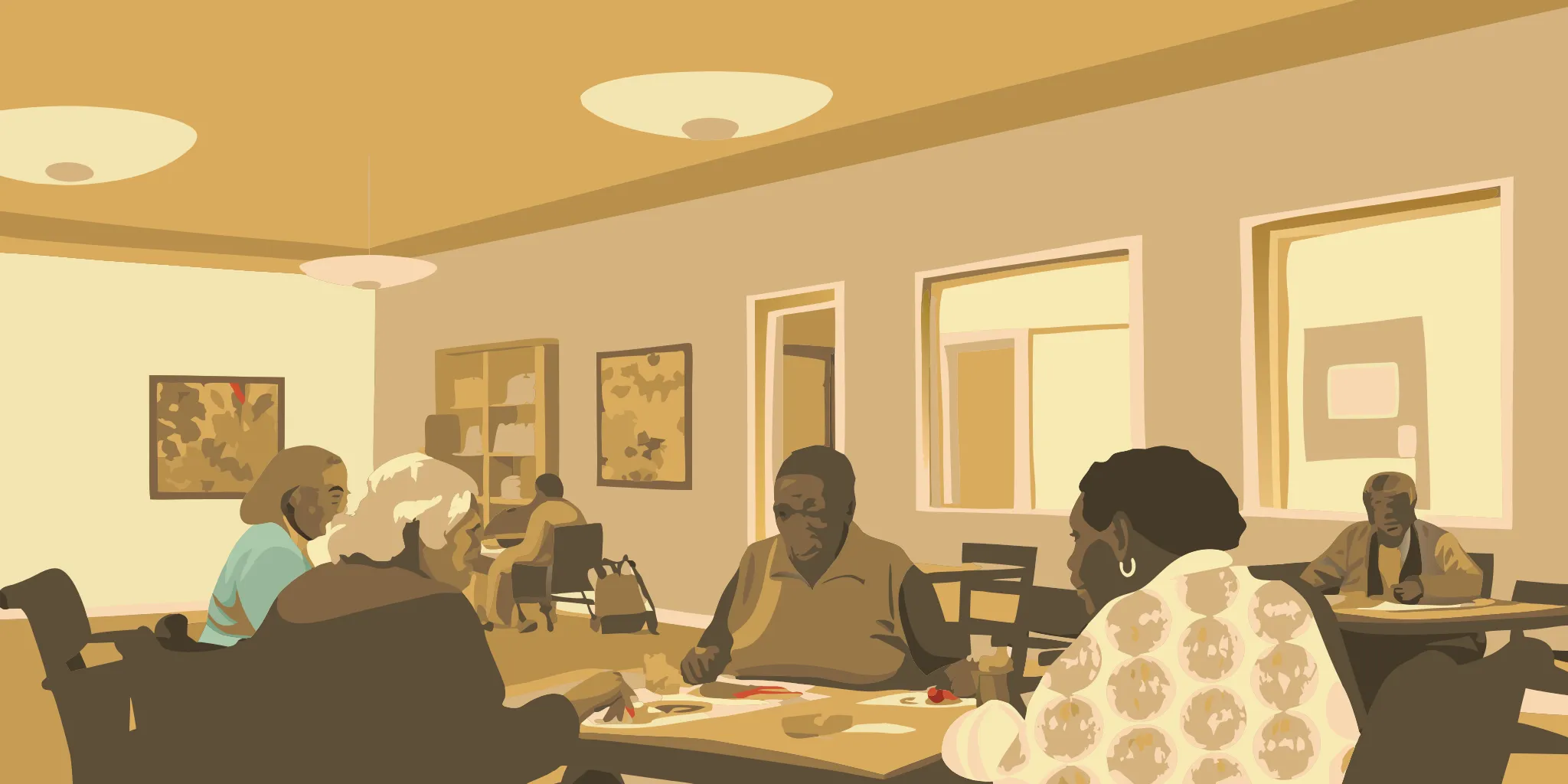
Senior centers give brands a direct way to reach older adults in a trusted community setting. For media buyers, that makes the channel more than a poster placement. It is a place-based media strategy built around routine, dwell time, context, and clear creative.
Senior center advertising works best when the campaign is planned with care. The audience is active, varied, and local. Some visitors may be comparing health plans. Others may be attending a class, lunch program, benefits session, wellness event, or social activity. A strong campaign respects that setting and uses simple, useful messages that fit the moment.
Senior center advertising is place-based out-of-home media that places brand messages inside senior centers and community facilities. It can include posters, lobby displays, bulletin boards, program materials, event signage, digital screens, and custom venue media. The goal is to reach older adults where they spend meaningful time, with clear creative and proof that the campaign was installed as planned.
This guide explains how advertisers can use senior centers as part of a broader alternative OOH plan. It covers audience fit, formats, targeting, accessible creative, execution, and proof-of-performance. It also shows how a turnkey partner can help connect strategy, venue selection, print production, installation, and reporting.
What is senior center advertising?
Senior center advertising is a type of place-based media. Instead of buying only roadside billboards or broad digital impressions, brands place messages in senior centers and related community spaces. The setting matters because people are already there for programs, services, events, meals, education, or social time.
Place-based media in a trusted setting
Place-based media works because the ad is tied to a real environment. A message about Medicare options, preventive care, local transit, nutrition, banking safety. Or community services can feel more relevant in a senior center than it would in a fast social feed.
That does not mean every message belongs in every center. The best campaigns match the offer to the venue, the audience, and the reason people are there. A good plan starts with the campaign goal, not the format.
How this differs from a service page
All Points Media has a dedicated senior centers advertising page for brands that want details on this venue category. This article takes a broader planning view. It explains how to think through formats, targeting, creative, and campaign proof before a media plan goes live.
That distinction is important for SEO and for readers. A service page can show the available channel. A strategy guide helps a media buyer decide how to use that channel well.
Why senior centers work for healthcare, financial, government, and consumer brands
Senior centers can be a strong fit for brands that need trust, clarity, and local reach. Many campaigns aimed at older adults involve choices that require time and thought. Health plans, benefits programs, financial services, public services, and consumer products all need messages that feel useful rather than rushed.
Healthcare and Medicare campaigns
Healthcare advertisers often need to explain options in plain language. Senior centers can support awareness for Medicare plans, wellness programs, screenings, pharmacy services, community health events, and preventive care. The environment can also help brands reach people when they are already thinking about health, services, and daily support.
Case studies such as Humana and UPMC Medicare show how senior-focused campaigns can connect place, message, and audience. These examples are useful because they tie the channel to real campaign needs, not vague awareness.
Financial services and public programs
Financial services brands may use senior center media to promote banking safety, retirement planning, insurance education, fraud prevention, or local branch awareness. Government agencies may use the same channel for public health, benefits, transit, voting, emergency readiness, or local service campaigns.
In each case, the message should be clear, calm, and useful. Older adults are not one audience segment with one need. A strong campaign treats them as active consumers, caregivers, voters, travelers, and community members.
Consumer brands and local relevance
Consumer brands can also benefit when the product fits the setting. Grocery, wellness, entertainment, mobility, home services, telecom, and local retail offers can all be relevant. The key is to avoid broad assumptions. A message should be based on real audience needs, local context, and a clear next step.
All Points Media focuses on reaching consumers where they live, work, and play. Senior centers fit that idea because they are part of daily life for many communities, not just a media location on a plan.
Senior center advertising formats to consider
Senior center campaigns can use several formats. The right choice depends on the goal, the venue rules, the length of the campaign, the need for local detail, and the type of response the brand wants. Some formats drive broad awareness. Others support education, event attendance, or a direct action.
Common placement options
Many campaigns use lobby posters, bulletin boards, hallway displays, tabletop signs, program guides, event calendars, digital screens, or custom displays. These formats work because they are placed near the paths people already use. They can support repeated exposure without feeling intrusive.
Print can be especially useful when the message needs to be viewed at a glance. Digital screens can help when creative needs rotation or when the campaign has multiple messages. Program materials can work well when the brand wants to be tied to a class, event, or service moment.
| Format. | Best use case. | Planning note. |
|---|---|---|
| Lobby posters. | Broad awareness near entry points. | Use large type and one clear message. |
| Bulletin boards. | Local services, events, and education. | Keep the design simple and easy to scan. |
| Hallway displays. | Repeated exposure during daily visits. | Match the message to common traffic paths. |
| Program guides. | Event, class, and schedule-based campaigns. | Use concise copy with a direct next step. |
| Tabletop signage. | Lunch, social, and group activity settings. | Use respectful copy that fits the setting. |
| Digital screens. | Rotating creative or time-sensitive messages. | Limit each frame to one main idea. |
Custom networks and custom media
Not every campaign needs a standard format. A national brand may need a custom network across several markets. A local public program may need a smaller venue set with high relevance. A healthcare campaign may need a mix of posters, program materials, and event support.
That is where a turnkey partner can add value. All Points Media builds custom place-based media programs across many venue types. The goal is to connect the audience, the space, the format, and the proof system before the campaign begins.
How should advertisers plan targeting and venue selection?
Targeting for senior center advertising starts with the business goal. A campaign for Medicare enrollment needs different markets, timing, and creative than a campaign for fraud prevention or a local grocery offer. The venue plan should follow the goal.
Define the audience and action
Start by naming the audience and the desired action. Do you want people to call, visit a site, attend an event, scan a code, pick up a brochure, or talk with a local representative? That decision affects every other part of the plan.
It also helps keep the creative honest. If the action is complex, the ad should not try to explain every detail. It should make the next step feel simple and safe. For many campaigns, that means a phone number, local event date, simple URL, or contact page.
Map markets to real community presence
Geography should be more precise than a DMA or state name. Media buyers should think about county reach, neighborhood needs, branch locations, plan service areas, clinic access, public program zones, and sales coverage. A campaign is stronger when the media map matches the service map.
All Points Media’s place-based media approach is built for that type of planning. It can help brands move beyond broad impressions and focus on the places where the right audience is most likely to engage.
Account for timing and venue fit
Timing matters. Medicare, open enrollment, flu season, tax season, benefits deadlines, local events, and public service campaigns often have clear windows. Senior center campaigns should be planned early enough for venue selection, creative production, installation, and reporting.
Venue fit matters too. Some centers may be better for wellness messages. Others may be stronger for financial education, local services, or community events. The more specific the plan, the more useful the placement becomes.
What makes senior center creative effective and accessible?
Creative for senior center media should be clear first and clever second. The best ad is easy to read, easy to understand, and easy to act on. That is true for all audiences, but it is especially important in community settings where people may see the message while walking, talking, or moving between activities.
Use plain language and clear hierarchy
Use a short headline, one main point, and one next step. Avoid dense copy, legal-heavy phrasing, and small disclaimers that fight the main message. If the topic needs details, use the ad to point people to a brochure, event, phone line, or landing page.
Large type, strong contrast, and simple layouts help more people read the message. They also make the creative better from a distance. A good test is simple: can someone understand the point in a few seconds?
Respect the audience and setting
Senior center creative should never talk down to older adults. Avoid fear-based copy unless the campaign is clearly about a real safety issue, such as fraud prevention or emergency alerts. Even then, the tone should be calm and helpful.
Show respect by focusing on value. Explain what the reader can do, how the offer helps, and why it is relevant now. If the message is about health, finance, or public benefits, avoid vague promises. Give a clear and truthful path to learn more.
Make the call to action simple
A senior center ad should not ask the reader to do five things. Choose one call to action. Call this number. Visit this page. Attend this event. Talk to a representative. Pick up a guide. The fewer steps there are, the easier the campaign is to follow.
For digital support, keep the URL short or use a simple landing page. If a QR code is used, include a backup option such as a phone number or plain URL. Accessibility means giving people more than one practical path.
How do senior center campaigns move from plan to proof-of-performance?
A strong campaign does not end when the creative is approved. It needs a clear path from planning to execution to proof. That is where many place-based campaigns fail when too many vendors are involved. The handoffs create delays, gaps, and weak reporting.
A turnkey campaign flow
- Set the goal. Define the audience, markets, timing, message, and action the campaign must support.
- Select the venues. Match senior centers and related community spaces to the campaign’s service area and audience needs.
- Build the creative plan. Choose formats, specs, copy, calls to action, and any local variations.
- Produce the materials. Print or prepare creative assets with quality checks before installation.
- Install the campaign. Coordinate venue access, placement rules, timing, and field execution.
- Verify performance. Collect proof such as install records, photos, venue confirmations, and campaign reports.
Why proof matters
Proof-of-performance matters because place-based media is physical. Media buyers need to know that the campaign was installed, where it ran, and whether the work matched the approved plan. Without proof, it is hard to defend spend or improve the next campaign.
All Points Media’s full-service model connects strategy, venue procurement, print production, nationwide installation, campaign management, and proof-of-performance reporting. That matters for brands that need a national footprint without managing many local vendors.
What to review after launch
After launch, review the campaign against the original goal. Did the venue mix match the audience? Were the formats right for the message? Did the creative stay clear in the real setting? Were there local market notes that should shape the next flight?
Good reporting should help the brand learn, not just check a box. Each campaign should make the next senior center media plan sharper.
Campaign tips for stronger senior center advertising results
The best senior center campaigns are simple, local, and well managed. They do not rely on one tactic. They connect the right audience, venue, format, message, and proof process.
Match the format to the goal
Use lobby posters for broad awareness. Use program materials for event or education tie-ins. Use tabletop signage when the message fits a seated social or meal setting. Use digital screens when the message needs rotation or timing.
Do not choose a format just because it is available. Choose it because it helps the reader take the next step.
Localize without adding clutter
Local details can make the campaign more relevant. A market name, event date, nearby branch, local plan option, or regional service line can help. But too many details make the ad hard to read.
Keep one version focused on one job. If the campaign needs many messages, create a versioning plan before production. That keeps quality high and avoids last-minute changes.
Use internal proof and past results
Senior-focused case studies can help teams build confidence before they buy. Examples such as WellCare Upstate New York and Paramount Elite show how place-based media can support campaigns aimed at older adults.
Media buyers should also ask how proof will be delivered before approving the plan. Proof should not be an afterthought. It should be part of the campaign design.
Frequently asked questions about senior center advertising
What is senior center advertising?
Senior center advertising is place-based media that places ads inside senior centers and community spaces. It reaches older adults during programs, classes, events, meals, social time, and daily visits.
Where can ads be displayed in senior centers?
Ads may appear in lobbies, hallways, bulletin boards, program guides, event calendars, tabletop displays, digital screens, and other approved common areas. Final placements depend on the venue and campaign plan.
What is the best way to advertise to seniors?
The best way is to match the message to the audience, setting, and next step. Use plain language, large readable type, respectful tone, local relevance, and a clear call to action.
How do brands prove a senior center campaign ran?
Proof can include install records, venue confirmations, photos, placement documentation, campaign management notes, and final reporting. Ask how proof-of-performance will be collected before the campaign begins.
Ready to build a smarter senior center advertising campaign?
Senior centers can help brands reach older adults in trusted community spaces, but the plan has to be clear. The right partner can help you choose venues, match formats to goals, produce accessible creative, manage installation, and document proof-of-performance.
Talk to All Points Media about building a senior center advertising campaign that fits your markets, audience, and media goals.
For custom programs, brands can extend venue-based reach with custom ADVAN Media mobile campaigns. Teams that need flexible targeting can also combine physical placements with digital place-based advertising with APM Digital.